

TL;DR:
- Bargain hunting involves systematically finding, verifying, and stacking discounts before making purchases. Using cashback apps, coupon aggregators, and price tracking websites together maximizes savings and ensures deals are genuine. Patience and disciplined price verification are key to effective discount shopping.
Step by step bargain hunting is a systematic method for saving money on everyday purchases by identifying, verifying, and stacking discounts before you spend a dollar. The industry term for this practice is "strategic discount shopping," but most frugal consumers simply call it bargain hunting. A 2026 survey of 1,000 U.S. consumers found that 64% rely on cashback rewards and coupons as their primary money-saving tools. That number tells you the baseline: if you are not using both cashback and coupons together, you are leaving money on the table. This guide walks you through every step, from preparation to purchase, so you can shop with a plan instead of luck.
What tools do you need for step by step bargain hunting?
Effective discount shopping starts with the right tools in place before you open a single browser tab. The three categories you need are cashback apps, coupon aggregators, and price tracking websites. Each one serves a different function, and using all three together is what separates disciplined bargain hunters from casual sale shoppers.

| Tool type | Primary function | Best used for |
|---|---|---|
| Cashback apps | Return a percentage of your purchase price | Online and in-store purchases across categories |
| Coupon aggregators | Collect and verify discount codes in one place | Checkout savings on retail and local services |
| Price tracking websites | Show price history over 3–12 months | Confirming a deal is genuinely below average |
Cashback apps work by partnering with retailers to pay you a small rebate after you complete a purchase. The rebate is real money, not points with arbitrary value. Coupon aggregators pull verified codes from across the web so you are not wasting time on expired or fake discounts. You can find a solid couponing guide for local savings to understand how these platforms work at the local level.
Price tracking websites are the most underused tool in the bargain hunter's kit. Price charts over 3–12 months reveal the true discount floor for any product. Without this data, you cannot tell whether a "40% off" badge is real or just a retailer resetting a price they inflated weeks earlier.
Pro Tip: Before adding any item to your cart, run a quick price history check. If the current price matches the average from the past six months, the deal is not as good as the badge suggests.
Preparation also means building a shopping list before you search for deals. Bargain hunters who shop without a list spend more, not less. A list keeps you focused on genuine needs and prevents impulse purchases from eroding your savings.
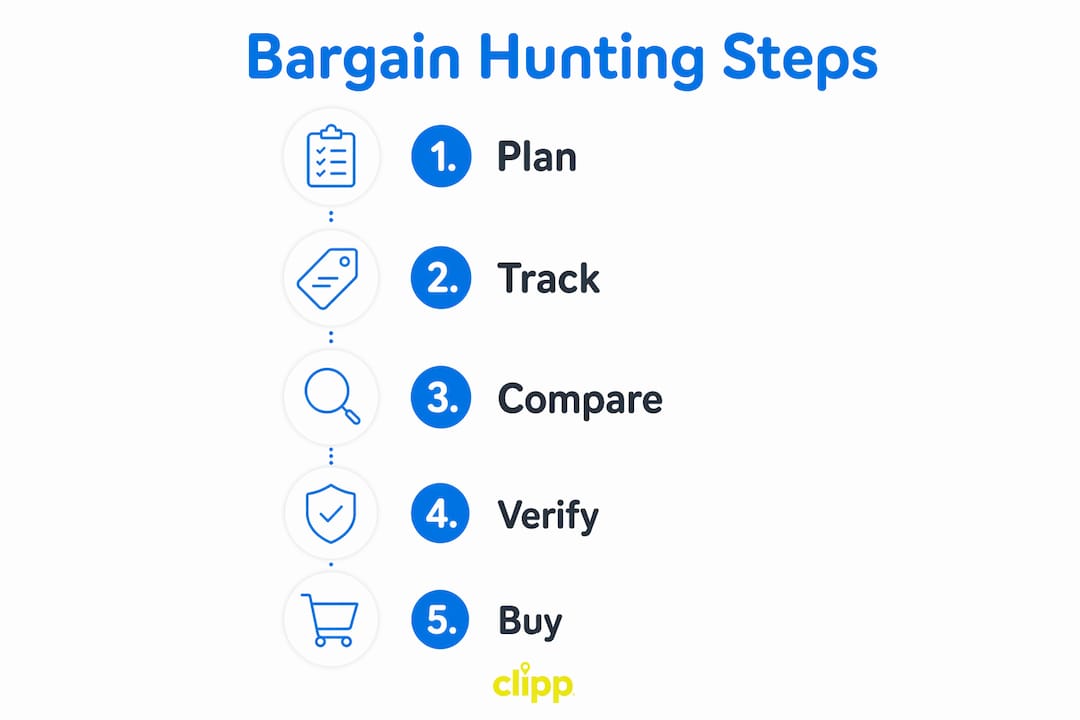
How to find and evaluate bargains step by step
The core process of discount shopping follows a repeatable sequence. Each step builds on the last, and skipping one typically costs you money.
- Identify your upcoming needs. Write down every purchase you expect to make in the next 30–60 days. Prioritize by urgency and cost.
- Research historical prices. Use a price tracking tool to find the average price for each item over the past three to twelve months. This is your benchmark.
- Stack coupon codes with cashback offers. Combining verified coupon codes with cashback yields reliable incremental savings. Apply the coupon at checkout and activate the cashback offer before you click "buy."
- Time your purchase around sales events. Timing purchases around events like Amazon Prime Day and setting price alerts can significantly increase savings. Sign up for alerts so you are notified the moment a price drops.
- Check local retail markdown cycles. Physical stores follow predictable discount schedules. Knowing when a store marks down its inventory lets you walk in at the right moment.
- Use cart abandonment to trigger discounts. Leaving items in an online cart can prompt retailers to send discount codes to encourage you to complete the purchase. Wait 24–48 hours after loading your cart and check your email.
This sequence works because it replaces impulse decisions with verified data. You are not hoping for a deal. You are engineering one.
Pro Tip: After a major sale event ends, wait another week before buying. Retailers often drop prices further to clear remaining stock, especially on electronics and seasonal goods.
Back-to-school spending averages $858 per household, with college households spending over $1,300. Starting your research in june rather than august can spread those costs across multiple paychecks and give you time to catch genuine sales.
Where to find the best deals and discounts
Knowing where to find deals is as important as knowing how to evaluate them. The best bargain hunters pull from multiple channels at once.
Online, your primary sources are cashback platforms, digital coupon aggregators, and price comparison tools. Each channel has a different inventory of discounts, so checking all three before a purchase is standard practice. Local deal platforms like Clipp surface verified savings on dining, wellness, home services, and entertainment that generic coupon sites miss entirely.
Offline, local thrift stores are one of the most predictable discount environments available. Thrift stores use monthly markdown cycles where color-coded tags receive 50% off and later 75% off mid-month. That schedule is public knowledge at most stores. You just have to ask.
Some local stores offer demographic discounts of 20–25% for seniors and students on specific weekdays. These discounts stack with existing markdowns, making them one of the highest-value tactics available for qualifying shoppers.
Types of deals worth tracking across all channels:
- Clearance items: End-of-season inventory sold at steep reductions to free up shelf space
- Open-box products: Returned or display items sold at a discount with full or partial warranties
- Loyalty program perks: Points, early access to sales, and member-only pricing
- Demographic discounts: Senior, student, military, and first-responder pricing at local retailers
- Off-season purchases: Shopping off-season yields the steepest discounts, since retailers clear inventory when demand is low. Buying winter coats in march or patio furniture in september consistently beats peak-season pricing.
One channel bargain hunters often overlook is local service deals. Restaurants, salons, gyms, and home improvement providers run limited-time promotions that are not listed on national coupon sites. Platforms like Clipp specialize in exactly this category, connecting you with local coupons for dining and services that generic aggregators do not carry.
How do you verify that a deal is genuinely worth taking?
The biggest mistake in discount shopping is trusting the advertised discount percentage without checking the math. A "30% off" label means nothing if the original price was inflated two weeks before the sale.
Consumer experts warn against trusting discounts based on recommended retail price. The correct comparison is the current price against the average historical price, not against an RRP that the retailer sets unilaterally. Savvy bargain hunters calculate discounts against average historical prices to identify true deals. If the current price beats the six-month average by 15% or more, you have a real discount.
Common mistakes to avoid:
- Buying outside your list: A 70% discount on something you did not need is still money spent, not saved.
- Ignoring coupon expiration dates: Expired codes waste time and can cause checkout errors that lead to missed cashback.
- Trusting single-source price comparisons: One website's "lowest price" claim is not reliable. Cross-check with at least two price tracking tools.
- Skipping the cashback activation step: Many shoppers apply a coupon code but forget to activate cashback before checkout. Both steps are required to stack savings.
When a coupon code fails at checkout, the fix is straightforward. Go directly to the retailer's official site or a verified coupon aggregator and search for a current code. Avoid random coupon sites with no update timestamps. Verified aggregators show when each code was last tested.
Pro Tip: Gift cards purchased at a discount from resale platforms can be combined with coupon codes and cashback offers for a third layer of savings. Buy a $100 gift card for $85, apply a 10% coupon, and activate cashback on top. Each layer is small, but together they add up fast.
Loyalty programs deserve more attention than most bargain hunters give them. Points accumulate across purchases and can be redeemed during sale events for compounding savings. The key is to redeem points when prices are already low, not when they are at full price.
Key takeaways
Effective bargain hunting is a repeatable process built on price verification, tool stacking, and disciplined timing rather than luck or impulse.
| Point | Details |
|---|---|
| Verify prices with history data | Always check 3–12 months of price history before trusting any advertised discount. |
| Stack cashback and coupons | Combining both tools yields reliable savings that neither delivers alone. |
| Time purchases strategically | Sales events, markdown cycles, and off-season shopping consistently beat impulse buying. |
| Use local and demographic discounts | Thrift store markdown cycles and senior or student discounts add 20–25% savings offline. |
| Stick to your shopping list | Buying outside your planned list erases savings, regardless of how large the discount appears. |
What I have learned from years of chasing deals
The discipline matters more than the tools
I have tested nearly every bargain hunting method out there, from extreme couponing binders to browser extensions that auto-apply codes. The honest truth is that the tools are secondary. The discipline to check price history before every purchase is what actually moves the needle.
The most common mistake I see is people getting excited about a sale event without doing the 90-second price history check first. Amazon Prime Day, for example, is genuinely useful for some categories and completely overhyped for others. Electronics and household staples often hit real lows. Fashion and home decor frequently do not. Knowing the difference requires data, not enthusiasm.
Local deals are where I have found the most consistent value over the years. National sale events get all the attention, but a well-timed local restaurant coupon or a gym deal through a platform like Clipp often delivers a better percentage off than anything I find during a major online sale. The competition for those deals is also lower, which means they last longer.
The one thing I would tell any new bargain hunter is this: patience is the strategy. The deal you wait for is almost always better than the deal you grab in the moment. Set your price alerts, build your list, and let the market come to you.
— Mehmet
Clipp makes local bargain hunting easier
Finding verified local deals used to mean checking a dozen different sites and hoping the codes still worked. Clipp changes that by pulling curated, time-sensitive offers for dining, wellness, home services, and entertainment directly to you based on your location.
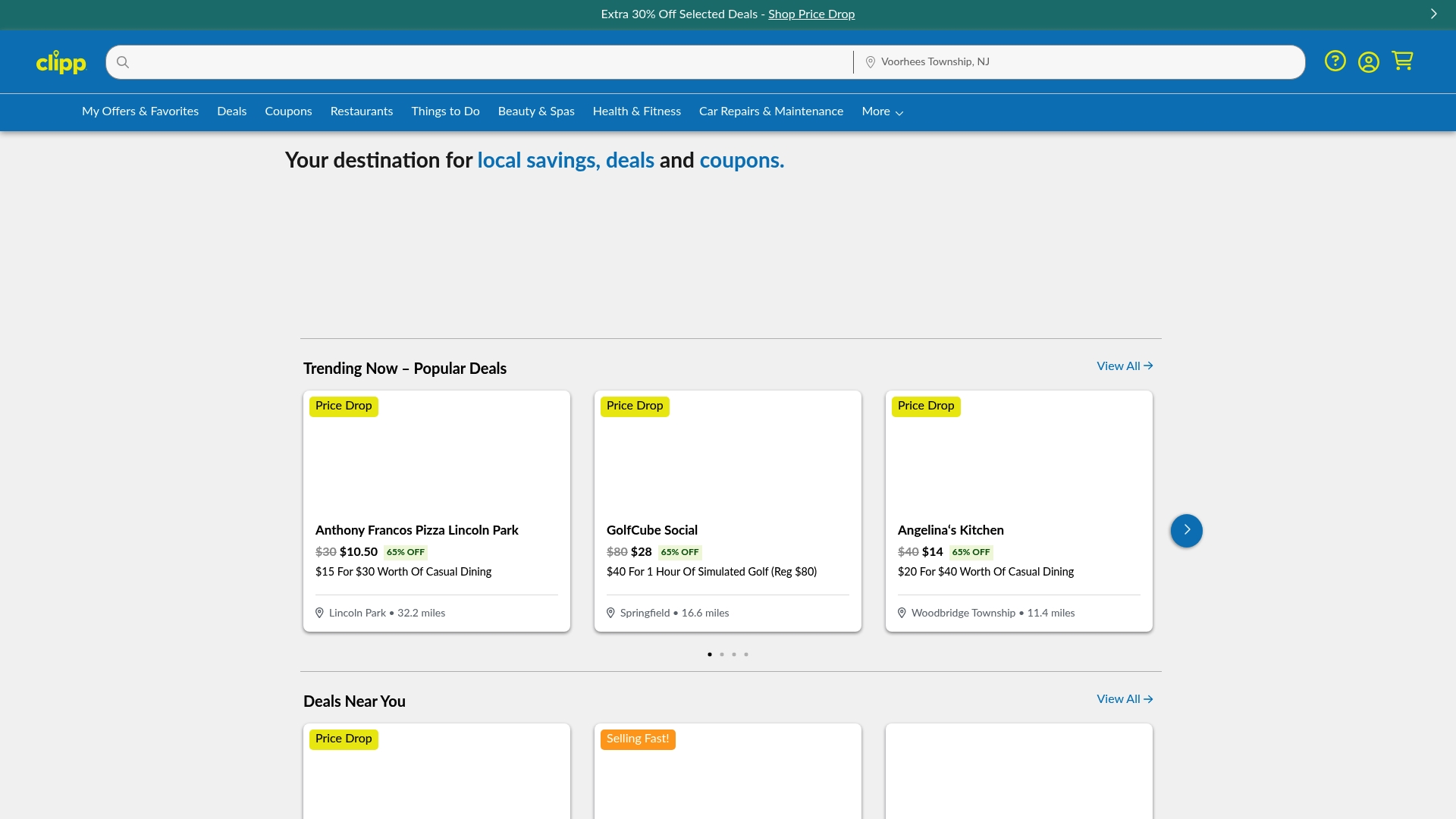
Clipp's local coupons and deals cover the categories that matter most for everyday spending: restaurants, salons, gyms, pet care, and more. The platform highlights trending deals and fast-selling promotions so you are not sifting through outdated offers. Whether you are shopping in a major metro or a smaller market, Clipp surfaces savings that generic coupon sites miss. Visit Clipp.com to browse verified deals near you and put the strategies from this guide to work immediately.
FAQ
What is the first step in bargain hunting?
The first step is building a prioritized shopping list of upcoming needs before searching for any deals. Shopping with a list prevents impulse purchases that erase savings.
How do I know if a sale price is a real discount?
Compare the current price to the average price over the past 3–12 months using a price tracking tool. A genuine discount beats the historical average, not just the retailer's recommended retail price.
Can I stack coupons and cashback offers together?
Yes. Applying a verified coupon code at checkout and activating a cashback offer before purchase are two separate steps that work simultaneously. Combining both is one of the most reliable ways to increase savings on any purchase.
When is the best time to buy off-season items?
Buy winter clothing in march and april, and summer goods in september and october. Retailers clear seasonal inventory at steep discounts when demand drops, making off-season purchases consistently cheaper than peak-season buying.
What are demographic discounts and who qualifies?
Demographic discounts are price reductions of 20–25% offered to seniors, students, military members, and first responders on specific days at participating retailers. Ask at the register or check the store's website for qualifying days and ID requirements.