

TL;DR:
- Digital coupon aggregators centralize deals from multiple retailers, saving time and increasing discounts.
- Users save an average of $1,465 annually, with 23% more usable discounts than store apps alone.
- Combining aggregators with store loyalty, cashback apps, and verification maximizes overall savings.
The average coupon user saves $1,465 annually through digital deals, yet most people still rely on a single store app and miss hundreds of dollars in available savings. A digital coupon aggregator changes that entirely. Instead of hunting across a dozen apps and websites, you get thousands of verified deals in one place, covering everything from your favorite restaurant to your local gym. This guide covers exactly how these platforms work, what makes them worth using, and how to squeeze out every dollar of savings they offer.
Table of Contents
- What is a digital coupon aggregator?
- How digital coupon aggregators work
- Key benefits and real-world savings
- Maximizing your savings: Expert strategies for consumers
- Our take: Why smart deal hunters blend aggregator breadth with store loyalty
- Ready to save more? Start with today's best local deals
- Frequently asked questions
Key Takeaways
| Point | Details |
|---|---|
| Aggregators centralize savings | Platforms collect and display coupons from many retailers, making deal hunting faster and easier. |
| You can save big | Typical users save over $1,400 a year on average by leveraging multiple discounts. |
| Breadth vs. depth matters | Aggregators offer more overall deals, but store apps may have the best local or personalized offers. |
| Verification is key | Pick aggregators that verify each deal to avoid fake or expired coupons for safe savings. |
| Stacking multiplies results | Combine deals with cashback and loyalty apps to maximize your money saved. |
What is a digital coupon aggregator?
Let's start simple. A digital coupon aggregator is a platform or website that collects, verifies, and presents digital coupons, promo codes, and deals from multiple retailers and brands in one centralized location. You search once and see offers from dozens of merchants at the same time. That's the core idea.
Store-specific apps work differently. When you use a grocery chain's own app, you see only that store's deals, personalized to your shopping history. That's useful, but limited. An aggregator casts a much wider net. It pulls from grocery chains, local restaurants, national retailers, service providers, and specialty shops, all at once.
Here's what aggregators typically collect:
- Promo codes for online checkout
- Printable or digital coupons for in-store redemption
- Flash sales and limited-time price drops
- Local service discounts for salons, gyms, pet care, and home improvement
- Restaurant deals including dining credits and meal bundles
- Cashback offers tied to specific purchases
The convenience factor is real. Instead of managing five separate apps and checking each store's website before you shop, you open one platform and search your category or zip code. That's minutes saved per shopping trip, which adds up fast.
"The real power of aggregation isn't just breadth. It's the ability to compare competing offers side by side and make smarter choices without doing the legwork yourself."
For consumers focused on digital coupon basics, understanding the difference between a store app and an aggregator is the first step. One tells you what a single merchant wants you to buy. The other shows you where the best deal actually lives across your entire neighborhood.
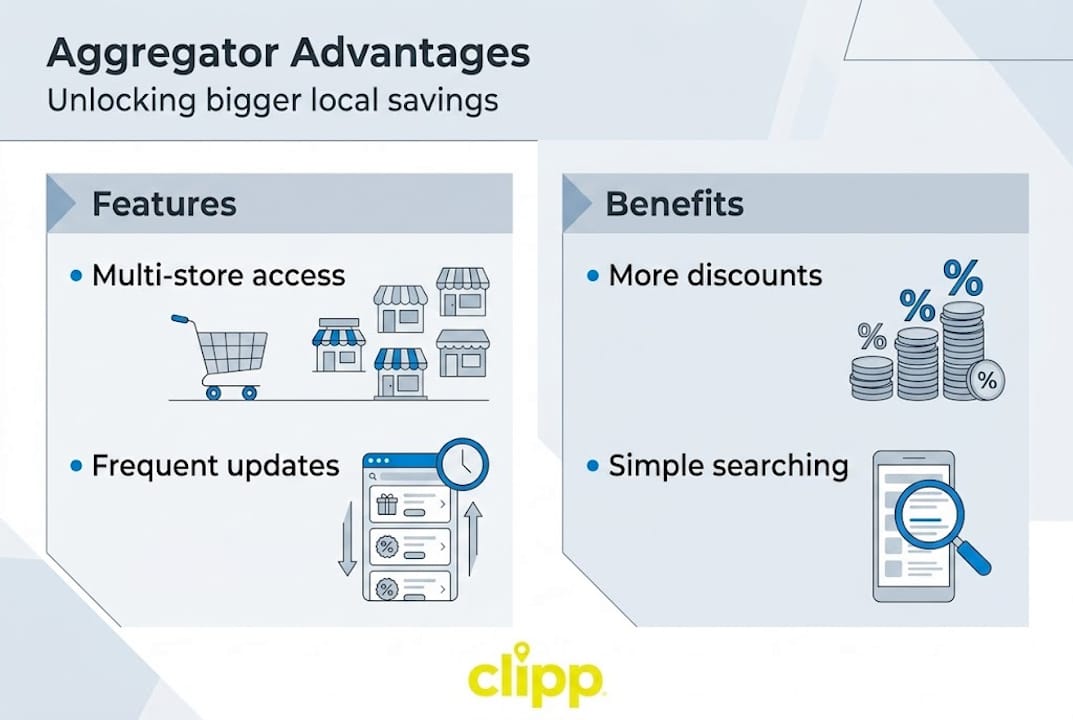
Aggregators also tend to update faster than store flyers. Many pull new deals daily or hourly, so you're not working with last week's offers. The categories span groceries, local dining, retail clothing, fitness, beauty, home services, and entertainment. Whether you're looking to save on a haircut or a plumber, aggregators likely have something relevant.
How digital coupon aggregators work
So how do these platforms actually gather and deliver so many deals? The process has a few moving parts, and understanding it helps you use these tools more confidently.
Step-by-step: from source to your screen
- Merchants submit deals directly to the aggregator through a business portal or affiliate partnership.
- Web crawlers and bots scan retailer websites and coupon databases automatically to pull publicly available codes.
- AI and human editors cross-check codes for validity, expiration dates, and terms of use.
- Deals are categorized and published with filters for location, category, discount percentage, and expiration.
- Users search or browse, copy a code or click through, and apply it at checkout.
- Redemption is tracked by the platform to monitor success rates and flag codes that stop working.
The hybrid approach of automation plus human review matters. Fully automated systems miss nuance. A bot might pull a code that technically exists but only applies to purchases over $200, which is not useful to most shoppers. Human editors catch those edge cases.
That said, no system is perfect. Fake and expired codes are common on unverified sites, and cookie stuffing fraud is a real concern, where a rogue browser extension claims affiliate credit for a sale you made without its help. Not all coupons auto-apply at checkout either, so manual entry is sometimes required.
Here's a quick side-by-side comparison:
| Feature | Coupon aggregator | Store-specific app |
|---|---|---|
| Number of merchants | Dozens to hundreds | One |
| Personalization | Low to moderate | High |
| Deal freshness | Updated frequently | Updated per store cycle |
| Local service deals | Yes | Rarely |
| Code verification | Varies by platform | Typically reliable |
| Stacking potential | High | Limited |
Pro Tip: Before relying on any code at checkout, check the "success rate" or "verified" badge on the aggregator. Platforms that show recent user confirmations are far more trustworthy than those that don't.
For a broader look at why use coupon platforms, the answer often comes down to access. And if you're curious about coupon aggregator alternatives, there are other tools worth layering in alongside your primary platform.
Key benefits and real-world savings
Numbers make the case better than anything. Digital coupon users save an average of $1,465 annually, and aggregators enable 23% more usable discounts compared to relying on store apps alone. That's not a small gap.
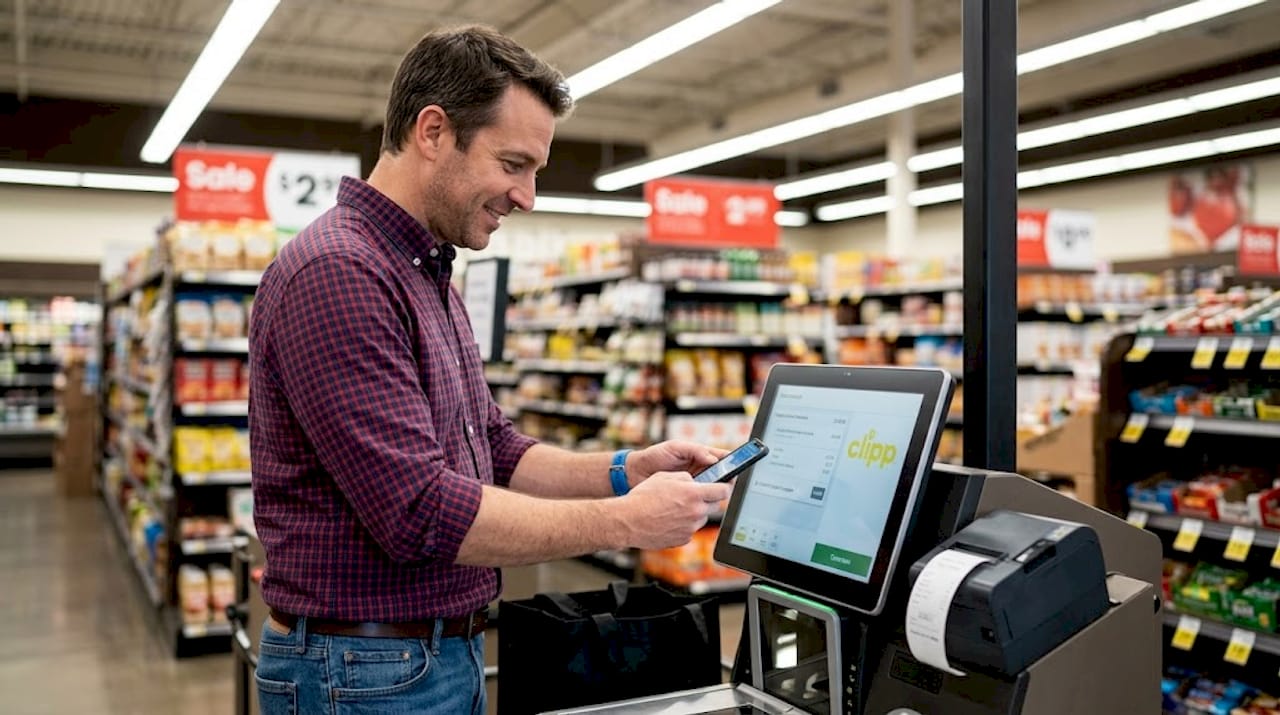
Break it down monthly and you're looking at roughly $120 saved per household. Per transaction, a good aggregator can shave anywhere from 10% to 40% off, depending on the category and current promotions.
What makes aggregators stand out:
- Breadth of offers across groceries, restaurants, retail, and local services in one search
- Faster deal discovery versus checking multiple store apps and websites separately
- Local service coverage that store apps rarely touch, think pet grooming, home repairs, fitness memberships
- Competition visibility so you can see which merchant offers the best deal on the same product or service
- Stacking compatibility with cashback apps and loyalty programs for layered discounts
About 62% of shoppers search for promo codes online before completing a purchase. That habit, when paired with a reliable aggregator, consistently produces savings that single-store browsing cannot match.
Aggregators prioritize breadth across retailers, making them best for deal hunting, but they do require verification to avoid fake or expired codes. That's the trade-off: more options, but more responsibility on the user to confirm validity.
Here's when each tool type wins:
| Situation | Best tool |
|---|---|
| Weekly grocery shopping | Store app (personalized offers) |
| Finding a local restaurant deal | Aggregator |
| Comparing prices across retailers | Aggregator |
| Earning points on repeat purchases | Store loyalty app |
| Discovering new local services | Aggregator |
For tactics on local deal savings and a category-specific restaurant coupon guide, the strategy shifts slightly depending on where you're spending.
Maximizing your savings: Expert strategies for consumers
Knowing aggregators exist is one thing. Using them to their full potential is another. Here's how to turn browsing into consistent, real savings.
1. Start with your biggest spending categories. Don't try to coupon everything at once. Identify your top two or three monthly expense areas, like dining, groceries, or home services, and focus there first.
2. Layer your savings tools. Stack cashback and loyalty programs on top of aggregator codes for maximum impact. Combining an aggregator discount with Ibotta or Fetch rebates on local purchases can push grocery savings to 35 to 55%. That's real money.
3. Verify before you rely. Always check the code's listed expiration date and any recent user comments. A code flagged as "worked 2 hours ago" is far safer than one with no activity in six months.
4. Use browser extensions wisely. Extensions like built-in savings tools auto-apply codes at checkout. But be selective. Only install extensions from reputable sources. Some less trustworthy ones engage in cookie stuffing.
5. Combine aggregator and store apps for local service deals. Aggregators often surface deals on salons, gyms, pet services, and restaurants that store apps never touch. Use both in parallel for full coverage.
6. Set deal alerts for categories you shop regularly. Many aggregator platforms let you follow specific merchants or categories and notify you when new codes go live.
For guidance on redeeming coupons in store without friction, the process varies by merchant. And for category-specific strategies, restaurant coupon types deserve their own attention since dining deals are often structured differently from retail codes.
Pro Tip: When manual code entry is required, copy the code to your clipboard before starting checkout. Switching back and forth between tabs causes session timeouts at some retailers, which can kill your deal mid-transaction.
- Use aggregators for discovery and comparison
- Use store apps for loyalty and personalized weekly deals
- Use cashback apps for rebates on top of both
- Verify every code before committing to a purchase
- Check expiration dates and user success confirmations
Our take: Why smart deal hunters blend aggregator breadth with store loyalty
Here's something seasoned couponers figure out the hard way: chasing every deal is exhausting and rarely efficient. The consumers who consistently save the most aren't the ones refreshing twenty apps. They're the ones who've built a simple, repeatable system.
Aggregators are discovery tools first. Use them to find out what's available, then run your own quick verification before you count on that code at checkout. AI verification is getting better, but it still misses context that a quick user review confirms in seconds.
Different categories also reward different strategies. Groceries favor store loyalty apps for personalized offers. Local services, restaurants, and entertainment are where aggregators genuinely shine. A proven coupon strategy looks different for a family's grocery run versus a Saturday dinner reservation.
The uncomfortable truth is that no single platform covers everything. The best deal hunters treat aggregators as their starting point, then layer in store apps and cashback tools based on what they're buying. That hybrid habit, not any one app, is what builds serious annual savings.
Ready to save more? Start with today's best local deals
You've got the strategy. Now put it into action. Clipp.com makes it easy to skip the search and go straight to verified, location-based savings across every category that matters to your daily life.
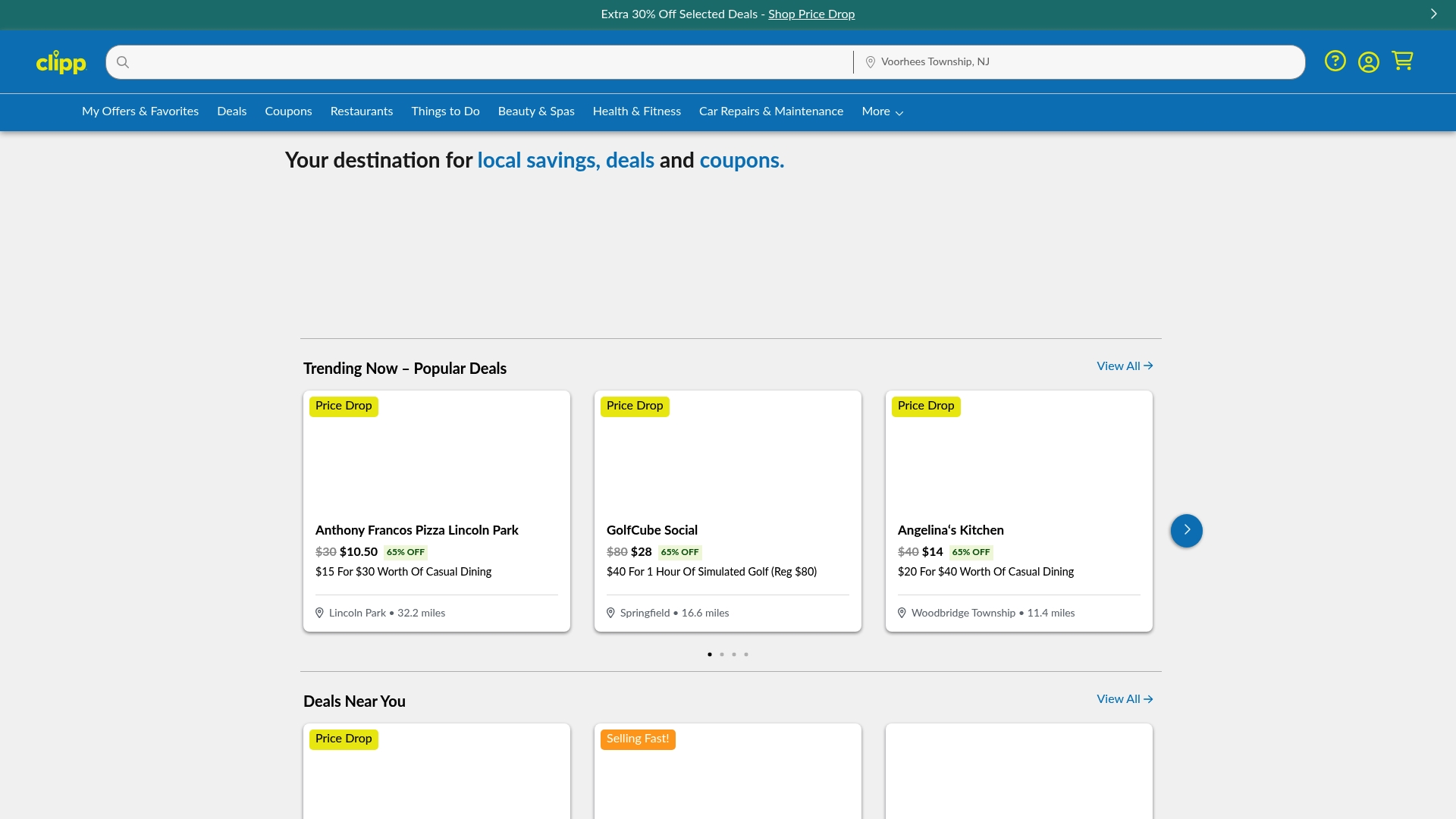
Browse Ashburn local deals by neighborhood and category to find what's available near you right now. Looking for something specific? Check the full list of Ashburn coupons for promo codes across dining, retail, and wellness. Need help with home repairs, fitness, or pet care? The service coupon deals section connects you with verified local providers offering real discounts. Every deal on Clipp goes through a verification process so you're not wasting time on expired codes.
Frequently asked questions
How do digital coupon aggregators differ from store coupon apps?
Aggregators cover multiple retailers and maximize your savings across categories, while store apps focus on personalized offers for a single brand. Use both for the best results.
Can I really save more money using an aggregator?
Yes. Users save $1,465 annually on average and can find 23% more usable discounts than with store apps alone, making aggregators a clear advantage for deal hunters.
Are coupon aggregators safe to use?
Most are safe, but fake and expired codes appear on unverified sites. Stick to platforms with strong verification practices and user success rate indicators to avoid fraud.
How do I get the most out of a coupon aggregator?
Stack with cashback apps and loyalty programs, verify codes before checkout, and check both aggregator and store apps to maximize savings on local and specialty purchases.