

TL;DR:
- Deal hunting involves layering strategies like price tracking, coupons, cashback rewards, and card bonuses to maximize savings. Using AI tools speeds up finding these discounts and filters deals based on precise criteria, avoiding time-wasting noise. A disciplined, targeted system focused on verified deals and price thresholds prevents impulsive spending and enhances long-term savings.
Deal hunting is the deliberate practice of finding the best discounts by combining price tracking, coupon stacking, cashback rewards, and AI-powered tools into a single repeatable system. Understanding how does deal hunting work means knowing that no single tactic delivers maximum savings. The real power comes from layering methods. A 2026 survey of 1,000 U.S. consumers found that 64% rely on cashback rewards and coupons as their primary savings tools. That number confirms what experienced shoppers already know: the best results come from combining multiple strategies, not chasing one.
How does deal hunting work: core strategies that deliver results
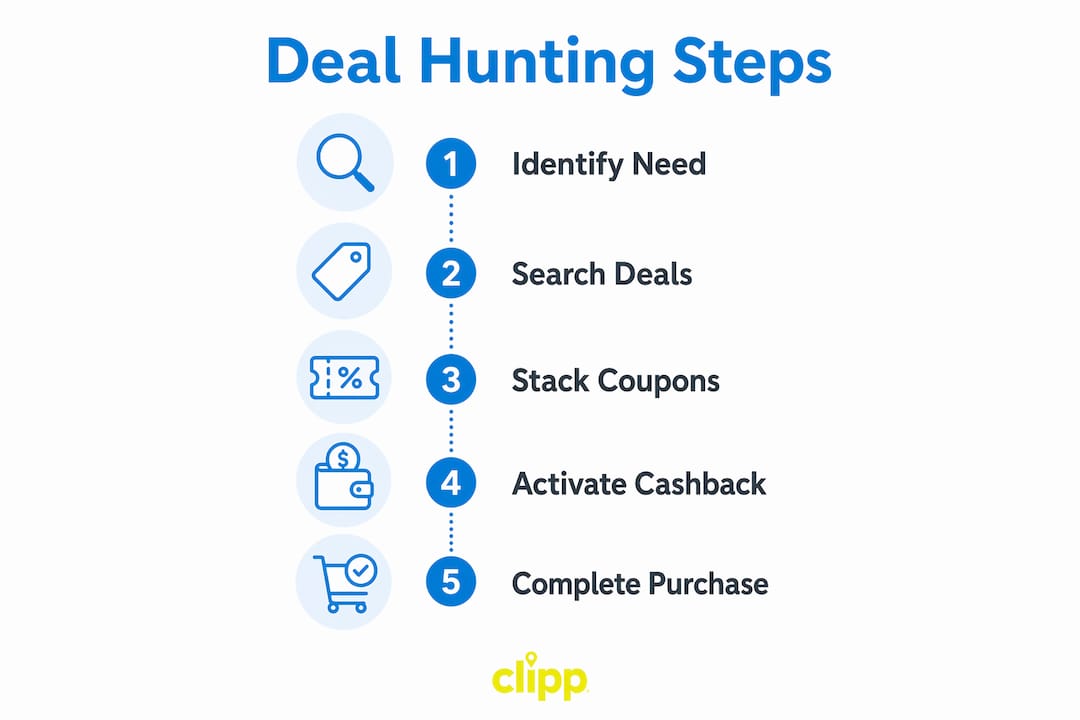
The most effective deal hunting workflow follows a four-step sequence: verify price history, apply a valid coupon, activate a cashback portal, and stack a payment card reward. According to deal hunting research, a 3-minute four-step routine consistently outperforms manual searching or single-source offers. Each step adds a layer of savings that compounds the total discount.
Here is the proven sequence savvy shoppers follow:
- Verify the price history first. Use a price-tracking tool like Keepa to confirm the listed price is actually a low. Retailers frequently inflate "original" prices before a sale to make discounts look bigger than they are.
- Find a verified coupon. Skip generic code sites. Use platforms that confirm codes work before displaying them. Expired codes waste time and create friction at checkout.
- Activate a cashback portal. Portals like Rakuten or TopCashback pay a percentage back on purchases made through their links. Activate before clicking through to the retailer.
- Apply a card reward. Many credit cards offer bonus categories for dining, groceries, or travel. Paying with the right card adds another 1–5% back on top of everything else.
Pro Tip: Set a personal rule to spend no more than 3 minutes on deal research per purchase. If you cannot find a verified discount in that window, buy at the current price or wait. Time has real value.
The layering of these strategies creates a compound savings effect that far exceeds what any single method produces. A shopper who stacks a 20% coupon, 8% cashback, and 3% card reward on a $100 item saves $31 total. That is not three separate wins. It is one coordinated move.

How does AI make deal hunting faster and smarter?
AI assistants have changed the mechanics of deal hunting. ChatGPT and similar tools can parse loyalty program terms, bank offer pages, and manufacturer rebate policies in seconds. That work used to take 20 minutes of tab-switching. Now it takes a prompt.
Here is what AI does well for deal hunters:
- Finds hidden discount layers. AI can identify stackable savings buried in store loyalty programs, bank promotional offers, and rebate policies that most shoppers never read.
- Reduces tab overload. Instead of opening 10 browser tabs to compare coupon sites, you ask one question and get a consolidated answer.
- Matches deals to your criteria. You can tell an AI assistant your target price, preferred retailer, and product specs. It filters out irrelevant offers and surfaces only what fits.
- Handles local savings research. AI tools can identify local restaurant promotions, gym membership deals, and service discounts in your zip code faster than manual searching.
Pro Tip: When using ChatGPT for deal research, be specific. Instead of asking "find me a deal on running shoes," ask "find verified coupons, cashback portals, and card bonuses for Nike running shoes under $120 at major U.S. retailers." Specificity produces usable results.
The shift from manual coupon hunting to AI-assisted discovery is not just about speed. It is about precision. AI surfaces deals that match your exact criteria rather than flooding you with generic promotions you will never use. That precision is what separates a productive deal hunting session from a 45-minute distraction.
What mistakes do amateur deal hunters make most often?
Alert fatigue is the most common and costly mistake in deal hunting. Smart deal hunters cluster alerts by broad categories and set defined walk-away prices rather than tracking every product individually. Without that structure, your inbox fills with noise and you start ignoring everything, including the alerts that matter.
Watch out for these specific traps:
- Buying because of marketing pressure, not price logic. Retail experts confirm that setting precise price thresholds before you search moves your decision from emotional to logical. If you have not set a target price before the sale starts, you are vulnerable to urgency tactics.
- Chasing ghost deals. Automated bots post deals on aggregator sites without verifying current availability. You click through and find the item is out of stock or back to full price. Use platforms that actively remove expired listings.
- Ignoring price history. A "50% off" badge means nothing without context. Keepa and similar trackers show whether a price is genuinely at a historic low or just dressed up to look like one.
- Overspending to save. Buying three units of something because the per-unit price drops is only a win if you actually need three units. Deal enthusiasm is a real spending trap.
- Buying in-season when off-season prices are lower. Buying seasonal items off-season when demand drops consistently yields better prices than holiday sales. Retailers clear inventory at genuine discounts, not manufactured ones.
The common thread across all these mistakes is reacting instead of planning. Deal hunting explained at its core is a proactive system, not a reactive response to sale notifications.
How do local consumers maximize savings on nearby products?
Local deal hunting requires a slightly different approach than online shopping. The tools overlap, but the strategy shifts toward combining platform-specific coupons with in-person loyalty programs and cashback rewards.
| Strategy | Best For | Savings Potential |
|---|---|---|
| Local deal platforms (e.g., Clipp) | Dining, salons, gyms, pet care | Up to 50% off listed price |
| Restaurant loyalty programs | Frequent diners | 5–15% back over time |
| Cashback on local purchases | Any in-store spend | 1–5% per transaction |
| Off-peak timing | Services with flexible scheduling | 10–30% on slow days |
| Newsletter subscriptions (selective) | Neighborhood retailers | Early access to flash sales |
The most effective local deal hunting technique is stacking a platform coupon with a cashback card. For example, you book a $60 massage through a local deal platform at 40% off, paying $36. You pay with a card that earns 3% cashback on wellness purchases. Your real cost is $34.92. That is a 42% total reduction from the original price, achieved in under two minutes.
Clipp connects local shoppers with restaurant coupons and dining savings across dozens of categories. The platform curates verified, time-sensitive offers so you are not wasting time on expired listings. Subscribing selectively to one or two local deal newsletters, rather than every retailer in your area, keeps your inbox useful instead of overwhelming.
Pro Tip: Check local deal platforms before booking any service appointment. Salons, gyms, and home service providers frequently list introductory offers for new customers that are not advertised anywhere else.
How do you build a personal deal hunting system that lasts?
A repeatable deal hunting system is built on structure, not willpower. Without a defined process, you either overspend chasing deals or give up because the effort feels too high. The execution hierarchy that works consistently follows this order:
- Set a target price before you search. Decide what you are willing to pay before you open a single tab. This one step eliminates most impulse purchases.
- Confirm the price is at a genuine low. Check Keepa or a comparable price tracker. If the price is not near its historic floor, wait or walk away.
- Locate a valid coupon. Use verified coupon sources. Confirm the code works before committing to the purchase.
- Activate cashback. Click through a cashback portal before landing on the retailer's site. This step takes 30 seconds and adds real money back.
- Pay with the right card. Match your purchase category to the card with the highest reward rate for that category.
Pro Tip: Review your deal alerts and newsletter subscriptions every 30 days. Remove any that have not produced a useful deal in that period. A leaner alert system produces better decisions.
Automation tools like AI-powered deal alerts handle the monitoring work so you do not have to check manually. Set your target price, define your category, and let the system notify you when conditions match. This approach turns deal hunting from a daily chore into a background process that surfaces opportunities when they are genuinely worth acting on.
Key takeaways
Effective deal hunting works because it layers multiple savings methods into a single coordinated system rather than relying on any one tactic alone.
| Point | Details |
|---|---|
| Layer your savings methods | Stack coupons, cashback portals, and card rewards on every significant purchase for compound discounts. |
| Set target prices first | Define your walk-away price before searching to avoid impulse buys triggered by marketing pressure. |
| Use AI for speed and precision | Tools like ChatGPT surface hidden discount layers in loyalty programs and rebate policies faster than manual searching. |
| Avoid ghost deals and alert fatigue | Use verified platforms that remove expired listings and cluster alerts by category to reduce noise. |
| Apply local deal strategies | Combine Clipp platform coupons with cashback cards to maximize savings on dining, services, and retail near you. |
Why precision beats volume in deal hunting
I have watched people turn deal hunting into a second job and still come out behind. They subscribe to 40 newsletters, set 200 price alerts, and spend three hours a week managing the noise. The savings rarely justify the time. The shoppers who actually win are the ones who treat deal hunting like a checklist, not a hobby.
The shift that changed my own approach was adopting the precision relevance framework. Before I search for anything, I write down the price I am willing to pay. That number is non-negotiable. When I find a deal that hits it, I buy. When I do not, I wait. That single rule has eliminated more bad purchases than any coupon strategy I have ever used.
AI tools have made this easier. I use ChatGPT to do the initial research on stackable discounts, then verify the best option manually before buying. The combination of AI speed and human judgment produces better results than either alone. You can explore deal hunting checklists to build your own version of this system.
The uncomfortable truth about deal hunting is that most people use it to justify spending, not to reduce it. The goal is not to find deals. The goal is to pay less for things you were already going to buy. Keep that distinction clear and the whole system works.
— Mehmet
Find local deals worth acting on with Clipp
Clipp is built for shoppers who want verified, local savings without the noise. The platform features curated deals on dining, wellness, home services, pet care, and more, with offers regularly reaching 50% off the standard price.
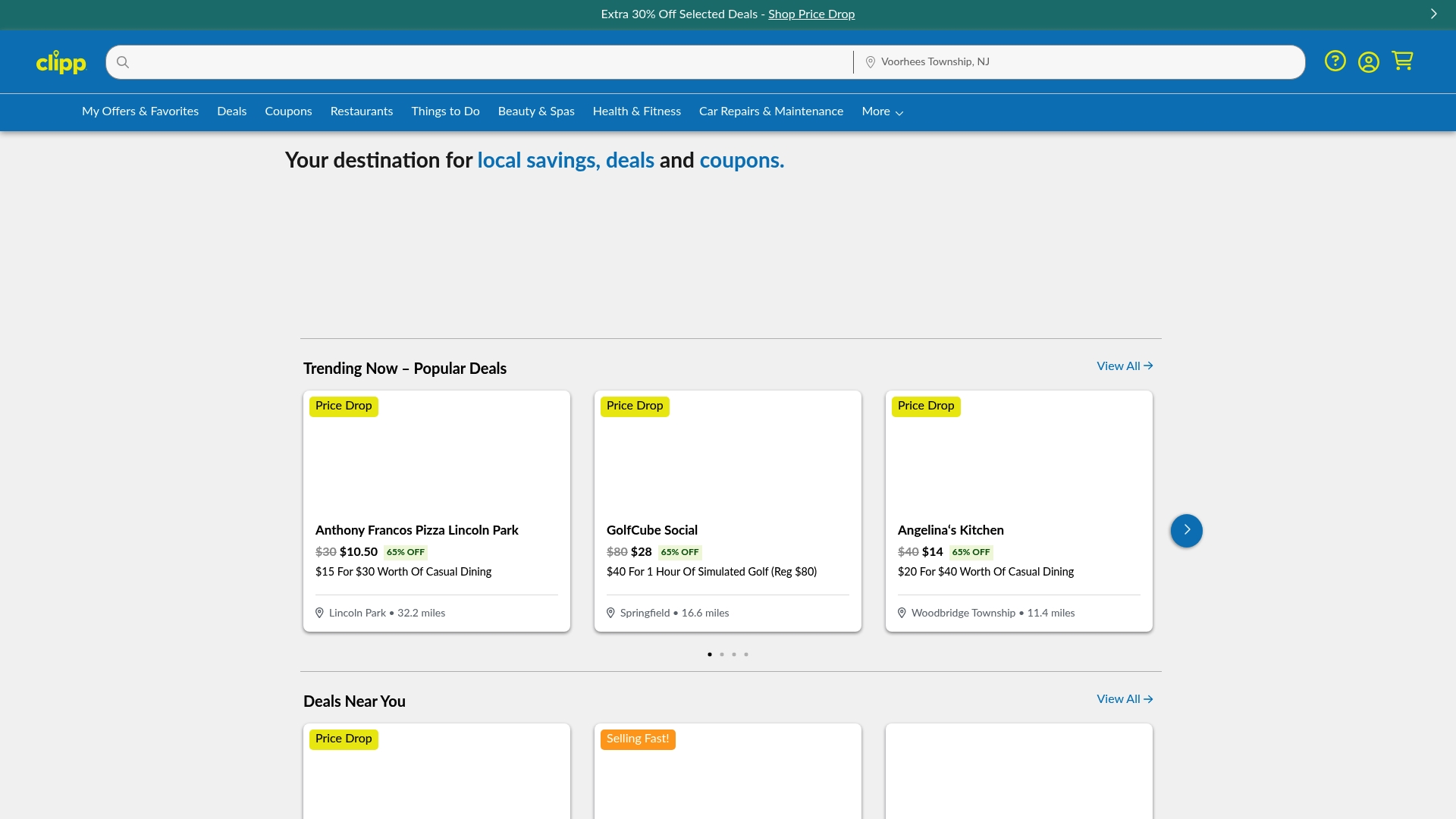
If you live in Texas, local deals near you are updated daily across restaurants, salons, and service providers. The Clipp mobile app puts those savings in your pocket so you can check offers before booking any local service. Pair a Clipp coupon with a cashback card and you have a two-step local savings system that takes under two minutes to execute. Browse deals by state to find verified offers in your area right now.
FAQ
What is deal hunting, exactly?
Deal hunting is the active process of combining price tracking, coupons, cashback portals, and card rewards to pay the lowest possible price on a purchase. It is a system, not a single tactic.
How do you stack deals for maximum savings?
Apply a verified coupon first, then activate a cashback portal before clicking through to the retailer, and pay with a card that earns bonus rewards in that purchase category. Each layer adds to the total discount.
What is alert fatigue and how do you fix it?
Alert fatigue happens when too many deal notifications cause you to ignore all of them, including the ones worth acting on. Fix it by clustering alerts into broad categories and setting a defined target price for each one.
Are AI tools actually useful for finding deals?
Yes. AI assistants like ChatGPT can identify stackable discounts across loyalty programs, bank offers, and rebate policies in seconds, surfacing savings that most shoppers miss during manual searches.
When is the best time to buy seasonal items?
Buying seasonal items off-season, when retailer demand drops and inventory clears, consistently produces better prices than shopping during advertised holiday sales periods.