

TL;DR:
- Most families miss out on significant savings because they don't understand which discount methods are most effective. Bundles, passes, and cashback programs offer the best value when aligned with family spending habits. Combining multiple discounts and focusing on routine expenses maximize savings and prevent chasing fleeting deals.
Most families leave hundreds of dollars on the table every year, not because deals don't exist, but because they don't know which discount types actually deliver. The average household saves $1,465 per year using coupons and promotions, yet most people only scratch the surface of what's available. Dining, entertainment, wellness, and everyday essentials all have dedicated discount ecosystems built around family budgets. This guide breaks down the most popular discount types, explains exactly how each one works, and shows you where families are finding the biggest wins right now.
Table of Contents
- The most popular discount types (and what they mean))
- How discounts really work: Mechanics behind the savings
- Where and when consumers use discounts most
- Hidden truths and expert strategies: Getting more from every discount
- Popular discounts: What most people miss (and how smart families win))
- Where to find the best local savings and deals
- Frequently asked questions
Key Takeaways
| Point | Details |
|---|---|
| Families save most with bundles | Bundle deals, family passes, and memberships offer the highest value for frequent dining and entertainment. |
| Cashback beats flat discounts | Cashback offers result in greater long-term savings and loyalty than simple percentage-off deals. |
| Digital deals dominate | More than half of all discounts are redeemed digitally, making savings faster and easier to access. |
| Layer discounts for maximum value | Combining different discount types, such as coupons and cashback, increases overall savings. |
The most popular discount types (and what they mean)
Not all discounts are created equal. Some save you money the moment you check out. Others build value over time. Knowing the difference helps you pick the right tool for each situation.
Popular discounts for families include coupons, loyalty memberships, bundle deals, cashback offers, percentage-off promotions, and family passes for dining and entertainment. Each one works differently, and each fits different spending habits.
Here's a quick comparison to show how they stack up:
| Discount type | How it works | Typical savings | Best for |
|---|---|---|---|
| Coupons | Instant price cut at checkout | $0.50 to $20+ per use | Groceries, dining, retail |
| Cashback/rebates | Refund after purchase | 1% to 10% back | Online shopping, credit cards |
| Loyalty memberships | Points or perks over time | Varies, often 5 to 15% | Repeat shoppers, families |
| Bundle/family deals | Fixed price for a group package | 20 to 40% vs. individual pricing | Dining, theme parks, events |
| Percentage-off promos | Flat % discount on purchase | 10% to 50% off | Seasonal sales, flash deals |
| Passes | Unlimited or repeated access | High value for frequent use | Entertainment, gyms, museums |
For families, bundle deals and passes often deliver the most value. A Chuck E. Cheese all-day pass or a Peter Piper Pizza game package gives you fixed-price fun without per-item costs adding up. Groupon-style deals bundle services at a fraction of the regular price. Walmart+ memberships layer free delivery, fuel discounts, and streaming into one annual fee.
Cashback is quieter but powerful. You spend normally, then get money back through apps or credit card rewards. It doesn't feel like saving in the moment, but it adds up fast.
"The best discount strategy isn't the biggest single deal. It's the one that fits your family's actual spending patterns."
For a deeper look at how these apply to eating out, check out these restaurant coupon types and coupon examples for families that show real-world applications.
How discounts really work: Mechanics behind the savings
Understanding what these discounts are is helpful, but knowing how they deliver value and why some are preferred over others makes you a smarter saver.
Let's walk through the mechanics of each main type:
- Coupons reduce the price at the point of sale. You present the code or clipping, and the register subtracts the amount. Retailer-issued coupons are typically nontaxable, meaning you don't pay sales tax on the discounted amount in most states. That's a small but real bonus.
- Cashback offers work after the transaction. You pay full price, then receive 1% to 5% back through an app, card, or rebate portal. The delay feels less satisfying, but the long-term return is often higher than a one-time coupon.
- Loyalty points accumulate gradually. Every purchase earns credits that convert to future discounts or free items. It rewards consistency, which is why businesses love this model.
- Bundle deals set a fixed price for a package. You get more for less, but only if your family will actually use everything in the bundle.
- Passes give unlimited or repeated access for a flat fee. Great for families who visit the same places regularly, like a local zoo, trampoline park, or gym.
Businesses prefer cashback and points programs for a strategic reason. These methods protect their listed prices while still rewarding loyal customers. A 20% off coupon trains shoppers to wait for sales. A points program keeps them coming back at full price.
Pro Tip: Layer your discounts whenever possible. Use a coupon at checkout AND earn cashback through a rewards card at the same time. Some families also stack voucher codes with in-store promotions for double savings. These coupon saving strategies are simple to set up and compound quickly.
Where and when consumers use discounts most
Now that you know how discount types work, let's explore where families use them most and who's saving the most.
Dining and entertainment sit at the top of household discount usage. Families with children are heavy users across both categories, and the numbers back it up. 90% of U.S. consumers use coupons, families with children use 37% more coupons than average households, and digital redemptions now account for over 53% of all discount use.
Here's where families are finding the most consistent savings:
- Restaurants and fast food: Loyalty apps, printed coupons, and digital codes are everywhere. Learning how to get restaurant coupons can cut your dining bill significantly.
- Entertainment and activities: Theme parks, bowling alleys, escape rooms, and movie theaters all offer family bundles and seasonal passes. Entertainment discounts are especially strong in spring and summer.
- Grocery and household essentials: Manufacturer coupons, store loyalty cards, and rebate apps like Ibotta dominate this space.
- Wellness and fitness: Gym memberships, yoga studios, and spas regularly offer new-member deals and referral bonuses.
- Pet care and home services: Often overlooked, these categories have strong local deal ecosystems.
$78.4 billion was saved nationally through coupons and discounts in 2025, and that number is expected to grow in 2026 as digital coupons become even more accessible through apps and retailer platforms.
Pro Tip: Stack a local daily deal with a digital promo code for the same business. Many local restaurants and entertainment venues honor both, especially when you book through a deals platform before visiting.
Hidden truths and expert strategies: Getting more from every discount
With the major categories and usage patterns in mind, it's time for advanced insights. Maximize your savings with what the experts know.
Cashback is actually more valuable long-term than a simple percentage-off promo for most families. Here's why: a 10% off coupon saves you once. A 3% cashback card saves you every single time you spend, on everything, forever. Over a year of normal family spending, that compounds into serious money.

Hybrid strategies combining points and cashback maximize ROI for families, and targeted offers can increase lifetime savings value by 23% compared to using single-method discounts alone.
Here are the most common mistakes families make with discounts:
- Chasing every offer. If you spend 45 minutes hunting a $2 coupon, you've lost money in time. Focus on high-value, low-effort deals.
- Ignoring loyalty points. Many families earn points they never redeem. Check your balances monthly and set a redemption goal.
- Over-discounting on non-essentials. Buying something you didn't need just because it's on sale isn't saving. It's spending with extra steps.
- Missing stacking opportunities. Most people use one discount at a time. Combining coupon strategies with cashback and points is where the real wins are.
- Skipping pass deals for recurring activities. If your kids visit the same place four or more times a year, a pass almost always beats paying per visit.
"Businesses that train consumers to only buy at a discount create a race to the bottom. Smart shoppers use that to their advantage, but only for planned purchases."
Pro Tip: Use apps for digital discounts to automate cashback and points tracking. Set alerts for categories you already spend in, so you never miss a deal on something you were going to buy anyway.
Popular discounts: What most people miss (and how smart families win)
Here's the take most guides skip entirely. Discounts are tools, not goals. The families who save the most aren't the ones chasing every flash sale or clipping every coupon they see. They're the ones who made a short list of three to five high-ROI discount methods that match their actual habits and stuck with them.
Digital deal hunting has made offers more accessible than ever, but that accessibility also creates noise. FOMO (fear of missing out) on a deal can push you into spending you never planned. That's the opposite of saving.
The risks of couponing are real, and most articles won't tell you that. Discipline beats volume every time. True value comes from combining two or three methods, like a loyalty membership plus cashback plus a seasonal pass, and focusing on experiences your family already loves rather than chasing whatever's trending.
The smartest move? Build your discount stack around your routine, not around what's on sale.
Where to find the best local savings and deals
Ready to act on these tips? Here's where your savings journey gets even easier.
Clipp.com brings together curated local deals across dining, entertainment, wellness, and family essentials, all in one place. Whether you want printable coupons or digital codes you can use today, the platform makes it simple to find what's near you.
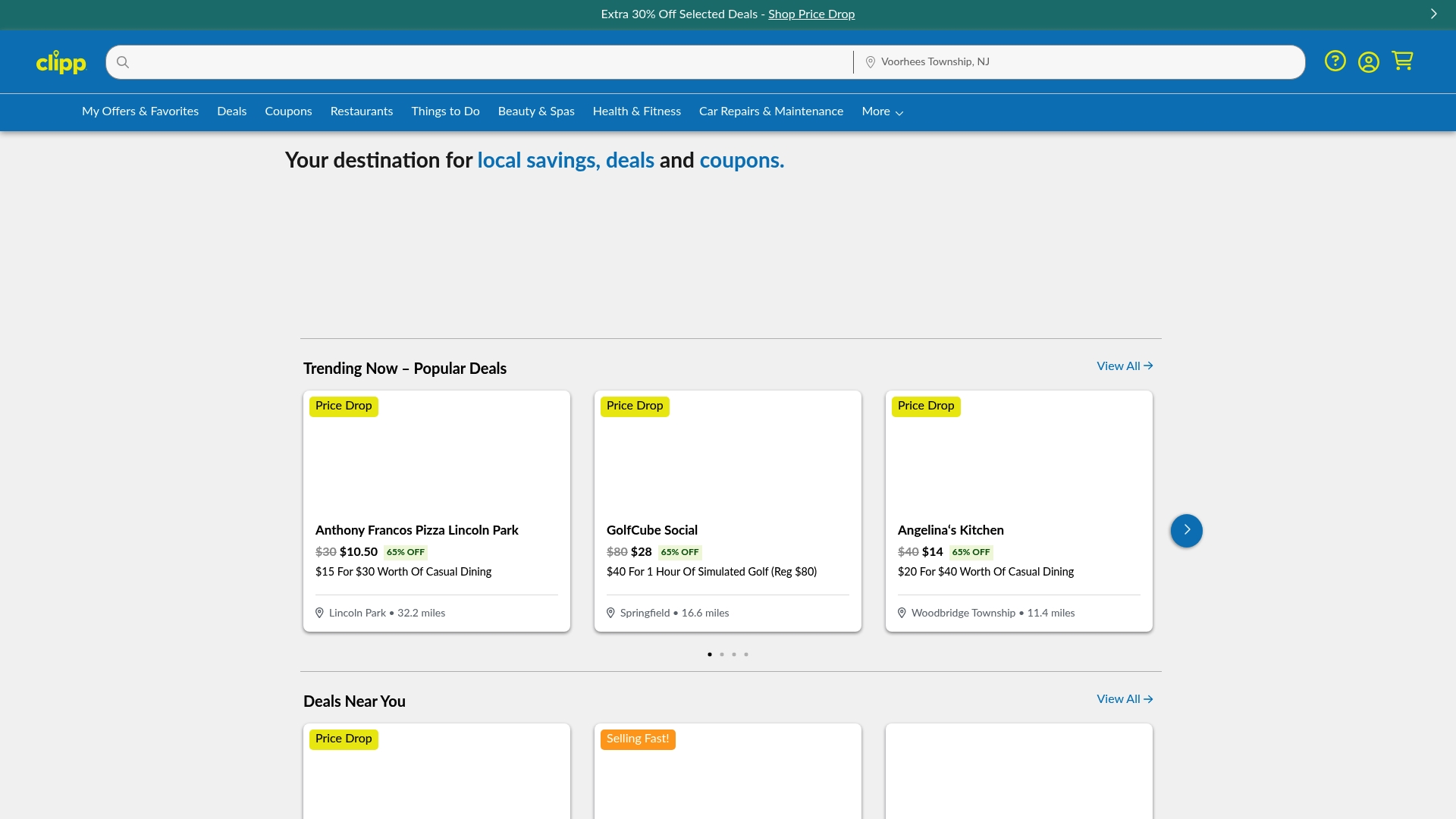
Browse 50% off local savings on the homepage to see what's trending in your area right now. For neighborhood-specific options, check local deals in Ashburn to find restaurants, gyms, and entertainment venues offering real discounts. Need help with home improvement or wellness? Explore service deals for categories beyond dining. The deals update regularly, so checking back often means you'll always have fresh options to stack with your existing loyalty and cashback strategies.
Frequently asked questions
What is the difference between a coupon and a cashback offer?
A coupon gives you an instant discount at checkout, while a cashback offer provides a rebate or refund after your purchase is complete. Coupons feel immediate; cashback builds over time.
Which discount types do families use most?
Families prefer bundles, passes, and memberships for repeat savings on dining and entertainment, since these formats reward consistent use rather than one-time purchases.
How much can an average household save using discounts?
The average household saves $1,465 per year using discounts and coupons, though families with children tend to save even more due to higher usage rates.
Are digital discounts more common than paper coupons now?
Yes. Over 53% of all discount redemptions are now digital, driven largely by younger families and the growth of deal apps and retailer loyalty platforms.