

TL;DR:
- Families often miss out on savings due to lack of knowledge about digital discounts and stacking strategies.
- Effective discounts include coupons, loyalty programs, cashback tools, and their optimal use depends on purchase size.
- Consistent, moderate savings through loyalty and stacking outperform rare, large deals, especially when managed actively.
The average American family leaves hundreds of dollars on the table every year by skipping discount offers, not because saving is hard, but because most people don't know where to start. The process feels cluttered with expired coupons, confusing apps, and the nagging sense that the payoff isn't worth the effort. That's the biggest misconception in personal finance. With the right mix of digital tools, loyalty programs, and stacking strategies, families consistently cut their monthly spending on dining, wellness, and entertainment without rearranging their lives. This guide walks you through exactly how discount offers work, which mechanics pay off the most, and how to build habits that generate real savings month after month.
Table of Contents
- How discount offers work: From coupons to apps
- Types of discount mechanics: What really drives savings
- Loyalty programs and rewards apps: Turning everyday spend into big savings
- Advanced savings tactics: Personalization, gamification, and stacking
- The overlooked art of smart discounting: What most guides don't tell you
- Level up your savings: Local deals at your fingertips
- Frequently asked questions
Key Takeaways
| Point | Details |
|---|---|
| Master discount mechanics | Understanding different types of offers helps target the best savings for each purchase. |
| Leverage loyalty programs | Joining reward programs and using apps can increase the amount and frequency of savings. |
| Stack and personalize | Combining coupons, loyalty, and personalized deals maximizes local savings. |
| Strategize and track | Minor planning and tracking expiry dates ensures more discounts actually get redeemed. |
How discount offers work: From coupons to apps
Discount offers aren't a single thing. They span a wide range of formats, from the classic paper coupon you clip from a Sunday circular to sophisticated app-based rewards systems that track every dollar you spend automatically. Understanding the full picture helps you pick the right tool for every shopping trip.
A discount offer is any structured incentive that reduces the price you pay for a product or service. The most common types include:
- Coupons: Single-use codes or printed vouchers that apply a price reduction at checkout
- Loyalty programs: Points or tier-based systems tied to a specific retailer or brand
- Cashback tools: Apps or credit cards that refund a percentage of your purchase after the fact
- Promo codes: Alphanumeric strings entered online or in-app for instant discounts
- Browser extensions: Software like Honey or Capital One Shopping that automatically apply codes at checkout
The shift from paper to digital has been enormous. Physical coupon books and newspaper inserts used to be the primary source for household savings. Today, mobile apps do the heavy lifting, pulling in real-time offers, geo-targeted promotions, and personalized deals based on your purchase history.
A clear example is Fetch Rewards, which earns points on any receipt you scan from groceries, gas stations, or restaurants, converting 1,000 points into one dollar in gift cards with a minimum $10 redemption threshold. It's simpler to use than Ibotta, though the per-offer value tends to be lower. That trade-off matters: Fetch wins on convenience, while dedicated rebate apps sometimes offer steeper individual rewards.
Learning how to use digital coupons tips effectively means knowing which platforms fit your actual spending habits, not just downloading every savings app in the store. A single app you use consistently will always outperform three apps you forget to open.
Pro Tip: Scan every receipt, not just grocery ones. Gas stations, fast food visits, and even hardware store purchases can earn points in apps like Fetch Rewards, adding up to free gift cards faster than most people expect.
Pairing receipt-scanning apps with a dedicated saving apps guide gives you a clearer map of which tools work best in your neighborhood and spending category. The ecosystem of digital discount tools is larger than most people realize, and the entry barrier is essentially zero.
Types of discount mechanics: What really drives savings
After seeing the channels for finding deals, it's important to know the structure behind every offer and which types deliver the best value for your situation. Not all discounts are created equal, and the mechanic behind a promotion determines how much you actually save over time.
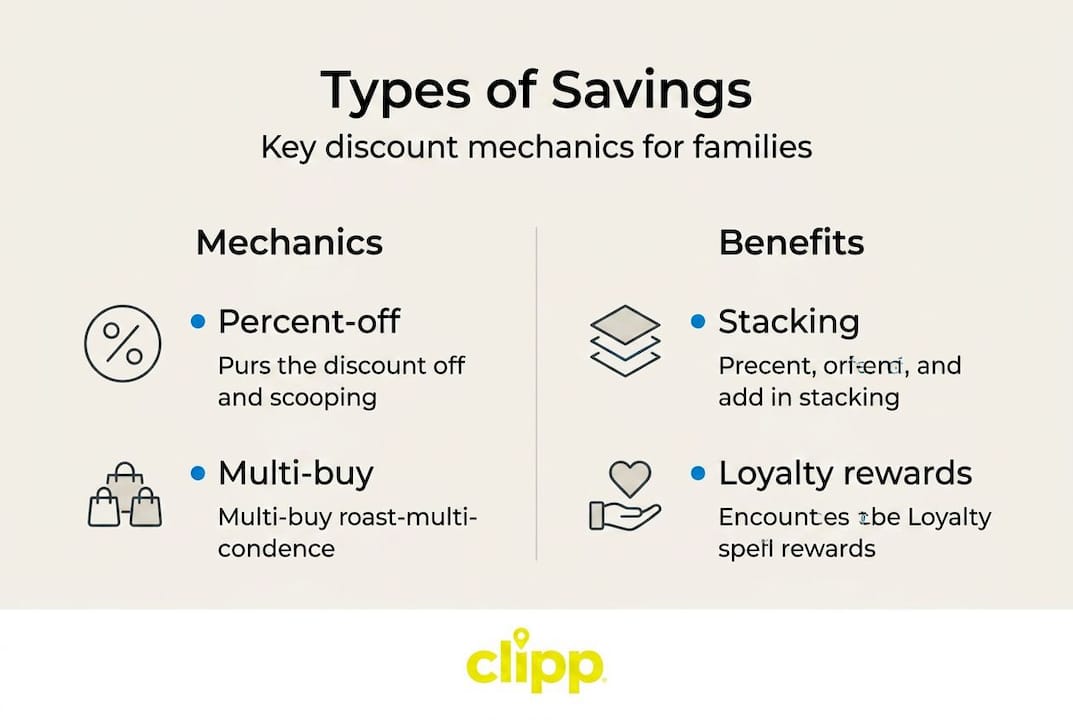
Here's a direct comparison of the most common discount structures:
| Mechanic | Best for | Key benefit | Watch out for |
|---|---|---|---|
| Percent-off (%) | Large purchases | Scales with price | Less valuable on small items |
| Dollar-off ($) | Small, fixed purchases | Predictable savings | Less impactful on high-cost items |
| BOGO (Buy One Get One) | Household staples | Doubles supply per dollar | Encourages over-buying |
| Threshold deals | Bulk or planned shopping | Unlocks bonus savings | May push unnecessary spending |
| Loyalty rewards | Regular, repeat purchases | Compounds over time | Expiry dates erode value |
Promotional mechanics include percent and dollar discounts, BOGO offers, threshold deals, and traditional coupons, with multi-buy formats generally producing less of a post-promo sales dip than straight percentage discounts. That's a critical point for shoppers: BOGO and multi-buy deals tend to be more reliable because they encourage stocking up on things you'd buy anyway, rather than creating a temporary spike followed by a spending crash.
When should you pick percent-off over dollar-off? The rule is straightforward. Percent-off wins on bigger purchases because the savings scale with the price. A 20% discount on a $150 salon visit saves you $30. That same 20% on a $10 takeout order saves $2. For small, everyday purchases, a flat dollar-off coupon often delivers more predictable value and feels more meaningful.
"The most effective promotional strategies match the mechanic to the purchase size and frequency, not just the headline discount number."
For families, the real power comes from stacking. That means combining a store coupon with a loyalty reward and a cashback app in the same transaction. This is where the coupon types that work make a measurable difference, because some formats stack cleanly while others have restrictions buried in the fine print.

Pro Tip: Always read the expiry date and exclusion terms before planning a stacking strategy. Many dollar-off coupons exclude sale items or require a minimum purchase, which can wipe out your savings if you're not paying attention.
The saving strategies that consistently work are the ones tied to your actual routines, not one-off deals that require a detour across town. Align your discount mechanics with the categories where you already spend the most, and the savings add up without extra effort.
Loyalty programs and rewards apps: Turning everyday spend into big savings
Now that the mechanics of deals are clear, let's focus on how loyalty programs and apps add a new layer to your everyday savings toolkit. Most people think of loyalty cards as mild perks, but the data tells a different story.
Loyalty programs produce measurable results across both sides of the transaction. Here's what the numbers actually show:
| Metric | Loyalty members | Non-members |
|---|---|---|
| Spending increase | 12 to 18% more | Baseline |
| Retention rate | 89% | 33% |
| Annual churn | 6 to 15% | Higher |
| Reward breakage | 31 to 40% | Not applicable |
| Program ROI | 10 to 20% | Not applicable |
Members spend 12 to 18% more and are retained at an 89% rate compared to just 33% for shoppers without loyalty membership, with a 51% reward redemption rate across major programs. The breakage figure, which is the portion of rewards that expire before being redeemed, sits at 31 to 40%. That's money you earned but never collected.
Avoiding breakage is one of the most impactful habits a family can build. Set a calendar reminder every 60 days to check your reward balances across all your programs. Redemption rates stay high when members treat points like cash, because that's exactly what they are.
Local loyalty programs often offer the deepest benefits because they're designed to drive foot traffic in a specific area. A neighborhood gym, a family-owned restaurant, or a regional grocery chain may offer geo-targeted bonuses, double-point days, or members-only flash deals that national programs simply can't match. Exploring the full range of local deals overview shows how neighborhood-level programs can dramatically outperform generic national platforms.
For families specifically, pooling rewards onto shared accounts accelerates redemption. Many restaurant loyalty apps and grocery chains allow household accounts or gift card transfers, meaning parents can consolidate points from multiple family members into a single account that hits reward thresholds faster.
The apps for reward tracking category has grown significantly, with dedicated tools that aggregate balances from multiple programs in one dashboard. This removes the mental friction of juggling eight separate apps and makes it far less likely you'll miss an expiry date.
Advanced savings tactics: Personalization, gamification, and stacking
Loyalty tools are powerful, but the real savings come when you combine strategies and adopt the latest app-driven tactics. Moving beyond basic coupon use into stacking, gamification, and personalization is where casual deal hunters separate from serious savers.
Here are the most effective advanced tactics available right now:
- Stack multiple discount layers: Combine a store coupon with your loyalty account and a cashback app in a single purchase. A meal that costs $40 might trigger a 15% restaurant coupon, earn 200 loyalty points, and generate $1.50 in cashback simultaneously.
- Enable geo-alerts: Many savings apps send push notifications when you're physically near a partner location. This turns proximity into savings without requiring you to plan ahead.
- Use team or family bonuses: Apps that allow group accounts or referral bonuses reward you for inviting household members. A family of four logging separate receipts into a shared account compounds points rapidly.
- Manage expiry windows actively: Segment your rewards by expiry date using a simple spreadsheet or your app's built-in tracker. Use the soonest-to-expire rewards first, always.
- Chase personalized offers: Apps that learn your spending habits serve up targeted promotions with above-average value. Accept personalization settings because the offers improve dramatically over time.
Gamification and personalization lift engagement by 48%, meaning members who participate in challenge-based or personalized loyalty programs use their rewards far more often than those in standard point systems. That engagement gap translates directly into savings.
The ROI of loyalty programs reaches 4.8 to 5 times investment, and empirical data shows that fixed dollar discounts lower average order value compared to percentage-off offers, which is a critical insight when you're deciding how to redeem points. Use dollar-off rewards on smaller purchases and save percent-off redemptions for bigger ticket items.
Real-world example: A family with three kids uses a shared account on their local grocery app. Both parents scan receipts, the oldest kid earns bonus points through weekly challenges, and the account hits a $25 reward threshold monthly instead of quarterly. That's roughly $300 per year in free groceries from an app they were already using.
The advanced savings strategies that work long-term are built around consistency and integration, not marathon coupon-clipping sessions. Paired with entertainment deal tips, these tactics extend well beyond the grocery store into movie nights, sporting events, and family outings.
Pro Tip: When a loyalty app offers a limited-time challenge (like "earn 500 bonus points for three purchases this week"), treat it as a scheduled savings event. Complete it intentionally, not spontaneously, and you'll hit bonus thresholds without changing your spending patterns.
The overlooked art of smart discounting: What most guides don't tell you
With advanced tactics in your pocket, it's time to step back and look at the big picture of what truly works for long-term savings.
Most discount advice chases the headline number. The biggest percent-off. The most dramatic deal. But experienced savers know something that most guides skip entirely: consistent, moderate savings beat rare, massive scores every single time. A 10% discount you use every week for a year outperforms a 50% off flash sale you catch once, and that's before accounting for the impulse spending those "too good to miss" deals often trigger.
Loyalty programs and stacking strategies reinforce this truth. The breakage rate of 31 to 40% in loyalty programs isn't a design flaw. For many businesses, it's revenue. Every reward you forget to redeem is money you earned and left behind. Smart discounters treat their reward balances like a secondary savings account, checking it regularly and redeeming deliberately.
The second thing most guides miss is the cost of complexity. Signing up for 12 apps, chasing eight different loyalty programs, and spending hours each week hunting deals is its own form of inefficiency. The ideal system is the one you'll actually maintain. Two or three well-chosen platforms aligned with your real spending categories will always outperform a sprawling, exhausting coupon operation.
Explore the coupon platforms perspective and you'll find that the most effective savers are methodical, not obsessive. They build repeatable habits around a small number of high-value tools, and they never let complexity become the enemy of actually saving money.
Level up your savings: Local deals at your fingertips
Putting it all together, here's how you can immediately start saving in your area.
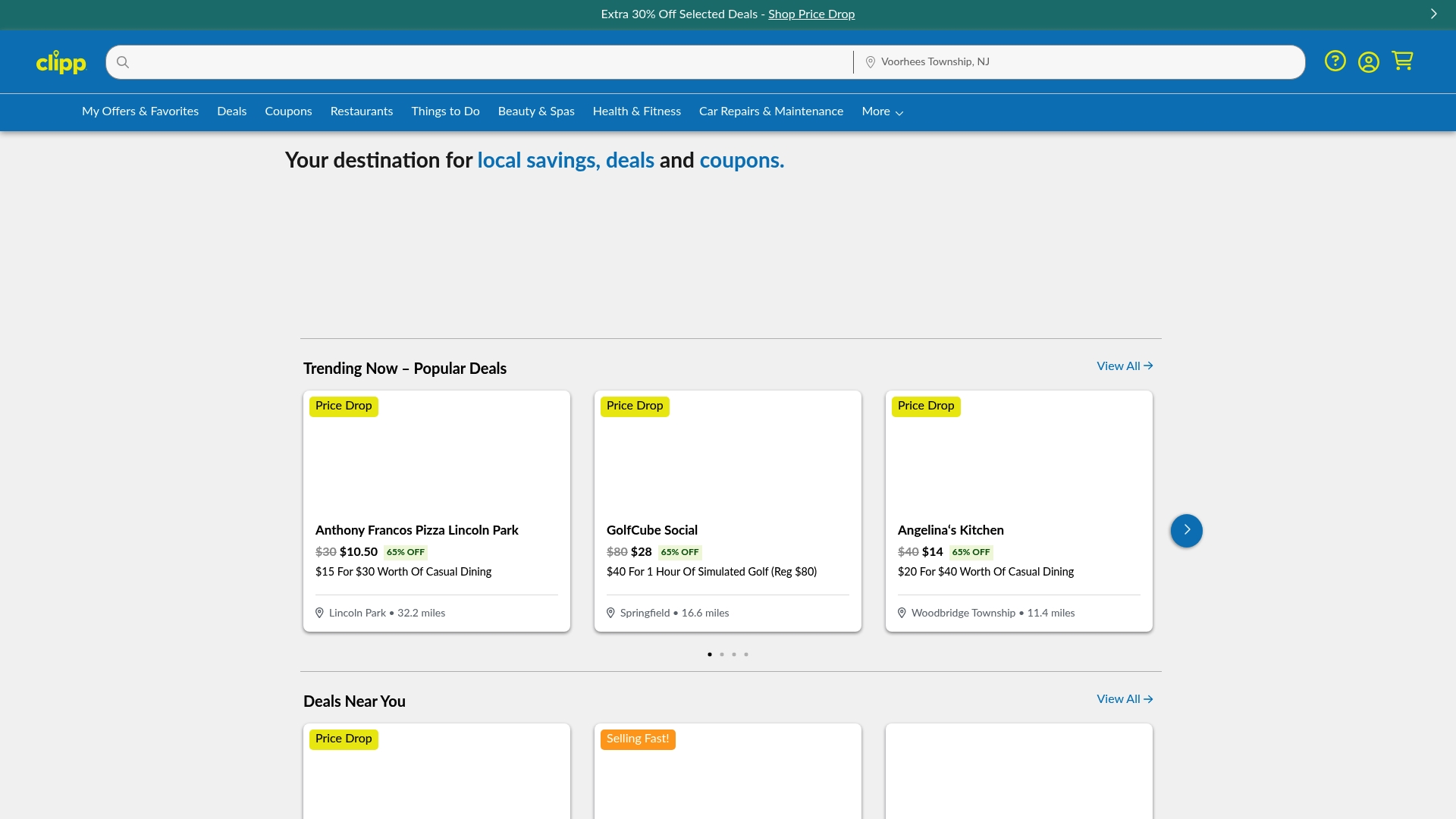
Everything covered in this guide, from stacking mechanics to loyalty breakage to gamified reward challenges, is only useful if you have a steady source of fresh, local deals to work with. That's exactly what Clipp.com is built for. The platform connects you directly to curated discounts on dining, wellness, home services, and entertainment near you, updated regularly so you're never working with expired offers. Browse local coupons to find ready-to-use savings across categories you actually shop, or check local deals for time-sensitive promotions that combine perfectly with the loyalty and stacking strategies you've just learned. Mobile-friendly and built for families on the go, Clipp.com turns the tactics in this guide into instant, real-world savings.
Frequently asked questions
Are digital coupon apps really better than paper coupons?
Digital coupon apps offer more convenience, real-time updates, and the ability to stack offers in a single transaction. Apps like Fetch Rewards, which scan any receipt for points, show how digital tools can generate passive savings that paper coupons simply can't match.
Which type of discount offer gives the highest long-term savings for families?
Multi-buy and stacking loyalty rewards typically deliver the highest sustained value for families over time. Multi-buy formats produce less of a post-promo spending dip than straight percentage discounts, making them more reliable for budgeting purposes.
How much do loyalty program members really save compared to non-members?
The gap is substantial. Members spend 12 to 18% more in value terms and enjoy an 89% retention rate versus just 33% for non-members, largely because frequent reward opportunities reinforce consistent purchasing habits.
Is there a risk in relying too heavily on discounts for household budgeting?
Strategic use of discounts is low-risk, but over-dependence can lead to missed expiry dates and reward breakage rates of 31 to 40%, meaning a significant portion of earned rewards go unused if members aren't actively tracking their balances.