

TL;DR:
- Using local coupons regularly can save families over $1,500 annually.
- Setting up store apps, loyalty programs, and notifications simplifies couponing.
- Proper stacking, timing, and cashback apps maximize overall savings.
A family that eats out twice a week, visits a local salon monthly, and catches weekend entertainment could realistically save over $1,500 a year just by using local coupons correctly. That's not a stretch. It's what happens when you stop leaving money on the table and start treating coupons as a regular part of how you spend. This guide walks you through everything: the tools you need, where to find deals, how to stack and time them for maximum impact, and the mistakes that quietly kill your savings before you even reach the register.
Table of Contents
- What you need to get started with local coupons
- Step-by-step: How to find and redeem local coupons
- Maximizing your savings: Stacking, timing, and cashback moves
- Avoiding common mistakes and understanding restrictions
- Our take: The real keys to coupon success in your neighborhood
- Ready for bigger savings? Local deals are just a tap away
- Frequently asked questions
Key Takeaways
| Point | Details |
|---|---|
| Start with the right tools | A smartphone, key apps, and knowing where to look are essential for coupon success. |
| Redeem smarter, not harder | Follow a clear process and understand digital vs. paper coupon differences for best results. |
| Stack and time for maximum savings | Combine coupons and match them with sales and cashback for unbeatable discounts. |
| Watch the fine print | Stay alert to restrictions, expiration dates, and requirements to avoid disappointment. |
| Build smart coupon habits | Check in regularly, aim for genuine value, and track your savings to stay motivated. |
What you need to get started with local coupons
Getting started with local coupons is simpler than most people expect. You don't need a binder full of clippings or hours of prep time. A smartphone, a few well-chosen apps, and a quick habit check are all it takes to start cutting costs on the things you already buy.
The first step is knowing your tools. There are two main formats: paper and digital. Paper coupons come from local newspapers, mailers, and in-store flyers. Digital coupons live in apps, browser extensions, and store loyalty programs. Both work, and the best coupon strategies often combine them.
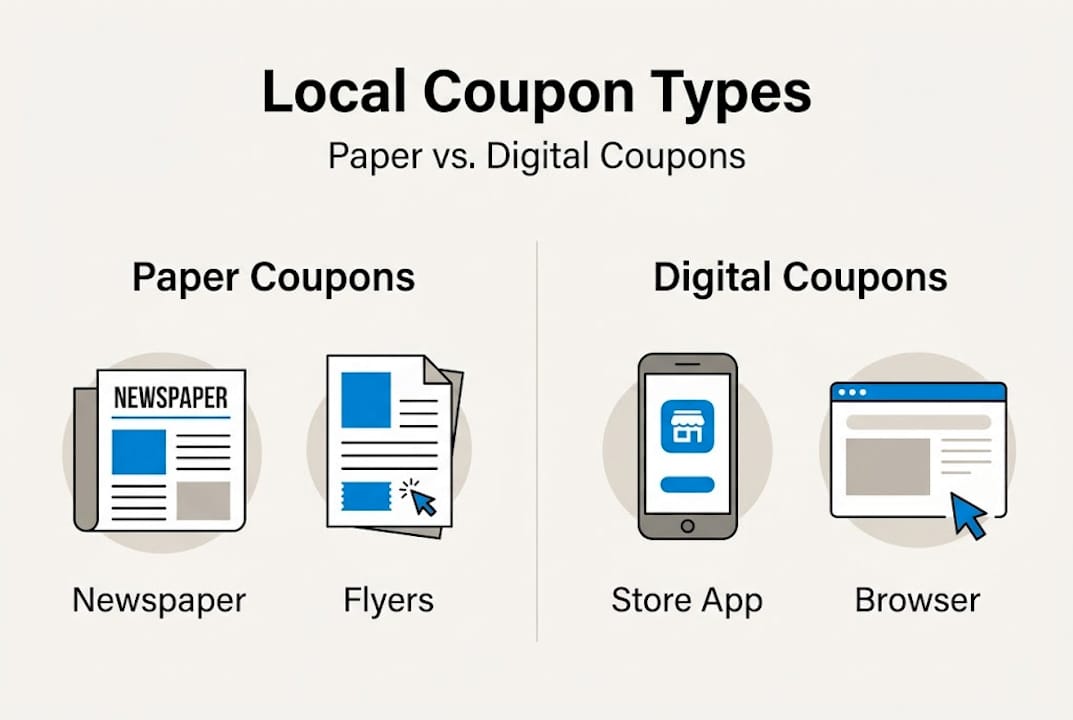
| Tool | Format | Best for | Cost |
|---|---|---|---|
| Store apps | Digital | Grocery, retail, dining | Free |
| Browser extensions (Honey, etc.) | Digital | Online and in-store | Free |
| Local newspapers | Paper | Neighborhood businesses | Low |
| Mailers and flyers | Paper | Hyperlocal deals | Free |
| Coupon websites | Digital | Broad category savings | Free |
Using store apps, loyalty programs, and browser extensions like Honey gives you access to both local and digital coupons without spending a dime. Most store apps let you clip digital coupons directly to your account, so they apply automatically at checkout. No fumbling, no forgetting.
Once your apps are installed, turn on notifications. This is the move most people skip, and it costs them. Push alerts from your favorite local restaurant or grocery store often carry time-sensitive deals that never get posted anywhere else. You can always mute the ones that feel spammy, but the first few weeks of alerts usually surface some genuinely useful offers.
Here's what to set up right away:
- Download your most-visited store's official app
- Enable location permissions for "near you" deals
- Install one browser extension for online shopping
- Sign up for loyalty programs at 2 to 3 local spots you visit regularly
- Check your local newspaper's digital edition for weekly circulars
Knowing why using coupon platforms matters helps you commit to the habit. Platforms aggregate deals you'd never find on your own, saving you the legwork.
Pro Tip: Always download coupons directly from official store apps or verified coupon sites. Third-party coupon codes from random blogs are often expired or invalid, and they waste your time at the register.
Step-by-step: How to find and redeem local coupons
Once you're set up, finding and using local coupons is a repeatable process. The key is knowing where to look and how to present your offer without a hitch.
Where to find local coupons:
- Official store and restaurant apps
- Local newspaper inserts and digital editions
- Neighborhood flyers and mailers
- Browser extensions that auto-apply codes
- Coupon aggregator websites and apps
- Social media pages of local businesses
- Email newsletters from your favorite spots
Once you spot a deal, here's how to claim and use it:
- Clip or save the coupon directly in the app or cut it out if it's paper
- Check the expiration date and terms before you leave home
- Store digital coupons in a dedicated folder or wallet app so they're easy to pull up
- At checkout, open the coupon before you reach the register to avoid delays
- Present clearly: show the barcode or hand over the paper coupon before the cashier totals your order
- Confirm the discount applied on your receipt before you leave
Digital coupons dominate, but paper persists for local businesses. The mechanics vary by platform, but reading the fine print and presenting your offer clearly are universal rules.
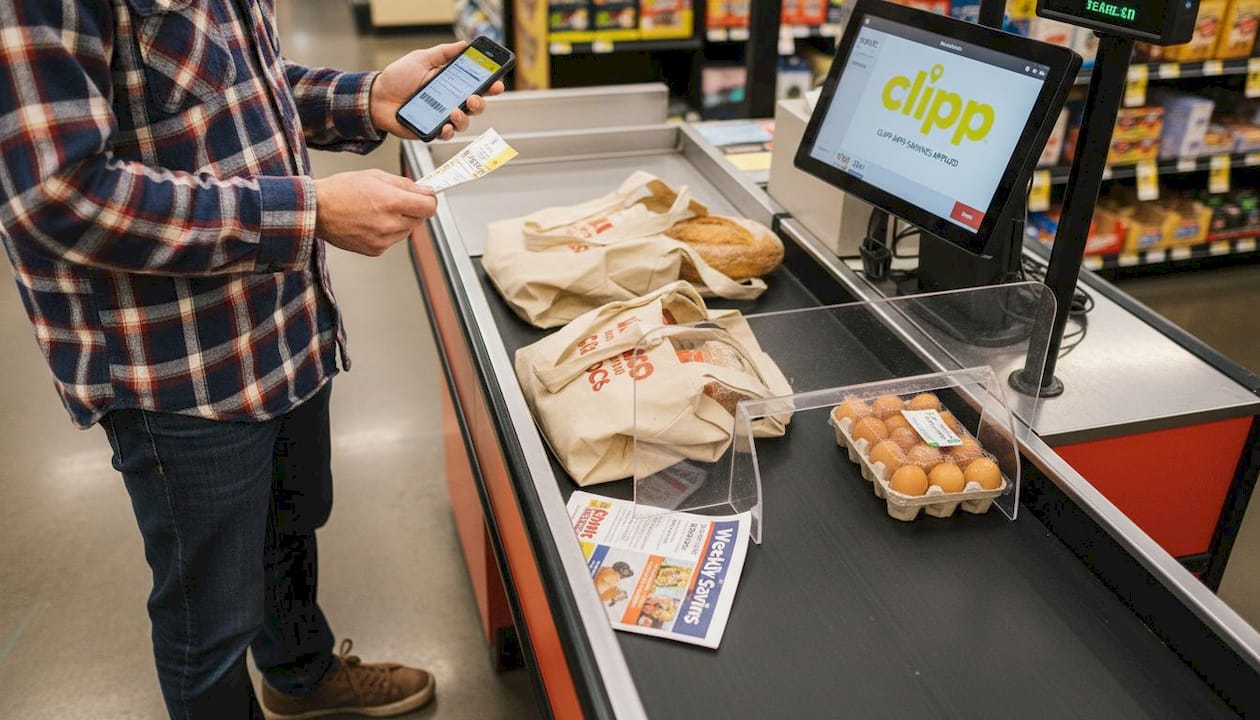
| Factor | Paper coupons | Digital coupons |
|---|---|---|
| Convenience | Lower (must carry) | High (phone-based) |
| Acceptance | Broad at local shops | Growing fast |
| Reliability | High if not damaged | Depends on signal/battery |
| Expiration tracking | Manual | Often auto-removed |
For restaurant coupon tips, the same logic applies: check the offer before you order, not after. Some dining deals only apply to specific menu items or dine-in visits, and finding that out mid-meal is frustrating.
Learning how to redeem in-store coupons correctly can mean the difference between a smooth checkout and an awkward holdout at the register.
Pro Tip: If a digital barcode won't scan, zoom in on your phone screen and increase brightness. Most scanning issues come from low screen brightness, not a bad coupon.
Maximizing your savings: Stacking, timing, and cashback moves
Basic couponing saves money. Advanced couponing saves a lot more. The difference comes down to three moves: stacking, timing, and layering cashback on top.
Stacking means using more than one discount on a single purchase. Many stores allow you to combine a manufacturer coupon with a store coupon on the same item. That's two discounts, one product. Stacking manufacturer and store coupons maximizes savings, especially when timed with a sale cycle.
Timing is where most casual couponers leave money behind. Stores run predictable sales cycles, usually every 6 to 8 weeks for grocery items and seasonally for services. If you wait to use your coupon until the item is also on sale, you're doubling up your discount without any extra effort. Watch for holiday weekends, end-of-month clearance, and new menu rollouts at local restaurants.
Cashback apps add a third layer. Apps like Ibotta, Rakuten, and Fetch Rewards pay you back a percentage of what you spend, even after a coupon discount. Stack a store coupon, catch a sale price, and submit your receipt to a cashback app, and your effective savings can hit 40% or more on a single purchase.
Here are the top cashback tools worth using alongside your coupons:
- Ibotta: Best for grocery and dining receipts
- Rakuten: Strong for online purchases and some in-store retailers
- Fetch Rewards: Broad receipt-based cashback across categories
- Dosh: Automatic cashback linked to your card
- Store credit cards: Many offer 5% back on top of existing coupons
Some stores also offer single-use coupon codes for first-time customers or loyalty milestones. These are worth grabbing because they often carry higher face value than standard weekly offers.
For deeper coupon stacking tips, the key is always checking store policy first. Not every retailer allows stacking, and assuming they do can lead to an embarrassing moment at checkout.
If you want to maximize neighborhood coupons, focus your stacking efforts on the categories where you spend the most, dining, groceries, and personal care, rather than chasing random deals.
Pro Tip: Before stacking, read the fine print on both coupons. Some manufacturer coupons explicitly exclude use with other offers, and cashback apps sometimes require the full pre-coupon price to trigger the reward.
Avoiding common mistakes and understanding restrictions
Powerful savings come with rules, and the rules are where most people trip up. Knowing the most common coupon pitfalls before you hit the register saves you frustration and keeps your discount intact.
Here are the restrictions you'll run into most often:
- Expiration dates: Even one day past the deadline means no discount
- Minimum spend requirements: You must hit a dollar threshold before the coupon applies
- ZIP code or location limits: Many local deals are geo-restricted to specific neighborhoods
- One per transaction rules: You can't use two of the same coupon in one visit
- Specific product exclusions: The coupon may cover only certain sizes, flavors, or menu items
- First-time customer only: Some offers are locked to new accounts or first purchases
Single-use codes prevent abuse, and geo or ZIP restrictions are common for local deals. The most important rule: don't impulse buy just to hit a minimum spend. Calculate the true value of what you're getting before you add extra items to your cart.
"The fine print isn't the boring part. It's the part that tells you whether you're actually saving money or just spending more to feel like you are."
Code validity is another common issue. Before heading out, verify that your coupon is still active by opening it in the app or checking the expiration on the paper version. Some digital coupons auto-expire and disappear from your wallet without warning.
Scanning failures happen too. A crumpled paper coupon, a low-battery phone screen, or a barcode that didn't load properly can all cause a coupon to fail at the register. Have a backup plan: screenshot the offer or note the promo code so a cashier can enter it manually.
Understanding the risks of digital coupons helps you stay ahead of these issues. And knowing the different types of restaurant coupons means you won't be caught off guard by dine-in-only restrictions when you planned to order takeout.
For a deeper read on staying safe with offers, reading coupon fine print is a skill that pays off every time you shop.
Our take: The real keys to coupon success in your neighborhood
Here's what most coupon guides won't tell you: the people who save the most aren't the ones with the most complex systems. They're the ones who built a simple habit and stuck to it.
Convenience beats strategy every time. If your coupon routine takes more than five minutes a week to maintain, you'll quit within a month. The goal is to make couponing feel automatic, not like a second job.
Focus on your frequent needs, not the flashiest deals. A 40% off coupon for a restaurant you'd never visit is worth nothing. A 15% off coupon for the pizza place you order from every Friday is worth real money over a year.
The trap most people fall into is chasing every offer they see. That leads to buying things you don't need and spending more than you save. Smart couponers use offers to reduce the cost of purchases they were already going to make. Check out real coupon examples to see what targeted savings actually look like in practice.
Pro Tip: Set a five-minute weekly coupon check, same day, same time. Track your savings in a notes app. Watching that number grow is one of the best motivators to keep going.
Ready for bigger savings? Local deals are just a tap away
You now have the framework to find, use, and maximize local coupons across dining, entertainment, and everyday services. The next step is putting it into action with real deals in your area.
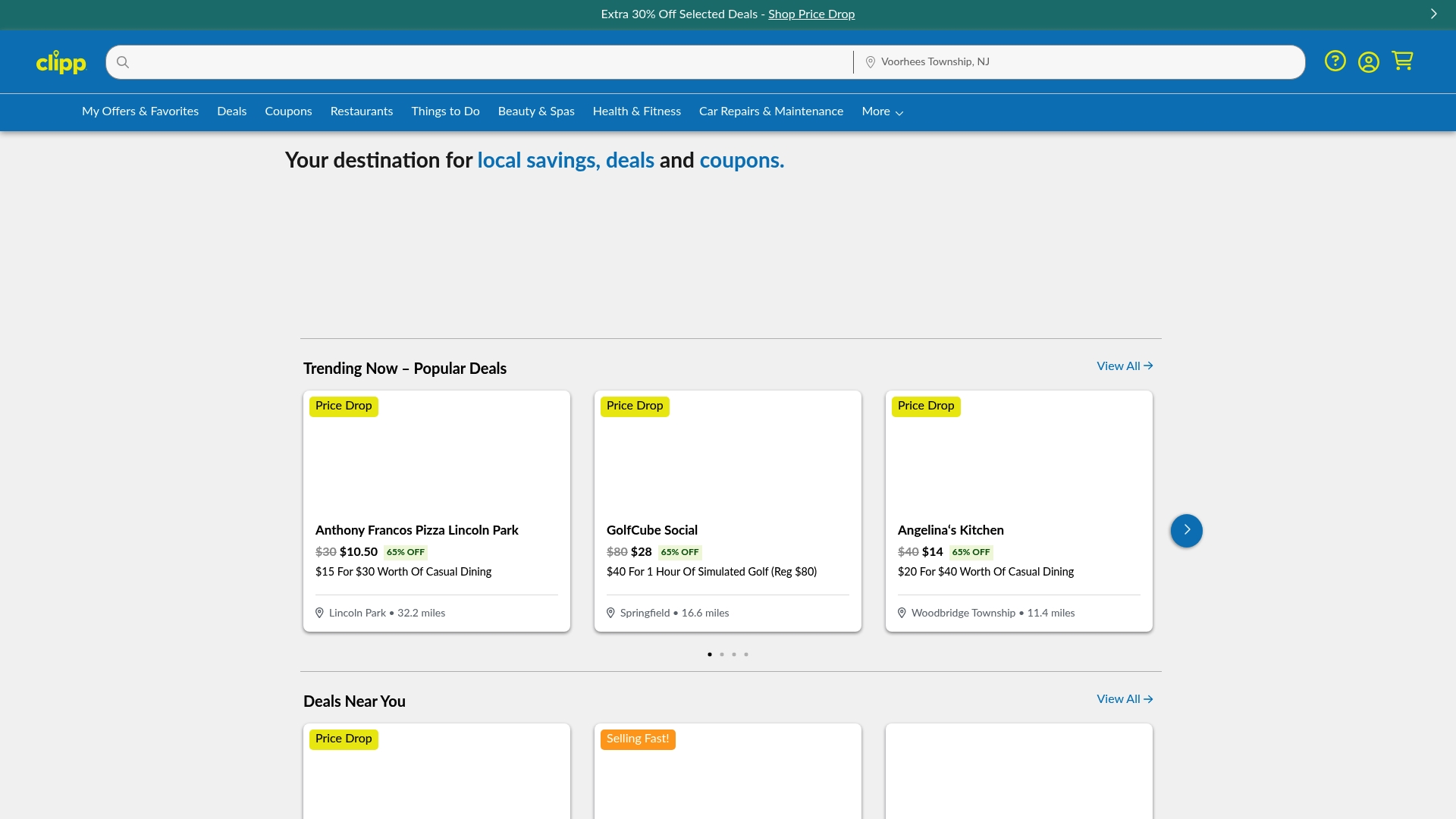
Clipp.com makes it easy to go from strategy to savings without the search. Browse local deals in Ashburn to see what's available near you right now, from restaurant discounts to service promos. If coupons are more your style, the find Ashburn coupons page pulls together the best current offers by category. And for the fastest redemption experience, the Clipp.com mobile app puts everything in your pocket so you're always ready to save when the moment comes.
Frequently asked questions
Where are the best places to find local coupons?
The best places are official store apps, coupon websites, local newspapers, and neighborhood flyers. Store apps, loyalty programs, and browser extensions like Honey are especially reliable for finding both local and digital offers.
Can I combine or stack local coupons?
Many stores allow you to stack a manufacturer coupon with a store coupon, and sometimes add a cashback app for extra savings. Always check store policy first, since stacking manufacturer and store coupons isn't universally permitted.
Why did my coupon fail at checkout?
Coupons often fail because of expiration, minimum spend requirements, restrictions by ZIP code, or cashier error. Single-use codes and geo-restrictions are especially common with local deals, so always verify terms before you shop.
Is it better to use digital or paper coupons?
Digital coupons are more convenient for most shoppers, but paper coupons can still score strong in-store deals at neighborhood businesses. Digital dominates but paper persists for local commerce, so keeping both options open gives you the most flexibility.
How can I avoid impulse buying just to use a coupon?
Check whether a coupon fits something you genuinely planned to buy before you commit. Calculating true value before adding items to hit a minimum spend is the simplest way to stay on budget and still save.