

TL;DR:
- True exclusive deals are limited to loyalty members, expire quickly, and often include extra perks beyond discounts. They foster customer loyalty and community support, leading to better long-term savings and local business health. Comparing and stacking these offers smartly, along with planning ahead, maximizes their value while avoiding gimmicks.
Scrolling through your inbox or social feeds, you've probably seen dozens of "deals" that turn out to be the same price you'd pay anywhere else. Real exclusive offers work differently. They're tied to memberships, platforms, or loyalty programs that most shoppers never bother joining, which means the savings are genuinely reserved for those in the know. This article breaks down exactly what separates a true exclusive deal from a recycled discount, where to find them near you, and how to evaluate and stack them so every dollar goes further on dining, entertainment, wellness, and more.
Table of Contents
- What makes a deal truly exclusive?
- Top sources of exclusive local deals
- How to compare and qualify exclusive offers
- Smart strategies for maximizing exclusive deals
- Our take: Why community-focused exclusive deals beat generic discounts
- How to start saving with local exclusive deals today
- Frequently asked questions
Key Takeaways
| Point | Details |
|---|---|
| Define exclusive deals | Exclusive deals are member-only discounts not available to the general public and usually offer higher savings. |
| Find deals locally | Subscription cards, loyalty programs, digital coupons, and partner businesses all provide ways to save on local activities. |
| Compare before joining | Always compare offers based on real savings, requirements, and flexibility to get the most value. |
| Use smart strategies | Avoid impulse buys, verify terms, and track your savings to maximize benefits from exclusive deals. |
| Choose community first | Supporting local exclusive deal programs builds community and delivers long-term win-win savings. |
What makes a deal truly exclusive?
To begin saving seriously, you need to know exactly what counts as an exclusive deal and why these are better than run-of-the-mill coupons.
A generic sale is open to everyone who walks through the door. An exclusive deal is different. It's restricted to a defined group, whether that's loyalty program members, newsletter subscribers, app users, or card holders. That restriction is what makes the savings real. The business can afford to go deeper on a discount because they know the person redeeming it is already engaged and likely to return.
True exclusive deals typically share a few key features:
- Member-only access: You must sign up, subscribe, or join to see the offer at all.
- Limited time windows: The deal expires, which creates urgency and prevents dilution.
- Partnership with local businesses: The merchant agrees to honor the deal specifically for a partner platform's audience.
- Added perks beyond price: Free items, early access, double reward points, or complimentary upgrades.
Here's why businesses bother creating these offers at all. Research shows that loyalty members spend 12 to 18% more per transaction than non-members. A 5% improvement in customer retention can boost profits anywhere from 25 to 95%. For restaurants specifically, loyalty programs drive 39% more visits, and members come back 2.5 times more frequently. The math works for local businesses, and when the math works for them, the deals get better for you.
"Exclusive deals aren't just about the discount itself. They reflect a business's investment in its best customers, and that relationship typically pays off in ways a simple sale never could."
When you boost loyalty with exclusive offers, you're participating in a system designed to reward you for coming back. That's fundamentally different from clipping a generic coupon that anyone can use.
Top sources of exclusive local deals
Now that you've got the definition, let's look at where you can actually find and access exclusive deals near you.
The landscape of exclusive local deals has expanded significantly. You're no longer limited to cutting out newspaper coupons or hoping for a clearance sign in a store window. Here are the main categories worth exploring:
-
Subscription dining cards: These are monthly memberships that unlock restaurant-specific deals unavailable to the general public. A standout example is the Broke-Ass Stuart Delicious Card 2026, which costs $10 per month and grants access to exclusive dining discounts at 50+ local San Francisco restaurants, including 20% off meals and free menu items, with up to $750 in potential savings. That's a remarkable return on a $120 annual investment.
-
Loyalty apps at major and local chains: Chain restaurants and local independents alike now run app-based programs. The best ones let you stack rewards, unlock birthday perks, and access member-only flash deals. Some programs even allow you to combine digital coupons with an ongoing in-store sale.
-
Digital coupon platforms: Aggregators pull together promo codes and digital vouchers for local services, shops, salons, gyms, and restaurants in one place. Checking real-life coupon examples can show you how these savings translate in real family budgets.
-
Wellness studios and entertainment venues: Many gyms, yoga studios, escape rooms, and family entertainment centers offer membership perks or introductory packages for app subscribers and email list members. These are often heavily discounted compared to walk-in rates.
-
Local business partnerships and influencer codes: Smaller neighborhood businesses sometimes partner with local bloggers or community influencers to distribute unique discount codes. These are genuinely exclusive because they're audience-specific.
-
Combo dining deals: Some local dining spots offer exclusive dining combos that bundle items together at prices you won't find on the standard menu.
Pro Tip: Sign up for newsletters from your five or six favorite local spots. Many businesses email their best exclusive deals directly to subscribers before posting them publicly or to any platform. This takes two minutes and can save you real money every month.

If you want to see how these categories work together in practice, the complete guide to local discounts walks through specific scenarios for dining, wellness, and entertainment savings in detail.
How to compare and qualify exclusive offers
With so many options, knowing how to evaluate exclusive offers helps you avoid gimmicks and focus on real savings.
Not every "exclusive" deal is worth your time or money. Some subscription services charge more than they save. Some loyalty programs require you to spend so much before redeeming that the math never works out. Here's a practical framework for comparing your options:
- Calculate real savings against the cost to access. A $10/month subscription card is only worth it if you'll realistically redeem at least $10 in deals monthly.
- Check participating locations. A deal is only useful if a location you actually visit is on the list.
- Understand stacking rules. Can you combine this deal with another coupon or a sale already in progress?
- Review expiration terms. Monthly deals that roll over are more forgiving than one-time-use codes with tight windows.
- Confirm minimum spend requirements. Some deals require a $30 minimum purchase to unlock a $5 discount. That's only useful if $30 is your natural spend level.
Here's a comparison table to help you see how the main deal types stack up:
| Deal type | Potential savings | Access cost | Ease of use | Stackable? |
|---|---|---|---|---|
| Subscription dining card | High ($50 to $750/month) | $5 to $15/month | Easy | Sometimes |
| Loyalty app (chain) | Medium | Free | Very easy | Often yes |
| Digital coupon platform | Medium to high | Free | Easy | Yes |
| Local business partnership | Variable | Free | Moderate | Rarely |
| Influencer/blogger codes | Low to medium | Free | Easy | Rarely |
Stacking is where serious savers find the most value. Consumer Reports documented a clear example: ice cream priced at $5.99 per unit dropped to 2 for $8 during a store sale, then a $1 digital coupon brought the total down further. That's three separate savings mechanisms working together on a single purchase. The same principle applies at local restaurants and service providers when you combine a loyalty reward with an active deal from a coupon platform.
Reviewing restaurant coupon types can help you understand which formats give you the most flexibility when you're trying to stack. And for a deeper look at digital options specifically, digital coupon tips covers common pitfalls alongside best practices.
Smart strategies for maximizing exclusive deals
You know how to compare offers. Now let's cover the strategies top savers use every week.
Having access to exclusive deals is only half the equation. How you use them determines whether you actually save money or just feel like you are. Here are the habits that separate disciplined deal-seekers from impulse spenders:
-
Plan your outings and purchases before searching for deals. Decide you want to try a new local restaurant this Friday, then search for a deal. Don't browse deals and let them decide where you eat. This single habit prevents overspending dressed up as saving.
-
Verify every code before you go. Nothing is more frustrating than arriving at a restaurant expecting 20% off and discovering the deal expired or the location isn't participating. A 30-second check saves real embarrassment.
-
Prefer mobile wallet passes over dedicated apps. Expert analysis shows that mobile wallet passes see 65 to 75% adoption rates at restaurants, compared to just 10 to 20% for standalone loyalty apps. Wallet passes live in Apple Wallet or Google Pay, so you don't need to download a new app for every business.
-
Track your monthly savings. If you're paying for a subscription service, keep a simple note of what you've actually redeemed. If your savings don't exceed the fee by a comfortable margin, cancel and reallocate.
-
Look for stackable combinations actively. Don't assume a deal can or can't be stacked. Ask. Many local businesses will combine a loyalty reward with an active platform deal if you simply mention it at checkout.
"The best exclusive deals reward preparation. A few minutes of planning before you dine out or book a service can realistically save you $20 to $50 per outing when you layer loyalty points, digital coupons, and a membership deal together."
Pro Tip: Set a calendar reminder at the start of each month to check your favorite deal platforms and loyalty apps for new offers. Many exclusive deals refresh monthly and are gone within days if they're genuinely good.
For a broader set of approaches, proven coupon strategies covers real-world tactics that work consistently. If dining is your main focus, saving on dining out walks through the most reliable methods restaurant deal-seekers use. And if you want to understand what's working right now in your area, trending deals explained breaks down the current landscape.
Our take: Why community-focused exclusive deals beat generic discounts
After learning the strategies and sources, here's a perspective you won't find on ordinary deal sites, the bigger picture of why local exclusivity pays off.
Generic mass-market discounts attract bargain hunters who will never return once the sale ends. Local exclusive deals do something fundamentally different. They build a recurring relationship between a neighborhood business and its most engaged customers. That relationship has compounding value for everyone involved.
Here's what gets overlooked: when you consistently use a local restaurant's loyalty program or redeem deals through a community-focused platform, you're not just saving money on a single meal. You're signaling to that business that their investment in exclusive offers is working. And businesses that see their loyalty programs succeed invest more in those programs, which means better deals and better perks for members over time.
The statistics bear this out directly. Restaurant loyalty programs drive a 39% increase in visit frequency, and members come back 2.5 times more often. A 5% improvement in retention can increase business profits by up to 95%. This isn't abstract. When a local diner thrives because its loyalty members return consistently, it can afford to offer a free appetizer or a deeper discount to those same members next month.
There's a community dimension here that impersonal national deal sites miss entirely. When your neighborhood gym offers an exclusive rate through a local platform, and enough community members use it, that gym stays open. The yoga studio, the family-owned pizza place, the local spa. These businesses survive on loyal local spending. Exclusive deals are one of the most direct ways to support your community while benefiting personally.
We'd also push back on the assumption that free deals are always better than paid subscriptions. A $10/month dining card that genuinely saves you $100 is a far better investment than ten free coupons you never use. The local voting power you exercise by consistently patronizing neighborhood businesses with exclusive deal programs creates a feedback loop that benefits everyone in your area. Think of your deal-seeking as community investment, not just personal savings.
How to start saving with local exclusive deals today
Ready to save more on your next meal, spa visit, or family event? Here's how to put what you've learned into action with trusted resources.
Clipp.com is built exactly for this moment in your savings journey. The platform aggregates verified, curated exclusive deals across dining, entertainment, wellness, home services, and more, all filtered by your neighborhood so you only see offers that are actually useful to you. You can browse trending deals, search by category, or filter by location. Deals are printable or savable directly to your phone.
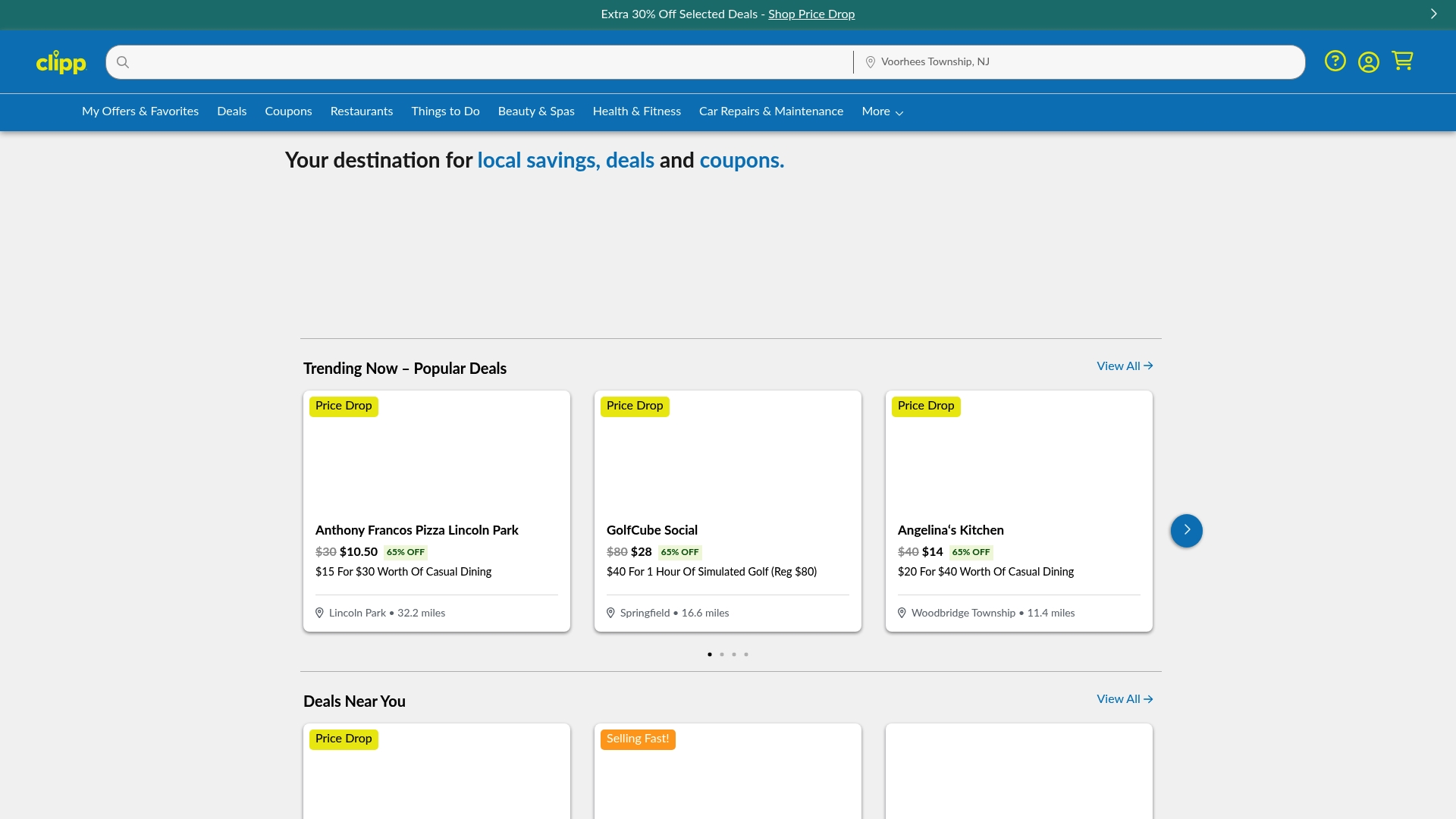
Whether you're looking for a discounted dinner reservation, a wellness package at a local studio, or a family entertainment deal for the weekend, Clipp.com surfaces the options that matter most. New deals are added regularly, so checking in at the start of each week takes less than five minutes and can unlock savings you'd otherwise never find. Start browsing deals near you today and put this week's budget to work smarter.
Frequently asked questions
How do subscription dining cards like Delicious Card work?
You pay a monthly fee (for example, $10) to access member-only dining deals at local restaurants, often worth hundreds in total potential savings. The Broke-Ass Stuart Delicious Card offers deals at 50+ SF restaurants, including 20% off and free items, for up to $750 in savings per year.
Are digital coupons safer or better than paper deals?
Digital coupons are easier to track, less likely to expire unnoticed, and can stack with in-store sales for deeper discounts. For example, a digital coupon stacked with an active 2-for-1 sale can bring your per-unit cost well below what any paper coupon achieves alone.
What's the difference between exclusive and regular discounts?
Exclusive deals are restricted to members of a specific program and typically deliver better savings than public promotions. Loyalty program members spend 12 to 18% more per visit and return 2.5 times more frequently, which is why businesses offer them deeper rewards.
How do I avoid scams or invalid promo codes?
Always verify codes directly on the merchant's official website or app before visiting, and avoid any platform that asks for excessive personal information just to reveal a deal. Consumer Reports recommends using wallet passes over third-party apps for verified, friction-free redemptions at local restaurants and retailers.