

Digital coupons have quietly overtaken paper clipping as the go-to savings method for millions of American families. The shift happened fast, and the numbers back it up: the digital coupon market is on track to grow from $8.7 billion in 2024 to $36 billion by 2032. But not every shopper is getting an equal slice of those savings. Some consumers face real barriers, from tech access to privacy trade-offs, that paper coupons never created. This guide breaks down how digital coupons work, who benefits, what risks to watch for, and how to squeeze every dollar of value out of them.
Table of Contents
- What are digital coupons and how do they work?
- The impact of digital coupons on everyday savings
- Who benefits most and who gets left out?
- Risks and challenges: security, privacy, and brand impact
- Maximizing your savings: practical tips for using digital coupons
- Find and maximize your local savings with Clipp.com
- Frequently asked questions
Key Takeaways
| Point | Details |
|---|---|
| Digital coupons drive higher savings | Compared to paper coupons, digital offers are redeemed more often and generate bigger discounts for consumers. |
| Access is not universal | Not all consumers have equal tech access, so solutions and legislative fixes are emerging for vulnerable groups. |
| Privacy and security matter | Digital coupon use comes with risks like fraud and data privacy, so choose trusted platforms and monitor your account. |
| Maximize by combining strategies | Combine digital coupons with loyalty programs, cashback offers, and paper deals for best savings results. |
What are digital coupons and how do they work?
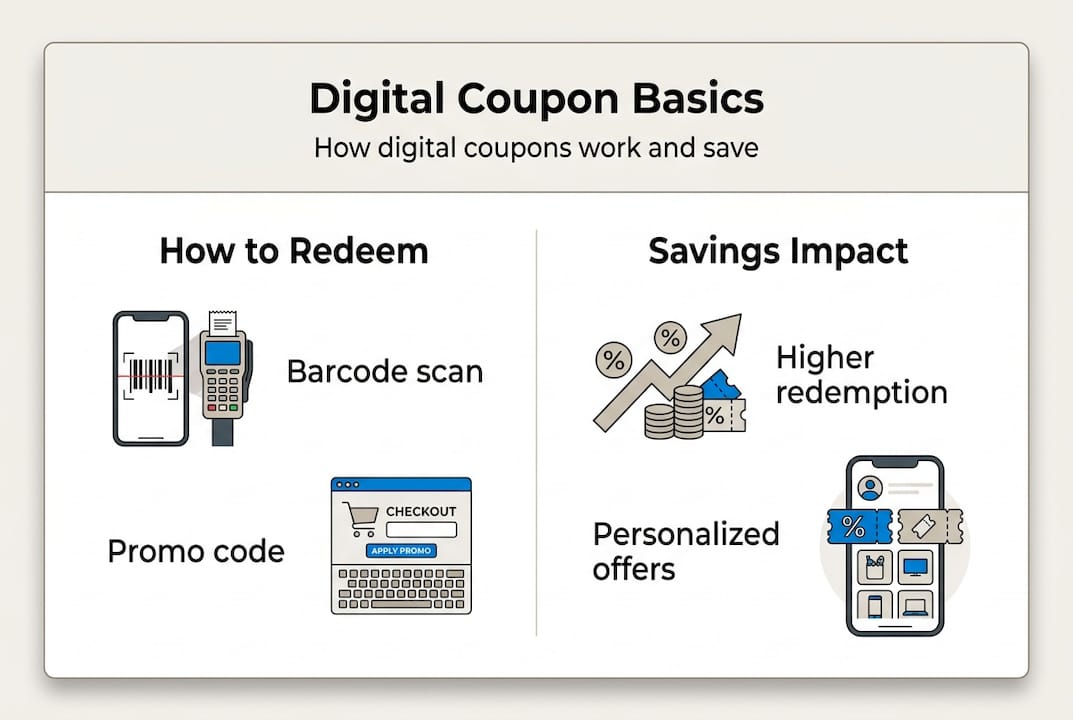
A digital coupon is any discount offer you access through a screen rather than a printed page. That covers everything from a barcode you pull up on your phone at the register to a promo code you type in at online checkout. The format has exploded because it is faster, cheaper to distribute, and far easier to personalize than paper.
Digital coupons are accessed via retailer apps or loyalty programs, loaded directly to your account or scanned at checkout, and often tailored to your purchase history. That last part matters. A store that knows you buy coffee every week can push you a coffee discount before you even think to look for one.
Here are the most common ways digital coupons reach you and how you redeem them:
- Retailer apps and loyalty programs: Download the app, clip the deal to your account, and the discount applies automatically at checkout.
- Email and text offers: Brands send personalized codes directly to your inbox or phone.
- Coupon platforms and deal sites: Aggregators collect offers from multiple brands in one place.
- Cashback apps: You shop normally, submit your receipt, and get money back.
Redemption methods include scannable barcodes, promo codes at checkout, and receipt submission for cashback. Understanding how voucher codes work can help you avoid common mistakes like entering expired codes or missing stacking opportunities.
The impact of digital coupons on everyday savings
The real-world savings from digital coupons are not trivial. Families using them consistently can cut meaningful amounts from their dining, entertainment, and service budgets every single month.
The scale of adoption tells the story. Digital coupons reach up to 10x the redemption rate of paper coupons, and 33% of all coupon redemptions are now digital. The market itself is projected to hit $36 billion by 2032, up from $8.7 billion in 2024. That growth is being driven by everyday consumers, not just extreme couponers.
Here is a quick look at how savings stack up across common spending categories:
| Category | Typical paper coupon savings | Typical digital coupon savings |
|---|---|---|
| Dining out | 5-10% | 10-25% |
| Grocery staples | 5-15% | 10-20% |
| Entertainment | Rare | Common via apps |
| Home services | Uncommon | Widely available |
| Wellness and fitness | Rare | Frequent via loyalty apps |
For families eating out regularly, restaurant coupon savings through digital platforms can add up to hundreds of dollars a year. The key is consistency, not luck.

Pro Tip: Sign up for loyalty programs at your three most-visited local spots. Most programs unlock personalized deals within the first week, and those targeted offers almost always beat the generic discounts available to everyone.
Who benefits most and who gets left out?
Digital coupons are genuinely convenient for anyone with a smartphone and a reliable internet connection. You can browse deals on your commute, clip offers in seconds, and never lose a coupon at the bottom of your bag again. That convenience is real.
But the picture is not entirely rosy. The digital divide disadvantages low-income households and seniors who lack smartphones or the tech skills to navigate apps. For these groups, the shift away from paper coupons is not a convenience upgrade. It is a barrier that cuts them off from savings they used to access easily.
Here is how access breaks down across different consumer groups:
| Consumer group | Access level | Main challenge |
|---|---|---|
| Smartphone users with data | High | Minimal |
| Seniors without tech skills | Low | App complexity |
| Low-income households | Variable | Device and data costs |
| Rural consumers | Moderate | Connectivity gaps |
Some retailers have responded with in-store kiosks where shoppers can browse and print digital deals without a smartphone. Digital coupon legislation in several U.S. cities and states now requires businesses to offer paper alternatives, recognizing that a fully digital system leaves vulnerable groups behind.
Privacy is another concern worth naming. To get targeted deals, you typically hand over purchase history and personal data. That data can be used for what researchers call surveillance pricing, where prices are adjusted based on what a retailer thinks you are willing to pay.
"The same data that gets you a personalized discount can also be used to charge you more for something else."
For mobile coupon access, platforms that are transparent about data use and give you control over your preferences are worth prioritizing.
Risks and challenges: security, privacy, and brand impact
Digital coupons are not without their dark side. Fraud is a real and growing problem in the coupon ecosystem, and consumers can get caught in the middle.
Here are the main risks to know before you clip:
- Coupon counterfeiting: Fake barcodes or codes circulate on social media and unofficial sites, often leading to declined discounts or account flags.
- Account takeovers: Hackers target loyalty accounts loaded with points or credits, draining value before you notice.
- Stacking abuse: Some users exploit loopholes to combine offers in ways that were never intended, which prompts retailers to tighten restrictions for everyone.
- App glitches: Technical errors can cause valid coupons to fail at checkout, leaving you scrambling at the register.
Fraud risks are prevented by unique codes, real-time validation, and geo-restrictions that limit where and how a coupon can be used. Retailers are getting smarter about this, but the arms race between fraud prevention and bad actors is ongoing.
On the brand side, heavy discounting through digital coupons can erode perceived value. Digital coupon backlash from some retailers reflects concern that constant promotions train customers to never pay full price, which squeezes margins and can cheapen a brand's image over time.
Pro Tip: Only download coupon apps from official app stores, and always check coupon expiration tips before heading to the store. An expired code at checkout wastes your time and can hold up the line.
Maximizing your savings: practical tips for using digital coupons
Knowing the risks is half the battle. The other half is building a simple system that keeps savings flowing without turning coupon hunting into a second job.
Here is a practical checklist to get the most from digital coupons:
- Join loyalty programs first. Most of the best digital deals are exclusive to members. Sign up for free programs at your favorite restaurants, grocery stores, and service providers.
- Use a dedicated email address. Create a separate inbox for deal emails so your main inbox stays clean and you never miss a time-sensitive offer.
- Check cashback apps weekly. Apps like these often have rotating offers that reset every week. A quick five-minute check can surface deals you would otherwise miss.
- Look for stackable offers. Some retailers allow you to combine a digital coupon with a loyalty reward or a sale price. Always check the terms before checkout.
- Ask about in-store kiosks. If you or someone in your family does not use a smartphone, many larger retailers have kiosks near the entrance where you can browse and print digital deals.
For local consumers and families, digital coupons enable affordable dining and entertainment through apps, but they do require loyalty sign-up to unlock the best offers. The workarounds exist, and they work.
For dining specifically, restaurant savings strategies that combine loyalty rewards with digital coupons consistently deliver the highest per-meal savings. Pair a restaurant's own app deal with a cashback offer from a third-party platform, and you can stack savings that paper coupons could never match.
Pro Tip: Combine digital and paper offers when the store allows it. Some retailers still accept both, and using them together on a single purchase can double your discount on qualifying items.
Find and maximize your local savings with Clipp.com
You now have a clear picture of how digital coupons work, where the real savings live, and what pitfalls to sidestep. The next step is putting that knowledge to work with deals that are actually available near you.
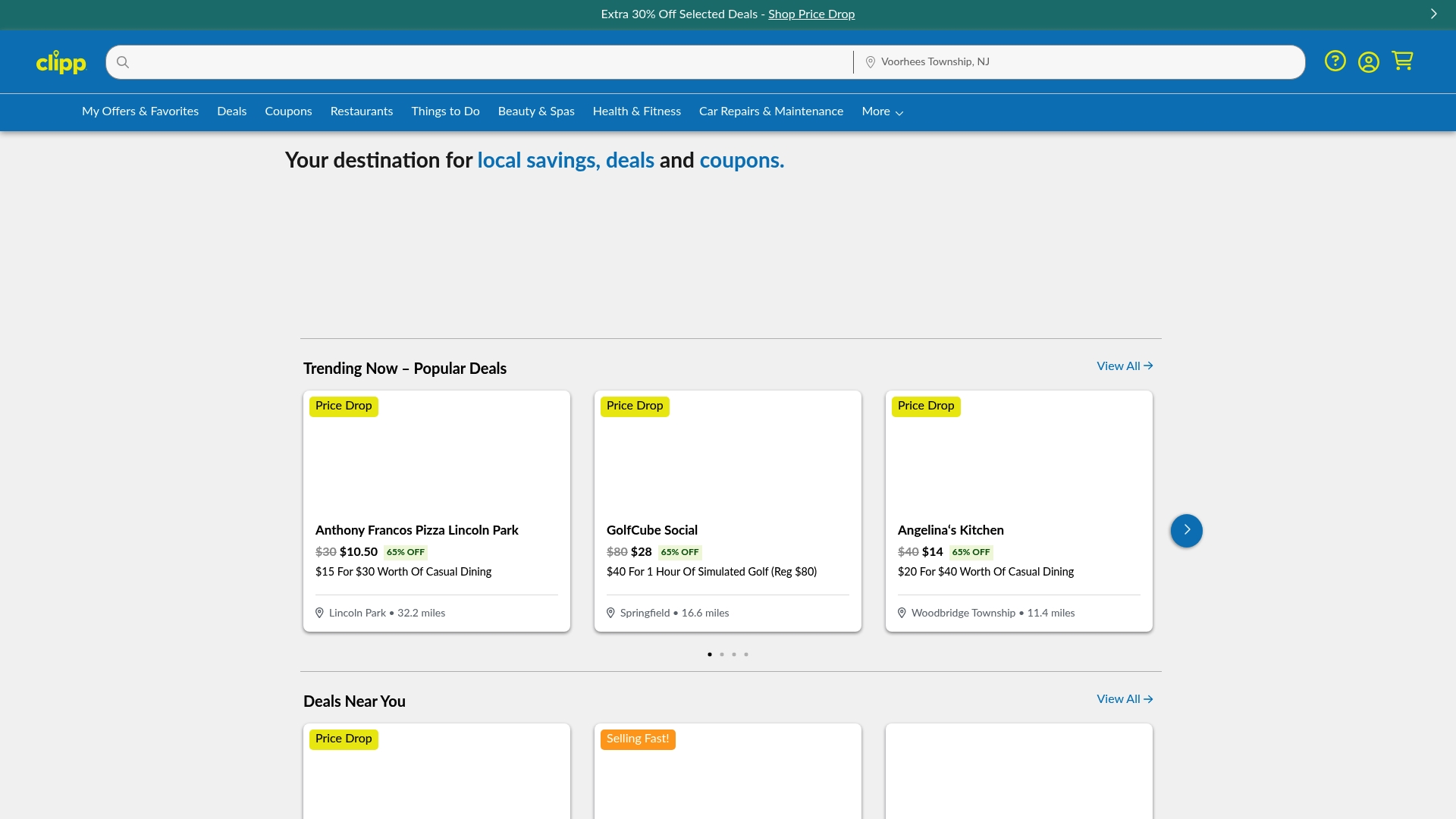
Clipp.com makes it easy to browse local deals across dining, entertainment, home services, wellness, and more, all in one place. Whether you are hunting for a discount on a family dinner or a deal on a local gym membership, you can find coupons near you without downloading a dozen separate apps. For home improvement, pet care, and other everyday needs, the local service deals section surfaces offers from businesses in your neighborhood. It is the kind of one-stop savings hub that makes the tips in this guide easy to act on right away.
Frequently asked questions
How can I use digital coupons without a smartphone?
Some stores offer in-store kiosks where you can browse and print digital deals, and others maintain paper alternatives on request. In-store kiosks help non-smartphone users access the same savings without needing a device.
Are digital coupons safe from fraud?
Most reputable platforms protect offers with unique codes and real-time validation, but you should always use trusted sources. Unique codes and geo-restrictions are the primary defenses against counterfeiting and account abuse.
Can digital coupons save me more than paper coupons?
Yes, and the gap is significant. Digital redemption rates reach up to 10 times those of paper coupons, and the personalized targeting means you are more likely to get discounts on things you actually buy.
What's the biggest downside of digital coupons?
The two main drawbacks are limited access for people without smartphones and the privacy trade-off that comes with sharing purchase data. Non-digital users and privacy risks remain the most cited concerns among consumer advocates.
Is personal data required for most digital coupon offers?
Most digital coupons require at least a loyalty account sign-up, and many use your purchase history to personalize offers. Data sharing for targeted discounts is standard practice across major retail platforms.