

TL;DR:
- Effective coupons offer genuine discounts, come from trusted sources, and are relevant to your needs.
- Classic strategies like in-store, print, and BOGO deals remain effective when used wisely.
- Digital and advanced local strategies focus on personalization and inventory control for better value.
Not every coupon is worth your time. Some deals genuinely stretch your budget, while others just shuffle money around without real benefit. In-store coupons triple promoted brand sales, yet plenty of flashy promotions deliver nothing close to that impact. The challenge is knowing which strategies actually work and which ones waste your energy. This article walks you through the criteria for spotting a genuinely valuable deal, the classic and digital tactics worth your attention, and the advanced approaches used for local entertainment, wellness, and home services. By the end, you will have a clear framework for making every coupon count.
Table of Contents
- Understand the criteria for effective coupon strategies
- Classic coupon strategies: In-store, print, and BOGO
- Digital and personalized coupon strategies
- Situational and advanced coupon strategies for local entertainment, wellness, and services
- Our hard-won lessons: What most coupon guides miss
- Start saving smarter with local deals
- Frequently asked questions
Key Takeaways
| Point | Details |
|---|---|
| Choose genuine deals | Focus on coupons with real, FTC-compliant savings and avoid misleading offers. |
| Stack digital rewards | Combine app coupons and loyalty programs to maximize savings on everyday expenses. |
| Use situational offers | Look for time-sensitive or event-based discounts for entertainment, wellness, and services. |
| Avoid brand erosion | Beware of deep discounts that may impact service quality or brand reputation. |
Understand the criteria for effective coupon strategies
Before you clip anything, you need a filter. Not all discounts are created equal, and applying the wrong strategy can cost you more than it saves. Effective coupon strategies share a few core traits: they deliver genuine price reductions, they come from trusted sources, and they are relevant to what you actually buy.
Here is what to look for when evaluating any coupon or deal:
- Genuine savings: The discount must reflect a real price reduction, not an inflated original price designed to make the markdown look impressive.
- Source credibility: Deals from established platforms, brand apps, or verified local merchants carry far less risk than random third-party sites.
- Relevance: A coupon for a restaurant you would never visit is worthless, no matter the percentage off.
- Expiration clarity: Vague or missing expiration dates are a red flag. Good deals are transparent.
- Stacking potential: The best coupons can be combined with loyalty rewards or other offers for compounded savings.
Research backs this up. In-store coupons drive category expansion, meaning they bring new customers into a product category rather than just shifting existing buyers. That is a sign of a healthy, well-structured promotion. On the flip side, deep discounts risk displacing full-price customers in wellness and dining, which can quietly erode the quality of the service you are trying to enjoy.
Legal compliance matters too. The FTC requires genuine price reductions and prohibits misleading comparisons like fake "former prices" that were never actually charged. If a deal looks too dramatic to be real, it probably is.
Brand erosion is a real risk with deep discounting. When a local gym or salon runs 70% off promotions constantly, it trains customers to never pay full price. That is bad for the business and often signals lower quality over time. Understanding digital coupon risks and benefits helps you stay on the right side of this line.
Pro Tip: Prioritize controlled offers, like member-only discounts or loyalty tiers, over blanket public promotions. These tend to deliver more consistent value without the quality trade-offs.
Classic coupon strategies: In-store, print, and BOGO
With criteria in mind, it is time to look at the classic strategies you see every day. These are the formats most consumers encounter first, and they remain highly effective when used correctly.
In-store coupons are distributed at the point of purchase, often at checkout or on product shelves. They are immediate, easy to use, and can triple sales for the promoted brand while generating positive spillover effects for nearby products. For local restaurants and service businesses, in-store coupons create urgency and reward customers who are already engaged.
Print coupons from newspapers, mailers, or in-store flyers still hold value, especially for older demographics and local businesses with limited digital presence. They are tangible and easy to understand, but they require more effort to collect and organize.
BOGO (buy one, get one) deals are popular but legally tricky. The FTC cautions against misleading BOGO deals where the base price is inflated to offset the "free" item. A legitimate BOGO means you are genuinely getting the second item at no extra cost based on the normal selling price.
"The most effective coupons are the ones that expand what you buy, not just discount what you already planned to purchase."
Here is a quick comparison to help you choose:
| Strategy | Best for | Key strength | Main risk |
|---|---|---|---|
| In-store coupons | Groceries, dining, local retail | Immediate use, high impact | Limited to physical visit |
| Print coupons | Local services, mailers | Tangible, no app needed | Easy to lose or forget |
| BOGO deals | Restaurants, entertainment | High perceived value | Legal pitfalls if prices inflated |
For dining specifically, knowing the restaurant coupon types available in your area helps you match the format to your actual habits. Families, for instance, benefit most from strategies covered in dining coupon examples that stack multiple discount layers.
- In-store formats reward loyal, repeat visitors
- Print coupons work well for first-time trials at local businesses
- BOGO offers are strongest when the base price is verified beforehand
Digital and personalized coupon strategies
Beyond classics, digital strategies are now leading the way for local savings. Mobile apps, browser extensions, and geo-targeted promotions have changed how deals reach you, and the results are measurable.

Personalized offers can lift revenue 5 to 15%, with real-world examples from brands like Grubhub and 8fit showing how contextual timing and user behavior data make discounts far more relevant. When a coupon arrives right as you are searching for a nearby lunch spot, it converts. Generic mass-market coupons rarely match that performance.
Here is how the top digital coupon formats compare:
| Format | Example brands | Typical uplift | Best use case |
|---|---|---|---|
| Geo-targeted push offers | Grubhub, local apps | 10 to 15% revenue lift | Dining, entertainment |
| Time-sensitive flash deals | Restaurant apps, Clipp.com | High urgency conversion | Last-minute bookings |
| Personalized loyalty offers | 8fit, gym apps | 5 to 12% engagement boost | Wellness, fitness |
| Weather-triggered promotions | Coffee chains, delivery apps | Situational uplift | Comfort food, delivery |
Digital coupons also carry some risks worth knowing:
- Privacy trade-offs: Personalized offers require apps to track your location and behavior. Read permissions carefully.
- Fake deals: Some platforms inflate original prices to make digital discounts look bigger than they are.
- Over-discounting traps: Chasing every digital deal can lead to impulse spending that cancels out savings.
Pro Tip: Stack digital offers with your existing loyalty rewards. Many restaurant coupon savings can be layered with points programs for compounded value. Always check the stacking policy before checkout.
The smartest digital coupon users treat their apps like tools, not entertainment. They set alerts for categories they already spend in, verify the base price before claiming a deal, and understand the digital coupon smart savings principles that separate real value from marketing noise.
Situational and advanced coupon strategies for local entertainment, wellness, and services
Let us look at strategies specifically designed for entertainment, wellness, and local services. These categories have unique dynamics that make standard coupon tactics less effective and specialized approaches far more rewarding.
Controlled inventory discounts, like those used by the now-retired Savored platform, preserved brand value by limiting the number of discounted seats at a restaurant rather than opening the floodgates to unlimited cheap reservations. Controlled inventory discounts preserve brand value compared to deep discount models like Groupon, which risk flooding a business with price-sensitive customers who never return at full price. For consumers, this means the deal you get from a controlled offer is more likely to reflect the actual quality of the experience.
Personalized offers drive engagement in wellness and entertainment too, especially when tied to timing, like a gym discount in January or a spa deal ahead of a local event.
Here is how to spot advanced local deals worth your time:
- Check if the offer is inventory-limited or time-gated, which signals a real constraint rather than a permanent markdown.
- Verify the business's regular pricing before claiming the deal.
- Look for event-triggered offers tied to local happenings, sports seasons, or weather patterns.
- Prioritize platforms that vet their merchant partners for quality and compliance.
- Read the fine print on service-based deals, especially for home repair or cleaning, where scope limitations can reduce the value significantly.
Best practices for service-based coupons:
- For home repair and cleaning, confirm what is included in the discounted service scope
- For fitness and wellness, check membership lock-in terms before redeeming intro offers
- For entertainment, verify seat quality or experience tier when booking discounted tickets
- Always check coupon expiration tips to avoid losing value at the last minute
- Cross-reference deals with restaurant coupon strategies to understand how dining-specific tactics translate to other service categories
"The best local deals are not the loudest ones. They are the ones structured to protect both your experience and the business's ability to deliver it."
Our hard-won lessons: What most coupon guides miss
Most coupon guides focus on where to find deals. Very few talk about what you lose when you chase the wrong ones. Here is the uncomfortable truth: the biggest discount is rarely the best deal.
When a local business runs a 70% off promotion, it is often a sign of desperation, not generosity. The quality of service you receive at that price point may not match what you would get as a full-price customer. Savvy deal seekers look at the reputation of the business first, the structure of the offer second, and the headline number last.
Stacking ability and expiration clarity are two factors most guides skip entirely. A coupon that expires in 48 hours and cannot be combined with anything else is worth far less than a modest 15% off that stacks with your loyalty points and stays valid for a month. Learning to maximize restaurant savings through smarter stacking, rather than deeper discounts, is the mindset shift that separates occasional savers from consistent ones.
The right coupon does not just save money. It builds smarter spending habits over time.
Start saving smarter with local deals
You now have a solid framework for evaluating, choosing, and stacking coupon strategies across dining, wellness, entertainment, and home services. The next step is putting it into practice with deals that are actually worth your time.
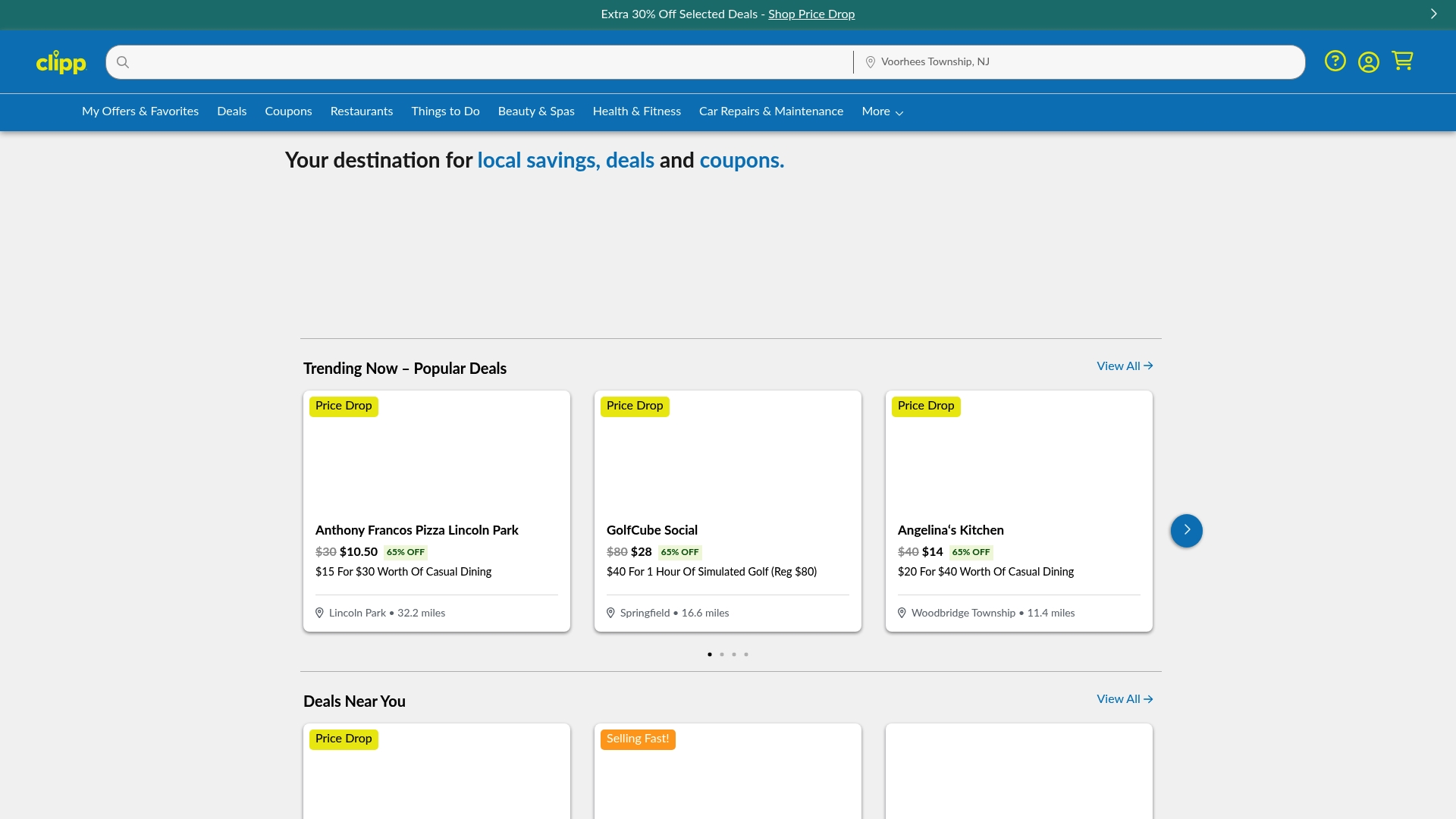
Clipp.com makes that easy. Browse local deals curated for your area, explore coupons across every category you care about, and find savings on local services from home repair to fitness. Every offer on the platform is vetted and organized so you spend less time searching and more time saving. Whether you are planning a night out or booking a home cleaning, Clipp.com connects you with the right deal at the right time.
Frequently asked questions
How do I know if a coupon deal is legitimate?
Look for genuine price reductions with transparent original pricing, and avoid BOGO offers or "former price" comparisons that seem inflated. The FTC requires genuine reductions and prohibits misleading discount claims, so any deal that cannot pass that standard is worth skipping.
Can digital coupons be stacked for more savings?
Yes, many digital coupons can be layered with store loyalty rewards or other active promotions, but always verify the stacking policy before you redeem. Personalized offers lift revenue precisely because they are designed to complement existing customer relationships, not replace them.
Do deep discounts always mean better savings?
Not at all. Deep discounts risk displacing full-price customers and can signal lower service quality, so controlled inventory offers often deliver more genuine value than a dramatic headline percentage.
How can I find the best coupon strategies for local entertainment?
Focus on event-based or time-limited offers from trusted platforms that vet their merchants. Personalized contextual offers tied to your location and timing consistently outperform generic mass discounts for entertainment and dining categories.