

Most people grab the first coupon they see and call it a day. But city-specific deal platforms can cut your dining and entertainment bills by 20% to 70%, and the majority of consumers never tap into that full range. The difference between a mediocre deal and a genuinely great one often comes down to knowing which platform fits your city, your habits, and your favorite spots. This guide breaks down exactly how city-specific deals work, compares the top models side by side, and gives you a clear playbook for stacking savings like a pro.
Table of Contents
- What are city-specific deals?
- How leading city-specific deal models work
- Why deals matter for both consumers and local businesses
- How to maximize city-specific deal savings
- What to watch out for: Pitfalls and mythbusting
- Find the best city-specific deals near you
- Frequently asked questions
Key Takeaways
| Point | Details |
|---|---|
| Local focus maximizes savings | City-specific deals often beat national offers and give more power to local consumers. |
| Choose the right platform for your habits | Some platforms are ideal for frequent diners, others for big one-time discounts. |
| Read terms to avoid surprises | Understanding restrictions and platform rules keeps your savings on track. |
| Stack and time your deals | Combine referrals, credits, and smart timing to unlock the biggest possible discount. |
What are city-specific deals?
City-specific deals are promotions that a platform targets to consumers based on their city or metro area. Instead of blasting a generic national coupon, these platforms partner with local restaurants, entertainment venues, and service providers to offer savings that are actually relevant to where you live. The result is a tighter, more useful experience for both the shopper and the business.
There are three main types you'll encounter:
- Voucher-based deals: You buy a discounted voucher upfront and redeem it in-store. Groupon is the most recognized example.
- Cashback or credit deals: You pay your bill through an app and earn credits back. inKind is a strong example, offering 20% back as dining credits.
- Subscription deals: You pay a flat monthly fee for ongoing perks like daily buy-one-get-one (BOGO) offers at local spots.
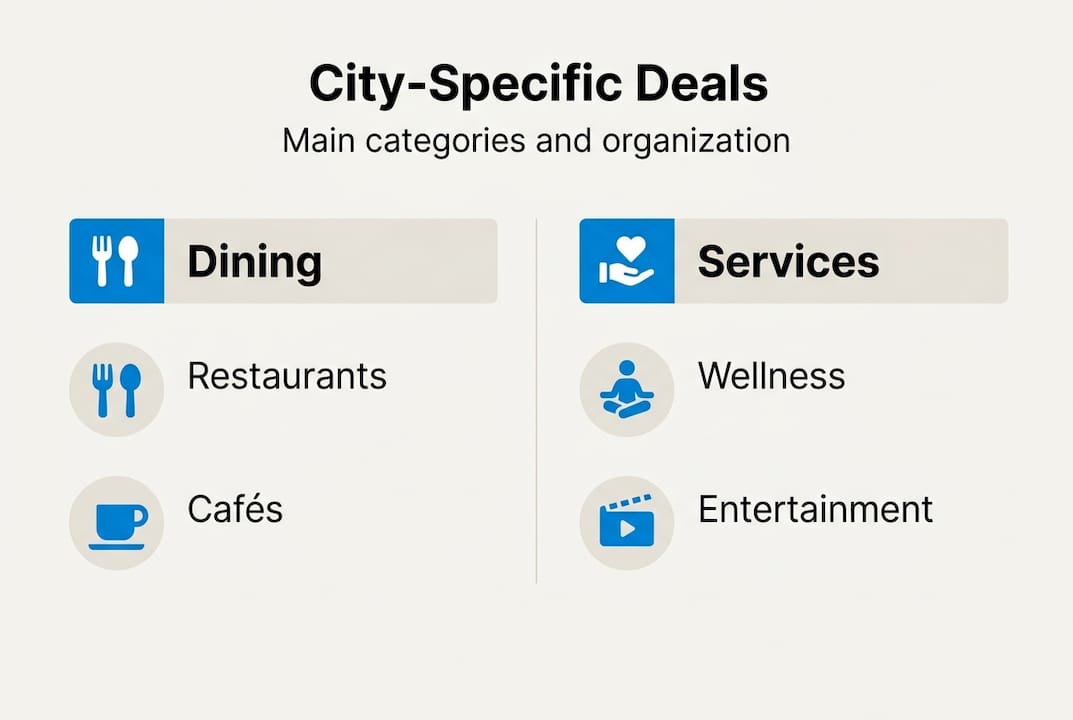
These deals typically cover dining, entertainment, wellness, and local services. The reason platforms organize by city is simple: local businesses need local foot traffic, not clicks from across the country. City-specific deal platforms offer discounts ranging from 20-70%, and those savings can multiply when you layer in referral bonuses or prepaid credits.
If you want a broader look at how these categories break down, the types of local deals guide on Clipp covers the full landscape. You can also explore restaurant coupons for dining out for a more focused breakdown of food-specific savings.
How leading city-specific deal models work
With the basics in place, it's essential to break down how top city-specific platforms actually work and how they differ.
Groupon's deal-of-the-day model requires a minimum number of buyers before a deal activates, offers deep discounts, and takes a significant platform commission from the merchant. You buy the voucher, show it at the restaurant or venue, and the deal is applied. It works, but the redemption process can feel clunky, and some merchants set tight restrictions on when and how you can use it.
inKind integrates directly with restaurant POS systems, giving you 20% back as credits without any voucher exchange. You load money into the app, pay your bill through it, and credits accumulate automatically. Stacking a referral bonus on top of a prepaid credit load pushes the value even higher. It's a smoother experience, especially for regulars at a favorite spot.
SLOeats charges a $9/month subscription for daily BOGO deals at independent local restaurants. It's best suited for residents who eat out frequently and want consistent savings at neighborhood spots rather than chains.
Here's a quick comparison:
| Platform | Model | Avg. savings | Best for | Coverage |
|---|---|---|---|---|
| Groupon | Voucher purchase | 30-70% | First-time visitors | National, city-filtered |
| inKind | App-based credits | 20%+ stackable | Regular diners | Select cities |
| SLOeats | Monthly subscription | BOGO daily | Local residents | San Luis Obispo area |
To understand the mechanics behind voucher redemption more deeply, the how voucher codes work article on Clipp is worth a read.
Pro Tip: Always read the terms before purchasing any deal. Merchants and apps often set city-limited rules, blackout dates, or minimum spend requirements that can catch you off guard at the register.
Why deals matter for both consumers and local businesses
Having compared the mechanics, it helps to understand why city-specific deals exist in the first place and what's at stake for both sides.

Restaurants and venues use deals primarily to fill tables during slow periods and introduce themselves to new customers. It's a marketing cost, not a profit play. Merchants use deals to acquire new customers, not for immediate profit, which means the real value for consumers comes from using deals strategically rather than assuming every offer is a windfall.
For consumers, the benefits are real but come with conditions:
- Time limits: Many deals expire within 30 to 90 days of purchase.
- Blackout dates: Weekends, holidays, or peak hours are often excluded.
- Use restrictions: Some deals apply only to specific menu items or party sizes.
- One-time vs. repeat value: Platforms like inKind reward loyalty; others push one-time viral visits that may not benefit the restaurant long-term.
The value of local dining events and promotions shows that when consumers and businesses align on expectations, both sides win. The problem arises when a consumer buys a deal without reading the fine print, shows up on a Saturday night, and finds out the voucher doesn't apply.
For businesses looking to attract new customers through targeted promotions, merchant acquisition through deals is a well-documented strategy. As a consumer, knowing this helps you recognize which deals are genuinely generous and which are designed to get you in the door with limited upside.
How to maximize city-specific deal savings
Once you understand the deal ecosystem, you can shift into maximizing your local dining and entertainment budget.
Here's a step-by-step approach that works:
- Check platforms before you go out. Before booking a restaurant or buying event tickets, search your city's active deals. Spending two minutes upfront can save you 20% or more.
- Stack referral and prepaid credits. On apps like inKind, loading prepaid funds and using a referral code at signup compounds your savings from the first visit.
- Read the fine print every time. Terms change. A deal that worked last month may now exclude your favorite menu items or require a minimum party size.
- Time your purchases strategically. Flash deals and limited-time promos often drop on Tuesday or Wednesday when restaurant traffic is slower. Enable app notifications so you catch them early.
- Compare platforms for your city. Not every app operates in every market. Local dining reservation strategies and deal stacking work best when you know which platforms are active in your area.
Here's a snapshot of what's possible by platform:
| Platform | Cities covered | Deals available | Max savings potential |
|---|---|---|---|
| Groupon | 500+ cities | 1,000+ per city | Up to 70% |
| inKind | Select U.S. cities | 6,330+ partners | 20%+ stackable |
| SLOeats | San Luis Obispo | Daily rotating | 50% (BOGO) |
Savings benchmarks show 20-70% off is possible, especially when combining referrals, prepaids, or credits. The consumers who hit the top of that range are the ones who treat deal-finding as a habit, not an afterthought.
Pro Tip: Before committing to a monthly subscription app, spend one week tracking how often you actually dine out locally. If it's three or more times per week, a subscription almost always pays for itself.
For more ideas on stretching your budget, explore local deal varieties and check out tips on mastering restaurant coupons to round out your strategy.
What to watch out for: Pitfalls and mythbusting
After the excitement of maximizing deals, it's crucial to address common missteps and consumer myths about city-specific savings.
Voucher platforms may have clunky redemption or local coverage gaps, and not all deals are as seamless as they appear in the app. Here are the most common pitfalls:
- Fast expiration: Some deals expire within two weeks of purchase. Buy only what you'll realistically use soon.
- Blackout dates: Peak dining hours, holidays, and weekends are frequently excluded. A Friday night dinner plan can fall apart if you haven't checked.
- Chain exclusions: Most city-specific deal apps focus on independent and regional restaurants. National chains rarely participate, so don't expect your favorite fast-casual franchise to show up.
- BOGO fine print: Buy-one-get-one offers sometimes exclude the highest-priced items, alcohol, or specific menu categories.
- Seasonal pauses: Some apps reduce their deal inventory during off-peak seasons or local slow periods, so availability fluctuates.
- Hidden minimum spend: A deal advertised as "50% off" may require a $40 minimum purchase before the discount kicks in.
A common myth is that all deal apps work the same way everywhere. They don't. Coverage, participating restaurants, and redemption rules vary significantly by city. Always verify that your specific location is included before you commit.
Pro Tip: Before heading out, open the app and confirm the deal is still active at your chosen location. Deals can sell out or be paused by the merchant with little notice.
For a deeper look at misconceptions about local deals, Clipp's resource library breaks down what's real and what's marketing spin.
Find the best city-specific deals near you
You now have a clear picture of how city-specific deals work, which platforms lead the pack, and how to avoid the traps that catch most consumers off guard. The next step is putting that knowledge to work before your next dinner reservation or night out.
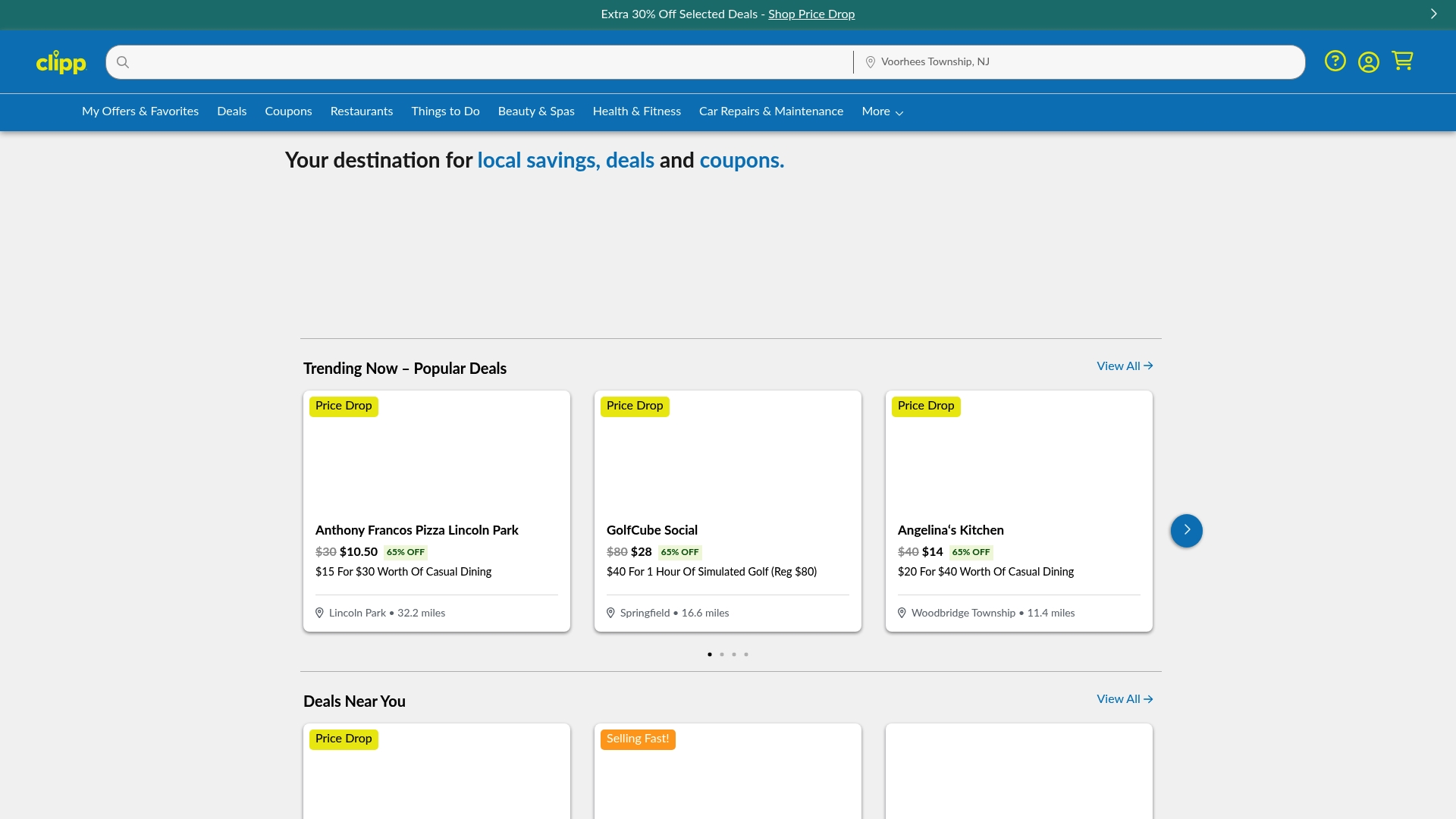
Clipp makes it easy to browse Ashburn city deals across dining, entertainment, and more, all filtered to what's actually available near you. You can also search Ashburn coupons by category to find the right match for your plans. Download the local deal apps to get flash deal alerts sent straight to your phone, so you never miss a limited-time offer in your neighborhood. Whether you're a frequent diner or an occasional deal seeker, Clipp keeps your local savings organized and accessible in one place.
Frequently asked questions
How are city-specific deals different from national coupon sites?
City-specific deals focus on your local area, often delivering bigger savings at independently owned restaurants and venues that national coupon sites overlook. Savings range from 20-70% and are concentrated on local businesses rather than national chains.
Can I use multiple deals at the same restaurant?
In most cases, only one deal or offer applies per visit, but some platforms allow stacking with referral or prepaid credits. inKind lets you stack referrals and credits for extra savings beyond the standard 20% back.
Are there extra fees or catches with city deal apps?
Most platforms do not charge consumer fees, but subscription-based apps do carry monthly costs and deals often come with blackout dates or usage limits. SLOeats charges $9/month for daily BOGO deals, and each platform sets its own terms.
What happens if a deal voucher isn't accepted when I arrive?
Always read deal terms for blackout dates and exclusions before you leave home. If a voucher isn't honored, read terms and check availability in advance, and contact the app's support team for a credit or refund if something goes wrong.