

TL;DR:
- Effective couponing requires strategy, focusing on valuable offers and matching needs.
- Digital coupons and local apps provide the best opportunities for stacking and saving.
- Targeted, deliberate use of coupons saves more than chasing every deal indiscriminately.
Coupons are everywhere. Your inbox, your phone, the back of a grocery receipt. Yet most people still end up spending more than they planned, chasing discounts on things they never really needed. The problem isn't a lack of coupons. It's a lack of strategy. Knowing how to spot a genuinely valuable offer, where to find the best local deals, and how to combine savings without falling into common traps is what separates real savers from everyone else. This guide walks you through exactly that, so you can consistently get more value from every coupon you use on dining, entertainment, and wellness near you.
Table of Contents
- How to recognize truly best-value coupons
- Where to find the highest-value local coupons
- Stacking and combining coupons for maximum local savings
- Common pitfalls and how to avoid wasting money with coupons
- Why most people misuse coupons and how you can outsmart them
- Start saving more with Clipp's local deals
- Frequently asked questions
Key Takeaways
| Point | Details |
|---|---|
| Target your needs | The best-value coupons save you money on stuff you already wanted to buy, not on unnecessary extras. |
| Go digital first | Digital and app-based coupons are usually more convenient, stackable, and targeted for local savings. |
| Stack for bigger savings | Combining local sales and loyalty offers with coupons provides the deepest discounts. |
| Avoid common traps | Don't buy things just for the coupon and always check policies and expiration dates. |
| Let tools do the work | Sign up for notifications and use apps to catch the best-value flash deals and bundles. |
How to recognize truly best-value coupons
Not every coupon is worth your time. That 50% off deal sounds exciting until you realize it's for a service you'd never normally buy, or it requires a minimum spend that pushes you well past what you'd usually pay. The first skill every smart saver needs is knowing how to tell a genuinely valuable coupon from a cleverly disguised spending trap.
The core mechanics of best-value couponing come down to a few non-negotiable habits: sticking to a shopping list, using digital coupons through store apps and loyalty programs, combining sales with coupons only on items you actually need, and prioritizing unit pricing over brand loyalty. That last point is huge. A coupon for a branded product can still cost more per unit than the generic version sitting right next to it.
Here's what to look for when evaluating any coupon:
- It matches something you already planned to buy. If the coupon changes what you were going to purchase, it's working against you.
- The discount is meaningful. A 5% off coupon for a local spa service isn't worth tracking down. Look for 15% or more on services you use regularly.
- The redemption process is simple. Complicated fine print, multi-step verification, or obscure expiration windows are red flags.
- It works on top of existing prices. The best offers layer on top of already-fair pricing, not inflated base prices.
- No excess purchase required. "Buy three, get one free" only helps if you genuinely need three.
"A coupon that changes your behavior is a marketing tool. A coupon that rewards your existing behavior is a savings tool."
Digital coupons through restaurant and store apps often allow stacking or unlock flash deals that paper coupons never offer. They're also easier to track, harder to forget, and frequently personalized to your actual purchase history. For more on saving on local deals, it helps to start with a clear list of the local services you use most, then build your coupon habit around those categories.
Pro Tip: Before clipping any coupon, ask yourself: "Would I buy this at full price?" If the answer is no, skip it. You're not saving money by spending it on something you don't need.
Where to find the highest-value local coupons
Once you know what qualities to look for, the next step is knowing precisely where to uncover the most valuable local coupons. The good news is that the best sources are often free and easy to access. The challenge is knowing which ones are actually worth your attention.
Neighborhood store apps and restaurant loyalty programs are consistently among the top sources for exclusive digital deals. These programs reward repeat customers with personalized offers that aren't available anywhere else. Signing up for emails from local dining spots, spas, and entertainment venues is another underused move. Many businesses send their highest-value coupons directly to subscribers before posting them anywhere public.
According to expert nuances for couponing, the smartest approach combines brand emails for high-value coupons, rebate apps used after purchase, and neighborhood apps paired with weekly ads for local service deals. That's a layered system, not a single source.
Here's a breakdown of the top sources worth your time:
- Local restaurant and salon apps: Often include loyalty points, birthday rewards, and app-only flash deals.
- Weekly neighborhood publications and apps: These frequently feature bundled offers for local businesses that aren't promoted online.
- Email newsletters from local businesses: Subscribe to your favorite spots. The best coupons often go to email lists first.
- Push notifications from deal apps: Enable alerts for time-sensitive flash deals. These can offer serious value but disappear fast.
- Rebate apps: Use these after purchase to layer additional savings on top of coupons you've already used.
Research consistently shows that digital over paper coupons wins on convenience and combinability, especially for local services. Paper coupons still show up in mailers and community papers, but they're harder to stack and easier to forget at home.
Pro Tip: Set up a dedicated email folder for local deal newsletters. Scan it twice a week instead of daily. This keeps you informed without turning coupon hunting into a second job.
Exploring digital coupon sources and downloading reliable coupon apps gives you a consistent pipeline of local offers without the clutter of chasing every deal that crosses your screen.
Stat to know: Shoppers who use loyalty apps and digital coupons together report saving significantly more per transaction than those who rely on a single coupon source alone.
Stacking and combining coupons for maximum local savings
Finding high-value coupons is great, but combining them the right way unlocks even bigger savings. Stacking means using more than one discount on a single purchase, and when it works, it can cut your bill dramatically.
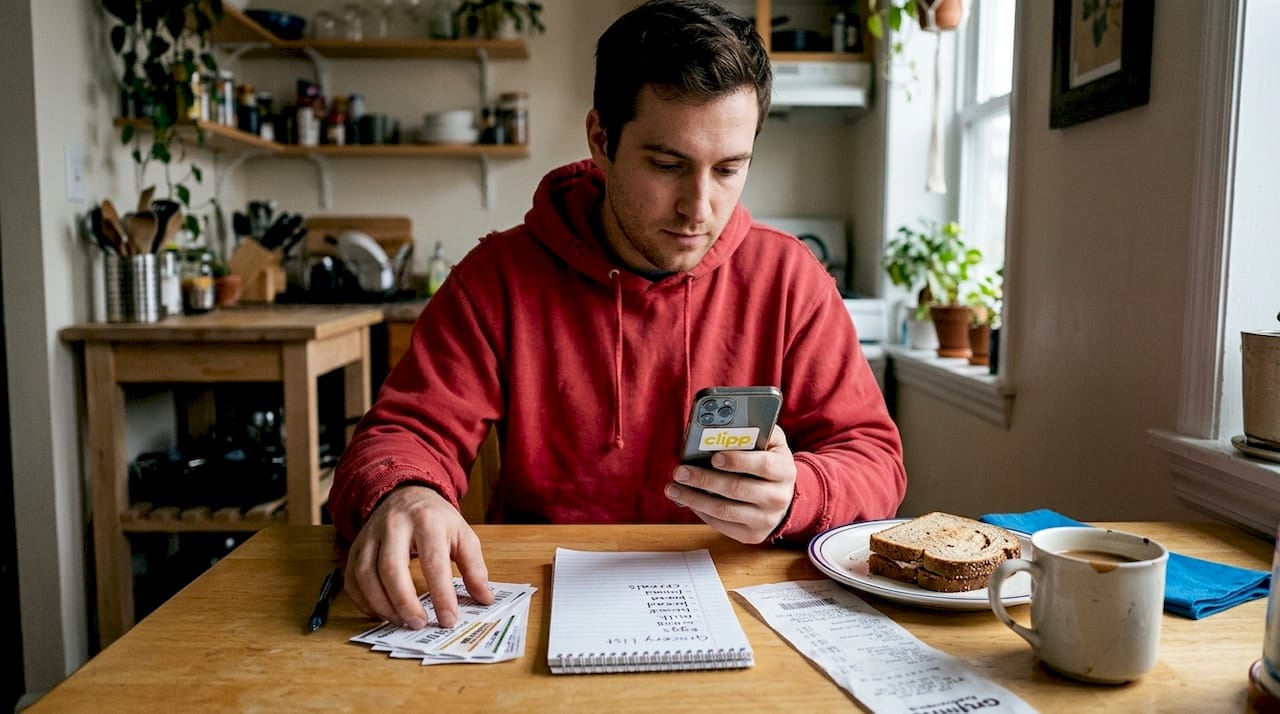
The most common stack for local services looks like this: a store or restaurant sale, layered with a digital coupon from their app, topped off with loyalty reward points. Each layer adds up. But not every business allows this, so checking the policy before you show up is essential.
Here's a quick reference for common stacking scenarios:
| Combination | Allowed? | Typical savings |
|---|---|---|
| Store sale + digital coupon | Often yes | 20 to 40% off |
| App coupon + loyalty points | Usually yes | 15 to 30% off |
| Two manufacturer coupons | Rarely | Varies |
| Flash deal + existing promo | Check policy | Up to 50% off |
| Email coupon + in-store sale | Sometimes | 10 to 25% off |
Here's how to approach stacking strategically:
- Check the policy first. Call ahead or read the app's terms. Some restaurants and salons explicitly allow stacking; others don't.
- Use flash deals with longer-term coupons. A flash deal on a Tuesday lunch can stack with a monthly loyalty reward for a bigger combined discount.
- Time your visits around sales cycles. Many local businesses run predictable weekly or monthly promotions. Plan your visits accordingly.
- Keep your coupons organized. A cluttered digital wallet leads to missed deals and expired offers.
- Know when to walk away. If stacking requires buying more than you need, the math stops working in your favor.
It's worth noting that loyalty program benefits come with a tradeoff. These apps collect purchase data, and stores may reject double manufacturer coupons, so the personalized deals you get in return aren't entirely free. For most local consumers, the savings outweigh the privacy cost, but it's worth being aware of what you're exchanging.
Pro Tip: Before any dining or wellness visit, spend 90 seconds checking the business's app and your email for active offers. That small habit can consistently save you 15 to 20% with almost no extra effort. Check out coupon stacking tips for more specific strategies by category.
Common pitfalls and how to avoid wasting money with coupons
As you build your coupon strategy, it's equally important to recognize and avoid the pitfalls that reduce or even erase your savings. The biggest mistake isn't clipping the wrong coupon. It's letting the coupon decide what you buy.
39% of shoppers buy unneeded items simply because they had a coupon. That's not saving. That's spending with extra steps. A $10 coupon on a $40 service you didn't plan to use costs you $30, not saves you $10.
Here are the most common coupon pitfalls and how to sidestep them:
- Buying for the deal, not the need. If it wasn't on your list before the coupon appeared, think twice.
- Ignoring generic or local alternatives. A coupon for a branded product or service can still be more expensive than an uncouponed alternative. Always compare.
- Underestimating opportunity cost. Spending 45 minutes hunting for a coupon that saves you $2 isn't a win. Your time has value.
- Missing redemption requirements. Some coupons require a minimum spend, a specific day, or a particular item. Read the fine print before you commit.
- Letting coupons expire unused. Keep your digital wallet organized and set reminders for high-value offers with short windows.
"The coupon didn't save you money. You saved money. The coupon just helped, if you used it right."
One underrated move is using a dedicated app or digital wallet to store active coupons. When everything lives in one place, you're far less likely to miss an expiration or forget a deal mid-transaction. Explore the risks and rewards of smart couponing risks to build a system that works long-term without the chaos.
The discipline here isn't complicated. It's just about keeping your savings goals in charge, not the marketing.
Why most people misuse coupons and how you can outsmart them
Here's the uncomfortable truth: chasing every available coupon almost always backfires. It leads to cluttered wallets, impulse purchases dressed up as savings, and a false sense of financial progress. Most people treat couponing as a volume game. The more deals they grab, the more they think they're saving. But the data tells a different story.
Consistent, targeted use beats volume every single time. The savviest local consumers we've seen use a simple filter: digital coupons only, combined only on essentials, and zero attention paid to deals that don't match their actual lifestyle. They ignore the noise.
The one mindset shift that separates long-term savers from everyone else is this: treat coupons as a reward for planned spending, not a reason to spend. That single adjustment, applied consistently through proven couponing strategies, is worth more than any stack of coupons you'll ever collect.
When you stop reacting to deals and start selecting them deliberately, your savings become predictable. And predictable savings compound over months and years into real money.
Start saving more with Clipp's local deals
You now have a clear framework for finding, evaluating, and combining the best-value coupons in your neighborhood. The next step is putting it into practice with a platform built specifically for local savings.
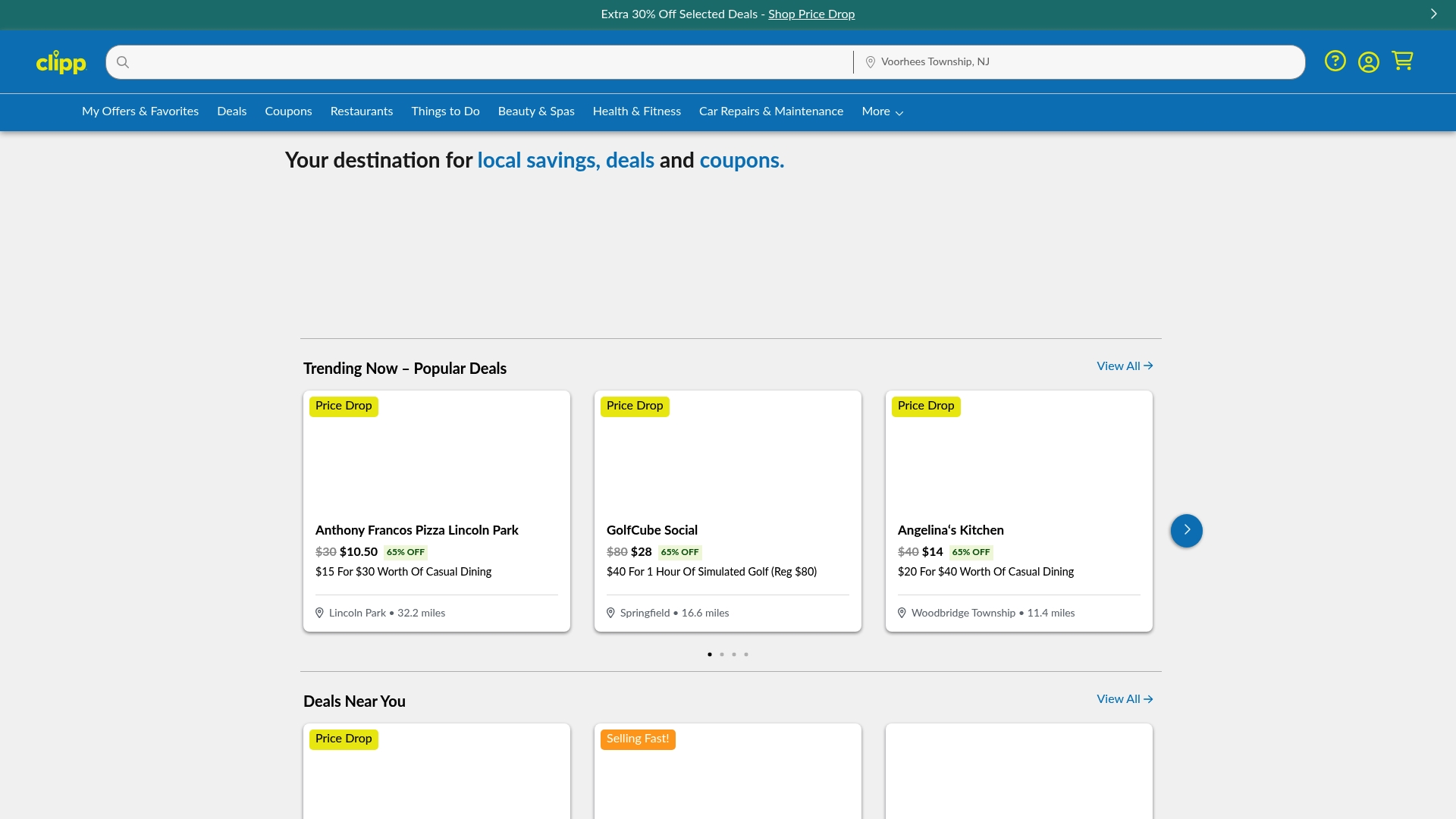
Clipp local deals brings together exclusive, curated coupons for dining, entertainment, wellness, and more, all in one place. New offers are added constantly, so there's always something relevant near you. Browse the top Ashburn deals to see what's trending right now, or download the Clipp coupon app to get instant alerts on flash deals and limited-time offers the moment they go live. Real savings on the local services you already love are a lot closer than you think.
Frequently asked questions
What is the best way to use coupons for local restaurants?
Use restaurant apps for digital coupons and combine them with daily specials or loyalty points when possible for best results. Prioritize digital coupons over paper for convenience and the ability to stack with other offers.
Are digital coupons really better than paper ones?
Digital coupons are more convenient and can sometimes be stacked with store sales or loyalty offers, making them generally better for local deals. The core mechanics of best-value couponing consistently point to digital and app-based options as the highest-value choice.
Can I combine coupons with in-store sales for bigger savings?
Yes, many stores allow coupon stacking with in-store sales, but always check the specific policy before shopping. Combining sales with coupons only on needed items is a core principle of smart, best-value couponing.
How do I avoid wasting money with coupons?
Only use coupons on things you actually need and always compare generic options even when a coupon is available. Avoid buying unneeded items with coupons, a habit that affects nearly 4 in 10 shoppers and quietly drains savings over time.