

TL;DR:
- Curated discount ideas combine digital tools, loyalty rewards, and local deals to create a systematic savings strategy. Layering discounts, timing purchases strategically, and asking for in-store reductions maximize savings on experiences and essentials. Most consumers overlook local deals and the importance of planning, thereby leaving significant money on the table.
Curated discount ideas are personalized, strategic savings plans that combine digital coupon tools, loyalty programs, and local deals to help you spend less without sacrificing the experiences you want. Unlike random couponing, this approach treats savings as a system. Tools like Honey, Rakuten, and Clipp make it possible to layer discounts across dining, entertainment, and everyday services. Nearly half of discount users find deals through retailer mobile apps, which means the best savings opportunities are already in your pocket. The question is whether you are using them strategically.
1. The best digital tools for finding curated discounts
The most effective deal hunters treat digital tools as a pipeline, not a one-off search. Browser extensions, cashback apps, and AI finders each handle a different part of the savings process. When you combine them, you cover discovery, comparison, and redemption in one workflow.
- Honey automatically scans and applies coupon codes at checkout across thousands of retailers. It also tracks price history so you know whether a "sale" is actually a deal.
- Rakuten pays cashback on purchases at major retailers including Walmart, Target, and Macy's. You shop through the Rakuten portal and receive a check or PayPal deposit each quarter.
- Capital One Shopping compares prices across retailers in real time and alerts you when a better price exists elsewhere.
- Ibotta focuses on grocery and household cashback, with offers tied to specific products you scan after purchase.
- Top3Picks is an AI deal finder that scans multiple sites to recommend best-value products based on your budget and stated needs. It removes the bias of sponsored results and surfaces genuinely competitive options.
Setting up price alerts on Amazon and Google Shopping takes under two minutes and pays off consistently on electronics, appliances, and seasonal items. Turn on push notifications for your cashback apps so you catch limited-time bonus offers before they expire.
Pro Tip: Add high-ticket items to your cart and then leave the site without buying. Many retailers send abandoned cart emails with exclusive discount codes within 24 to 48 hours. This tactic works best on items priced above $50, where retailers are most motivated to recover the sale.
2. How to use loyalty programs and local deals together
Digital apps get most of the attention, but stacking local loyalty rewards with in-store coupons is where serious savings compound. The two systems are not competing strategies. They are complementary layers.

Grocery chains like Albertsons, Safeway, and Vons offer sign-up discounts of $5 off a $25 purchase, plus $15 in rewards once you accumulate points. That welcome discount alone pays for the two minutes it takes to register. Over time, points accumulate on every purchase and convert into meaningful credits on future trips.
Local deal platforms like Clipp specialize in exactly this kind of neighborhood savings. Clipp aggregates discounts from nearby restaurants, salons, gyms, and service providers into one browsable feed. Instead of hunting across a dozen websites, you see what is available near you in a single view. The platform highlights trending deals and limited-time offers so you are not wasting time on expired promotions.
Here is how digital and local savings compare across key categories:
| Category | Digital tool approach | Local deal approach |
|---|---|---|
| Dining | Cashback via Rakuten or Ibotta on delivery apps | Clipp restaurant coupons for dine-in savings |
| Groceries | Honey price tracking plus app-clipped coupons | Loyalty card stacking with in-store circulars |
| Services | Cashback portals for online bookings | Neighborhood coupons for salons, gyms, pet care |
| Entertainment | Price alerts on ticket platforms | Local activity deals through Clipp near you |
In-store circulars still carry manufacturer coupons that stack on top of loyalty discounts. Picking up a physical circular at the entrance of a grocery store takes ten seconds and can add another $5 to $10 in savings on a single trip when combined with your loyalty card.
3. Creative budget-friendly ideas for dining, entertainment, and services
The most overlooked curated savings list is the one built around timing and behavior, not just coupons. Changing when and how you spend unlocks discounts that no app can surface for you.
1. Bundle and buy in bulk. Warehouse memberships at Costco or Sam's Club pay for themselves quickly on household staples. For services like car washes, haircuts, or gym classes, buying a multi-session package almost always cuts the per-unit cost by 20% or more.
2. Time your dining outings strategically. Restaurants offer their deepest discounts during off-peak hours, early-bird windows, and shoulder seasons. A Tuesday dinner reservation at a popular spot often costs 15 to 25% less than the same meal on a Saturday night, especially when paired with a Clipp restaurant deal.
3. Use mystery discount formats. Some retailers and restaurants run "pick a treat" style promotions where customers receive a random discount between 10% and 50% at checkout. These are worth opting into because the floor discount is always positive.
4. Ask directly for a price reduction. Retailers often empower staff to offer up to 10% off if a customer asks in person or through live chat. This works particularly well on display models, last-season inventory, and services where the provider has open slots to fill. The worst answer is no.
5. Stack cashback, gift cards, and coupons. Buy a discounted gift card through a platform like Raise or Gift Card Granny, then use it alongside a coupon and a cashback app. Purchasing gift cards that earn loyalty points before shopping sale items multiplies your overall savings across three separate discount layers.
6. Substitute one high-cost habit. Coffee drinks at specialty shops typically run $6 to $9. Brewing at home five days a week saves $150 to $225 per month. That is not a sacrifice. It is a reallocation toward experiences that matter more to you.
7. Use seasonal sales as a planning calendar. Major discount windows like Black Friday, Labor Day, and post-holiday clearance are predictable. Build your shopping list around them rather than reacting to them. Electronics, furniture, and winter apparel hit their lowest prices at specific, recurring points in the year.
Pro Tip: Consumers increasingly rely on digital coupons over paper versions because apps deliver better discounts and instant redemption. Clip digital coupons before you leave home, not at the register, so you never miss an offer under time pressure.
4. How to avoid common discount pitfalls
Discounts only save money when you were going to spend it anyway. The biggest threat to a smart savings strategy is "bargain fever," the impulse to buy something because the deal feels too good to pass up.
Consumer Reports experts warn that the most reliable protection against overspending is a written budget and a shopping list you commit to before browsing deals. Decide what you need, then find the best price for it. Never reverse that order.
A few specific traps to watch for:
- Percentage discounts on inflated prices. A 40% discount on a product that was marked up 60% last week is not a real deal. Check the price history using Honey or CamelCamelCamel before trusting a sale tag.
- Outdated promo codes. Coupon aggregator sites frequently list expired codes. Use browser extensions that verify codes in real time rather than copying codes from static web pages.
- Convenience versus cost. Delivery fees, service charges, and tips on food delivery apps can erase a 20% discount entirely. Picking up an order directly or redeeming coupons in-store almost always produces a better net price.
- Ignoring unit prices. A bulk buy is only a bargain if the unit price is lower. Grocery stores are required to display unit prices on shelf tags. Use them.
"The goal of couponing is to spend less on things you need, not to spend more on things you don't." This framing, consistent with Consumer Reports guidance, is the clearest test for any discount decision.
The best deal hunting blends AI-powered discovery, automated price tracking, coupon stacking, and cashback into a full savings pipeline. Each layer catches what the others miss.
Key takeaways
Curated discount ideas work best when you layer digital tools, local deals, and behavioral timing into a single, repeatable savings system.
| Point | Details |
|---|---|
| Stack discount layers | Combine store sales, loyalty rewards, cashback apps, and gift cards for maximum net savings. |
| Use digital tools as a pipeline | Honey, Rakuten, Ibotta, and Top3Picks each handle a different stage of the savings process. |
| Time purchases strategically | Off-peak dining, seasonal sales, and abandoned cart emails unlock discounts no coupon can match. |
| Ask for discounts directly | Retailers can offer up to 10% off when customers ask in-store or via live chat. |
| Avoid bargain fever | Shop with a list and a budget before browsing deals to prevent overspending on unnecessary items. |
Why I think most people are leaving real money on the table
Most consumers treat discounts as a passive activity. They clip a coupon here, catch a sale there, and feel good about saving $3 on cereal. That is not a savings strategy. That is luck with extra steps.
What I have found actually works is treating discount hunting as a system with three distinct phases: discovery, timing, and stacking. Discovery means knowing which tools surface the best deals for your specific spending categories. Timing means understanding that the same product or experience has a predictable price floor if you wait for the right moment. Stacking means never using just one discount when three are available simultaneously.
The local angle is where most people completely underinvest. Apps like Clipp exist specifically to surface neighborhood deals on dining, wellness, and services that national platforms miss entirely. A $30 massage deal at a local spa or a two-for-one dinner at a nearby restaurant delivers real value on experiences you were already planning to have. That is a fundamentally different outcome than buying something you did not need because it was 50% off.
Patience is the underrated skill here. The best savings go to people who plan purchases around known discount windows rather than reacting to whatever is on sale today. Build the habit of checking your local savings options before booking a restaurant, scheduling a service, or buying a gift. It takes 90 seconds and consistently produces better outcomes than any single coupon ever will.
— Mehmet
Find your next deal on Clipp
Clipp connects you with curated local deals on dining, entertainment, home services, wellness, and more, all in one place. The platform is built for consumers who want real savings on real experiences near them, not generic promo codes for national retailers they never use.
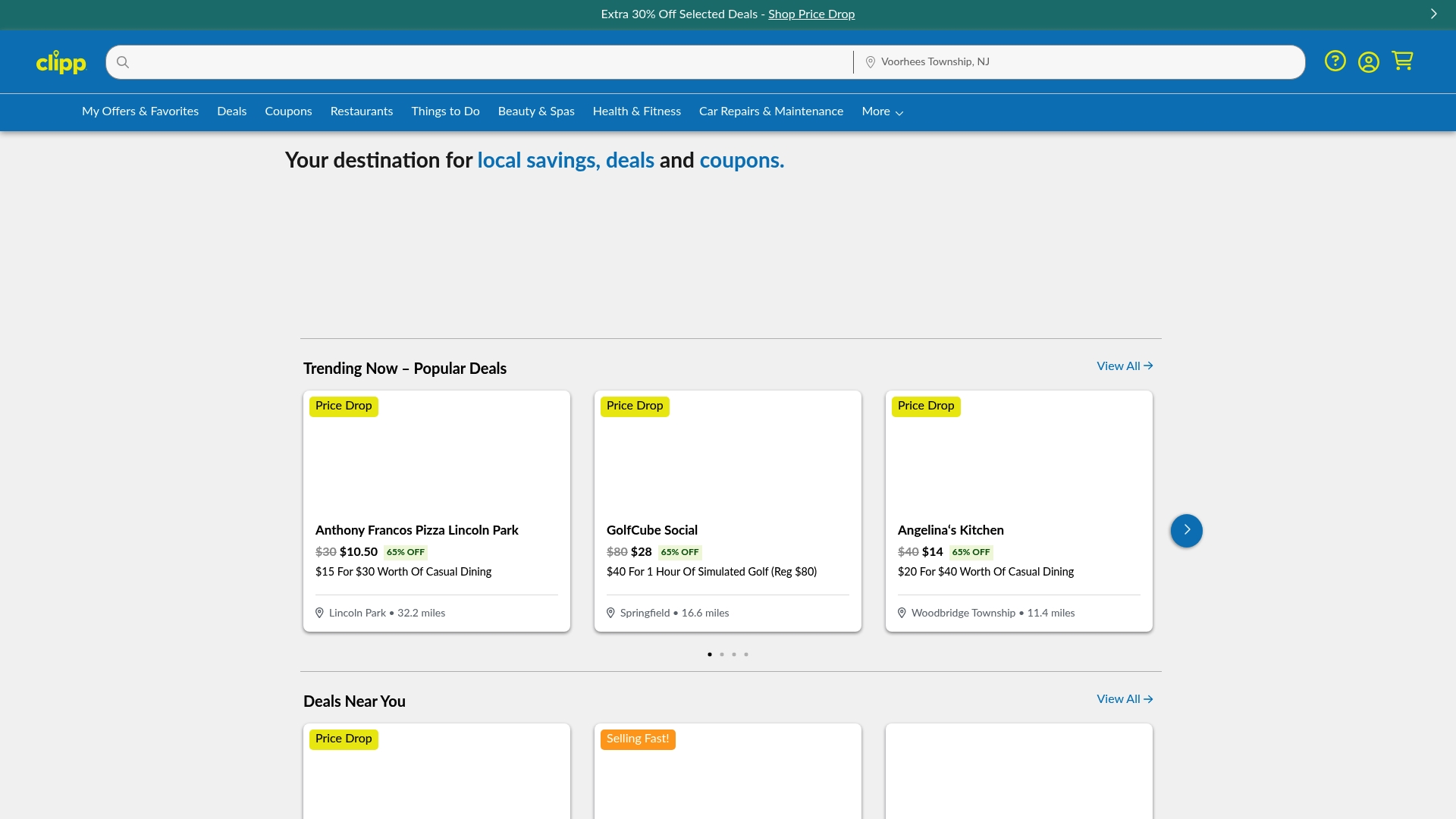
Browse local deals near you to see what restaurants, salons, gyms, and service providers in your area are offering right now. Clipp highlights trending and fast-selling promotions so you always see the best available offers first. You can also explore local coupons for additional savings across everyday categories. Download the Clipp mobile app to get personalized deal notifications and redeem savings directly from your phone.
FAQ
What are curated discount ideas?
Curated discount ideas are personalized, strategic savings approaches that combine digital tools, loyalty programs, and local deals to reduce spending on dining, services, and entertainment. Unlike random couponing, they treat savings as a repeatable system built around your actual spending habits.
How do I find the best online discounts?
Browser extensions like Honey and Capital One Shopping automatically apply coupon codes and compare prices at checkout. Cashback platforms like Rakuten and Ibotta add a second layer of savings on top of any existing sale or coupon.
What is the most effective way to stack discounts?
The most effective method combines a store sale, a loyalty reward, a manufacturer coupon, and a cashback app on the same purchase. Buying a discounted gift card before shopping adds a fourth layer, multiplying total savings across each step.
How can I save money on local dining and entertainment?
Platforms like Clipp aggregate neighborhood restaurant deals, activity discounts, and service coupons in one feed. Timing outings during off-peak hours and combining a local coupon with a cashback app consistently produces the lowest net cost.
How do I avoid wasting money on fake discounts?
Check price history using tools like Honey or CamelCamelCamel before trusting any sale tag. Always compare unit prices rather than percentage discounts, and shop from a written list to avoid impulse purchases driven by bargain fever.