

TL;DR:
- A systematic deal-finding checklist combines AI discovery, price tracking, coupons, and cashback to maximize savings. Using multiple tools and verifying total costs prevents overestimating discounts and ensures genuine bargains. Incorporating local deal apps and timing strategies further enhances cost-effective shopping both online and offline.
A checklist for finding deals is a systematic set of actions and tools that helps budget-conscious shoppers identify and secure the best discounts across local and online retailers. The most effective version combines AI-powered product discovery, price tracking, coupon stacking, and cashback rewards into one repeatable process. Tools like Honey, Rakuten, CamelCamelCamel, and Clipp make each step faster and more reliable. Combining cashback with automated coupons can reduce costs by 15 to 30% versus full retail. That kind of savings does not happen by accident. It happens because of a system.
The essential checklist for finding deals step by step
A structured discount shopping checklist removes guesswork and replaces it with a repeatable process. Here are the core steps every smart shopper should follow.

1. Start with AI-powered product discovery
AI tools like ChatGPT and Top3Picks do more than surface product options. Generative AI uncovers stackable discounts, price matching opportunities, and student or military discounts that casual shoppers miss entirely. Ask specific, multi-layered questions such as "What is the best price for X product right now, and can it be stacked with a loyalty reward?" The more specific your query, the more useful the answer. This step sets the foundation for every comparison that follows.
2. Check price history before you buy
Never judge a deal by the current price tag alone. Price tracking tools like CamelCamelCamel and Keepa monitor historic price trends and send alerts when items hit their lowest recorded prices, especially on Amazon. A product listed at "40% off" may have been at that same price for six months. Price history exposes that illusion immediately. This single step prevents more bad purchases than any other on the list.
3. Set price drop alerts for timing
Once you know the fair price for an item, set an alert so you act at the right moment instead of guessing. CamelCamelCamel, Keepa, and Google Shopping all offer free alert features. Smart shoppers use saved searches and instant alerts to beat competitors to mispriced items, which is especially critical in local and secondhand markets. Timing is not luck. It is preparation.
Pro Tip: Set alerts at 10 to 15% below the current price, not just at the historic low. You will catch more drops and still secure a genuine bargain.
4. Apply coupon and promo code extensions at checkout
Browser extensions like Honey and Rakuten automatically test and apply coupon codes at checkout without any manual searching. Many shoppers leave money on the table by skipping these tools during online purchases. Installing both takes under five minutes and costs nothing. RetailMeNot is another reliable source for codes across hundreds of retailers. Make this a non-negotiable final step before completing any online order.
5. Stack cashback rewards on top of coupons
Cashback programs like Rakuten and Ibotta add a percentage back to your purchase after the fact, on top of any coupon savings already applied. This stacking approach is one of the best ways to find deals that most shoppers overlook. Rakuten alone offers between 1% and 10% back at thousands of retailers. When you combine a 20% off coupon with 5% cashback, the total savings compound in your favor. Always check whether a cashback portal is active before you click through to a retailer.
6. Verify total delivered cost including fees and taxes
A $30 item with $15 shipping and no free return policy is not a deal. Smart shoppers use a pre-purchase checklist for items over $20 that verifies price history, return policies, multiple retailer comparisons, and all fees before buying. Calculate the total delivered cost every time. This habit alone eliminates the most common deal-hunting mistake: celebrating a discount that disappears once the full order total appears.
7. Compare at least three retailers side by side
One retailer's "sale price" is another retailer's everyday price. Use Google Shopping, a comparison table in a notes app, or an AI tool to line up at least three options across price, shipping cost, return window, and seller rating. This step is the core of any solid bargain shopping checklist because it replaces assumption with evidence. A product that appears cheapest at one store often costs more once shipping is factored in.
8. Use store-specific apps and loyalty programs
Store-specific apps and loyalty programs provide exclusive, unadvertised discounts between 10% and 30% that are not visible on public websites or in-store signage. Target Circle, Kroger's app, and similar programs push member-only deals directly to your phone. These are not generic promotions. They are personalized offers based on your purchase history, which means they tend to match what you actually buy. Signing up for the apps of your five most-visited stores takes less than 20 minutes and pays off quickly.
Pro Tip: Enable push notifications on store apps. The best flash deals often expire within hours and are never posted publicly.
9. Time your purchases strategically
Off-season buying is one of the most underused ways to save money. Winter coats bought in March cost 40 to 60% less than the same coats in October. Beyond seasonal timing, professional thrifters shop early mornings at garage sales and use marketplace alerts to find mispriced items before other buyers arrive. For online shopping, Tuesday and Wednesday mornings tend to surface more restocked inventory and fresh markdowns. Timing is a skill that compounds over time.
10. Prepare for local and secondhand shopping
Local deal hunting requires physical preparation that online shopping does not. Bring cash in small denominations because cash leverage often produces a better negotiated price than a card payment. Carry a tape measure and a phone with a flashlight for furniture and appliance checks. Research fair market values on eBay's sold listings or Facebook Marketplace before you arrive so you know exactly what a fair price looks like. Effective local secondhand deal hunters also research routes in advance to cover multiple sales in one trip.
11. Negotiate respectfully and use cash as leverage
Negotiation is a legitimate part of the deal-finding process, especially at local markets, garage sales, and independent retailers. Offering cash signals a fast, certain transaction, which many sellers prefer over card fees or the risk of a buyer backing out. A simple "Would you take $X for this?" is enough to open the conversation. Do not lowball aggressively. A 10 to 20% reduction from the asking price is a realistic and respectful target in most local settings.
How digital tools sharpen your deal-hunting checklist
The right tools do the repetitive work so you can focus on the final decision. Here is how each category fits into a complete discount shopping checklist:
- Coupon finders: Honey and RetailMeNot automatically locate and apply promo codes at checkout, removing the need to search manually.
- Price trackers: CamelCamelCamel and Keepa monitor Amazon price history and send alerts when prices drop to target levels.
- Cashback apps: Rakuten and Ibotta add money back after purchase, stacking on top of any coupon savings already applied.
- AI deal finders: Tools like Top3Picks identify the best products within a budget across multiple retailers simultaneously.
- Store apps: Target Circle, supermarket loyalty apps, and similar programs surface member-only deals that never appear publicly.
- Browser extensions: Honey and Rakuten's extensions notify you of better prices at competing retailers while you shop, in real time.
The smartest deal hunters in 2026 layer all of these tools together into one pipeline: AI discovery, price tracking, coupon application, and cashback collection. Each layer adds savings that the others miss. Using only one or two tools leaves significant money uncaptured.
Pro Tip: Use the Clipp mobile app alongside your browser extensions to catch local deals that online-only tools never index.
How to evaluate whether a deal is genuinely worth it
Not every discount is a real saving. A structured evaluation process separates genuine bargains from marketing theater.
Use a simple comparison table when assessing any significant purchase. Line up the product across retailers with columns for price, shipping cost, return window, seller rating, and any applicable cashback. This format makes it impossible to overlook a hidden fee or a restrictive return policy. The total delivered cost column is the only number that matters.
Watch for inflated "original prices" that were never actually charged. Retailers sometimes set an artificially high reference price to make a modest discount look dramatic. Price history tools like Keepa expose this tactic immediately by showing what the item actually sold for over the past 12 months.
Assign a personal value threshold before you shop. Decide in advance what you are willing to pay for a specific item, then treat anything above that number as a pass regardless of the stated discount. This habit prevents emotional overspending triggered by countdown timers and "limited stock" warnings. Successful deal hunting requires a systemized approach that delegates repetitive tasks to technology and reserves human judgment for the final value assessment.
For local and secondhand purchases, verify seller credibility by checking reviews on Facebook Marketplace, Nextdoor, or eBay seller ratings. A great price from an unreliable seller is not a deal. It is a risk.
Key takeaways
A complete checklist for finding deals combines price history verification, coupon stacking, cashback layering, and total cost calculation to produce savings that no single tactic achieves alone.
| Point | Details |
|---|---|
| Layer your tools | Combine AI discovery, price trackers, coupon extensions, and cashback apps for maximum savings. |
| Verify total delivered cost | Always calculate price plus shipping, taxes, and fees before calling something a deal. |
| Use store apps for hidden discounts | Loyalty apps offer 10 to 30% member-only discounts that never appear on public pages. |
| Time purchases strategically | Off-season buying and early morning local shopping consistently produce the lowest prices. |
| Negotiate with cash locally | Cash offers give you leverage for 10 to 20% reductions at garage sales and local markets. |
Why I think most people's deal hunting is one layer too shallow
I have been running a deal-finding checklist for years, and the single biggest mistake I see is stopping at the coupon step. Someone finds a 20% off code, feels satisfied, and checks out. They never looked at the price history. They never checked whether a cashback portal was active. They never compared shipping costs across three retailers. That 20% discount often shrinks to 8% once the full picture is visible.
The tools that changed my approach most were not the flashy ones. CamelCamelCamel is unglamorous and free, but it has saved me from more fake sales than any other resource. Keepa's price history graphs are the first thing I check before any Amazon purchase over $25. Neither tool requires a subscription or a learning curve.
The other lesson I learned the hard way: local deals require physical preparation that online shopping does not. I once drove to a garage sale and passed on a piece of furniture because I had no way to measure whether it would fit. A tape measure costs two dollars and fits in a jacket pocket. Preparation is the difference between a great find and a wasted trip.
Deal hunting is a skill. The first time you run through a full checklist, it takes 20 minutes. After a month of practice, the same process takes five. The savings compound. The habits stick. The checklist becomes automatic.
— Mehmet
Find local deals faster with Clipp
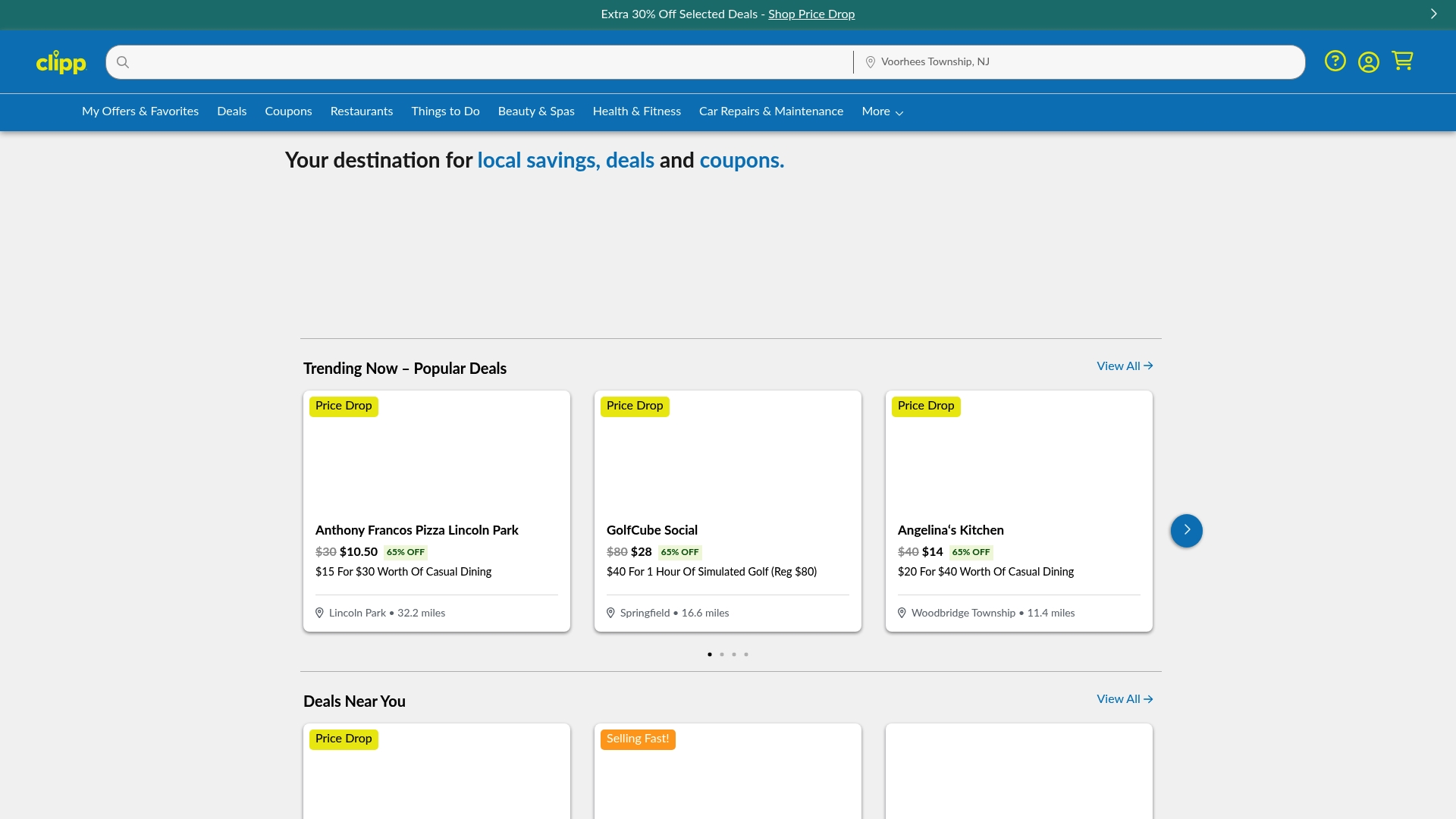
Clipp connects you directly to the best local deals on dining, wellness, home services, entertainment, and more in your neighborhood. The platform curates exclusive local discounts across dozens of categories, so your deal-finding checklist has a reliable local source built in. Browse trending offers, clip coupons instantly, and set alerts for the categories you shop most. Every deal on Clipp.com is verified and time-sensitive, which means you are always looking at real savings rather than stale promotions. Start browsing local deals now and add Clipp to your regular checklist routine.
FAQ
What is a checklist for finding deals?
A checklist for finding deals is a structured set of steps that combines price research, coupon tools, cashback apps, and total cost verification to help shoppers secure genuine discounts. It replaces guesswork with a repeatable process that works across online and local shopping.
How do I know if a discount is real?
Check the item's price history using CamelCamelCamel or Keepa to confirm the "original price" was actually charged before the sale. Always calculate the total delivered cost including shipping and taxes before deciding.
What are the best free tools for deal hunting?
Honey and Rakuten handle coupon codes and cashback automatically at checkout. CamelCamelCamel tracks Amazon price history for free. Store loyalty apps like Target Circle provide member-only discounts between 10% and 30% that are not available publicly.
How do I find the best local deals near me?
Use platforms like Clipp, which curate verified local discounts on dining, services, and entertainment by neighborhood. Enable push notifications on store apps and check local deal platforms regularly since the best offers expire quickly.
Can I stack coupons and cashback on the same purchase?
Yes. Applying a coupon code at checkout and then collecting cashback through Rakuten or Ibotta on the same order is a standard stacking strategy. This combination can reduce total costs by 15 to 30% compared to full retail price.