

TL;DR:
- Effective promotional deals accelerate customer purchases and significantly increase conversion rates when aligned with specific goals. Small businesses should carefully select deal types, target the right customer segments, and calculate break-even volume to protect margins and ensure genuine sales growth. Tracking appropriate metrics and avoiding common mistakes like frequent broad discounts enable sustainable growth and long-term brand value.
Promotional deals are defined as time-limited, value-added offers designed to accelerate customer purchase decisions and increase conversion rates. Knowing how to boost sales with deals separates businesses that grow consistently from those that discount reactively and erode their margins. The data is clear: website visitors who interact with promotions have a 244% higher purchase conversion rate compared to those who don't. That gap between 2.17% and 0.63% represents real revenue sitting on the table. This guide covers the deal types that work, how to align promotions with your goals, and how to protect profitability while driving genuine sales growth.
How to boost sales with deals: the types that actually work
Not all promotional deals convert equally. The format you choose determines whether customers act immediately or scroll past. Understanding the mechanics behind each type gives you a real advantage when planning your next campaign.
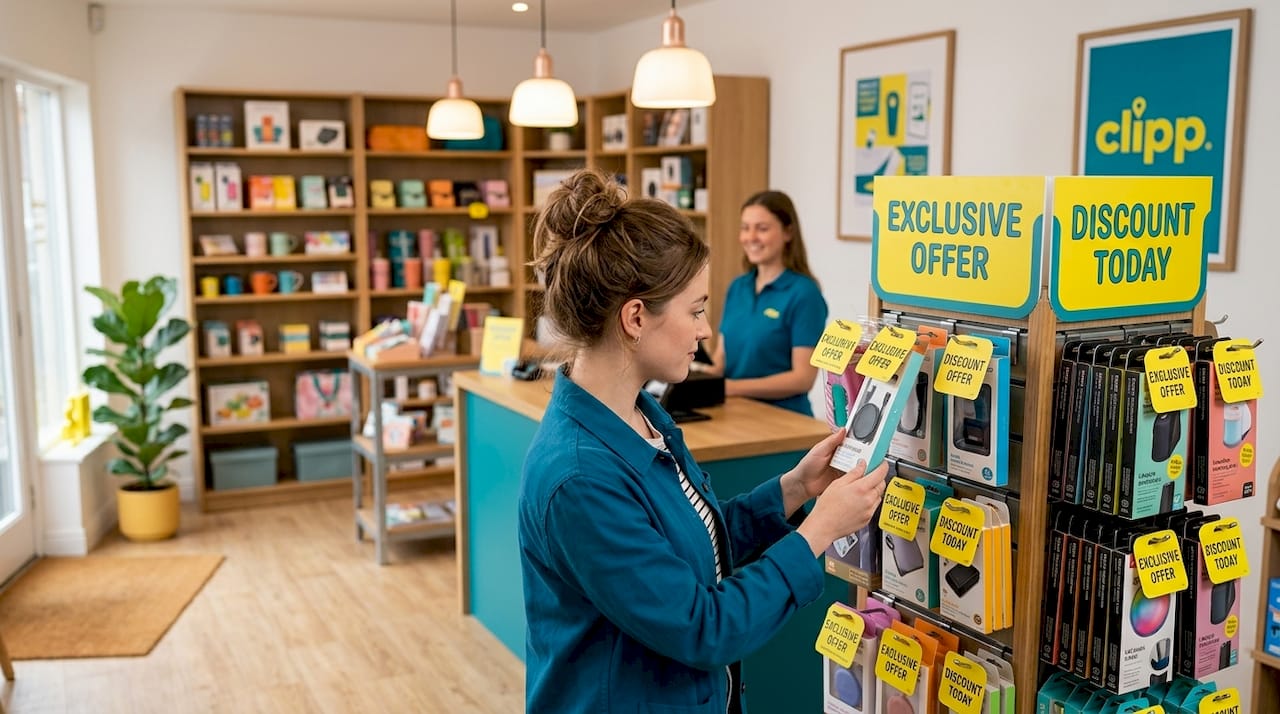
Percentage and dollar-off discounts are the most familiar format, but they carry the highest margin risk if applied broadly. Bundle deals work differently. 45% of shoppers say product bundles incentivize purchases by offering perceived added value. Bundles shift the customer's focus from price to value, which protects your average order value while moving more inventory.
Limited-time offers and flash sales are the most psychologically potent format available. 62% of shoppers cite limited-time discounts as their top purchase motivator. Countdown timers and expiration dates create urgency that removes the "I'll think about it" response. The effects of limited-time offers on purchase behavior are well documented: scarcity triggers faster decisions.
Here are the deal formats worth testing for your business:
- Percentage discounts: Best for clearing slow-moving inventory or attracting first-time buyers. Keep them shallow (10 to 15%) to protect margin.
- BOGO (buy one, get one): Moves volume without advertising a price cut. Customers perceive value; you move two units.
- Product bundles: Pair a high-margin item with a lower-margin one. The customer wins on perceived value; you win on blended margin.
- Flash sales: 4 to 24-hour windows with steep discounts. Use sparingly to avoid training customers to wait.
- Free shipping thresholds: Setting a minimum order value for free shipping consistently lifts average order value.
- Cashback and rewards: Build repeat purchase behavior rather than one-time transactions.
Pro Tip: Free shipping often outperforms a straight percentage discount of equivalent value. Customers respond more emotionally to "free" than to a calculated saving.
How to align deals with your business goals and audience
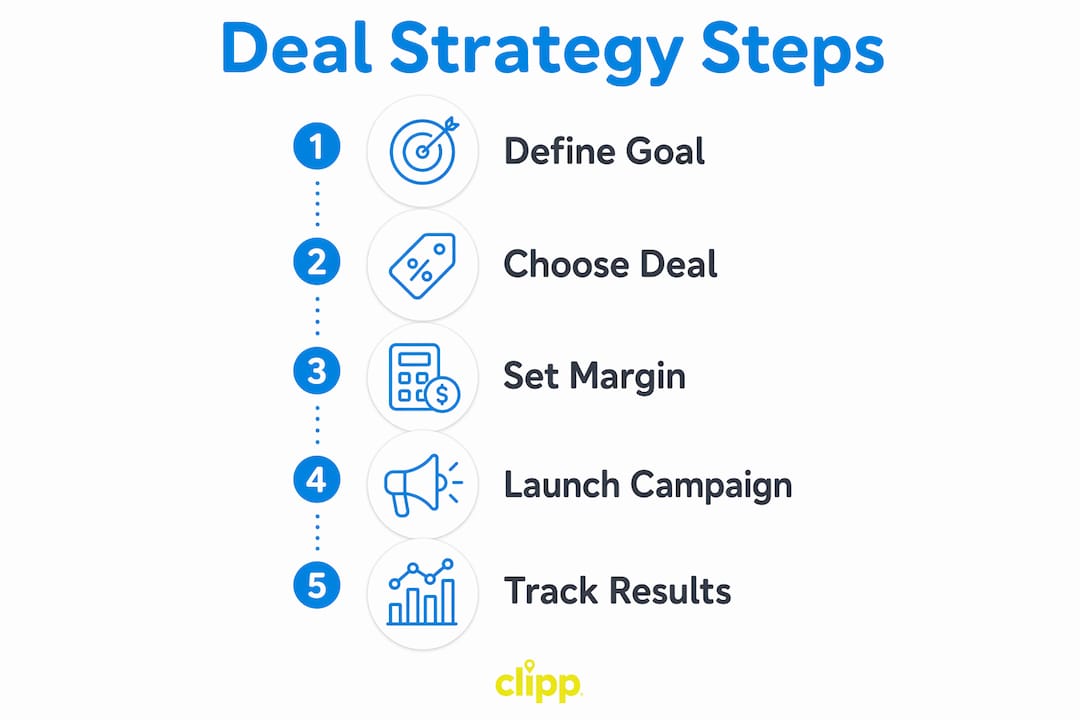
A deal without a defined goal is just a margin cut. The most effective sales strategies start with a specific objective: acquiring new customers, reactivating lapsed buyers, clearing end-of-season inventory, or rewarding loyalty. Each goal requires a different offer structure and a different audience.
82% of shoppers are more likely to buy when offered a relevant discount. The word "relevant" is doing the heavy lifting in that statistic. A blanket sitewide sale is not relevant to anyone in particular. A targeted offer sent to customers who browsed a specific category but didn't buy is highly relevant. Relevance is what converts.
Follow this sequence when planning any promotional campaign:
- Define the goal. Write it in one sentence. "Acquire 50 new customers in the next 30 days" is a goal. "Increase sales" is not.
- Identify the audience segment. New visitors, lapsed customers (no purchase in 90 days), loyal repeat buyers, and local neighborhood shoppers each need a different offer.
- Choose the deal format. Match the format to the goal. New customer acquisition works well with a first-purchase discount or free trial. Loyalty rewards work better with exclusive early access or members-only pricing.
- Select your channels. Email reaches existing customers with high intent. Social media reaches new audiences. Local deal platforms like Clipp reach neighborhood shoppers actively looking for savings in dining, wellness, and home services.
- Set a time window. Open-ended deals lose urgency. A 7 to 14-day window is long enough to reach your audience and short enough to maintain pressure.
- Define your success metric before launch. Decide in advance whether you are measuring new customer acquisition, revenue per session, or average order value. Measuring the wrong metric after the fact leads to bad decisions.
Understanding how deals engage consumers at the local level is particularly useful for small businesses competing against larger chains. Neighborhood shoppers respond strongly to location-specific offers because they feel personal and immediately actionable.
What margin-aware discounting looks like in practice
The financial math behind discounts is where most small business owners get surprised. A discount that feels modest on the surface can require a dramatic increase in sales volume just to break even on profit.
At a 40% gross margin, a 20% discount requires doubling your unit sales to maintain the same profit. That is not an edge case. It is the standard math for mid-range margins. Before running any discount, calculate your break-even volume using this formula: required sales uplift = discount percentage divided by (gross margin minus discount percentage). If the number feels unrealistic, the discount is too deep.
| Discount type | Margin impact | Best use case |
|---|---|---|
| Sitewide percentage discount | High risk, dilutes brand | Clearance only, use once or twice per year |
| Bundle discount | Low to medium risk | Increases AOV, moves paired inventory |
| Segment-specific offer | Low risk | Targets lapsed customers without touching loyal buyers |
| Flash sale | Medium risk | Short window limits total margin exposure |
| Loyalty reward | Low risk | Rewards existing spend rather than cutting price |
Bulk and bundle discounts protect average order value far better than sitewide cuts. Broad discounts dilute brand perception and margin simultaneously. Bundles shift the conversation to value.
The most counterintuitive rule in discount strategy: your highest-value customers should almost never receive discounts. Discounting your best buyers trains them to wait for sales and cannibalizes revenue you would have captured at full price. Instead, route your deepest discounts to lapsed customers who need a reason to return, and use RFM segmentation (recency, frequency, monetary value) to sort your customer base before any campaign goes live.
Pro Tip: Run a holdout test by withholding your deal from a random 10% of your audience. Compare their purchase rate to the group that received the offer. The difference is your true incremental lift, not just correlation.
How to execute, track, and optimize your promotions
Launching a deal without a tracking plan produces data you cannot act on. The execution phase is where good strategy either compounds or falls apart.
Start with a content calendar that maps every deal to a specific date, channel, and audience segment. Time-sensitive offers require assets (email copy, social graphics, landing pages) ready at least one week before launch. Last-minute execution leads to errors and missed send windows.
The metrics that matter most for deal performance:
- Revenue per session: Measures the true value of each visitor during the promo period, not just total revenue, which can be inflated by volume.
- Average order value (AOV): Tells you whether customers are buying more or just buying cheaper.
- Conversion rate by segment: Breaks down which audience responded and which did not.
- New customer rate: Tracks whether the deal attracted genuinely new buyers or just discounted existing ones.
Judging success only by revenue is misleading. Revenue per session and average order value reveal whether a promotion actually improved business health or just moved the same dollars at a lower margin. A post-promo analysis comparing these metrics against your baseline is non-negotiable.
A/B testing deal formats is one of the highest-leverage activities available to small business marketers. Test one variable at a time: discount depth, offer format, time window, or subject line. Run each test long enough to reach statistical significance before drawing conclusions.
Common mistakes that undermine deal strategies
Most deal campaigns that fail do so for predictable reasons. Recognizing these patterns before launch saves both margin and brand equity.
- Discounting too frequently. Frequent discounting trains customers to wait for sales rather than buying at full price. Once that behavior is established, it is very difficult to reverse.
- Applying discounts too broadly. Sitewide sales feel generous but they discount customers who would have paid full price anyway. That is pure margin loss with no incremental benefit.
- Ignoring incrementality. A spike in sales during a promo period does not prove the deal caused the spike. Without a holdout group, you cannot separate deal-driven purchases from purchases that would have happened regardless.
- Using false urgency. Countdown timers that reset or "limited stock" claims that never run out destroy customer trust. Once a customer catches the manipulation, they rarely return.
- Skipping the post-promo analysis. Running deals without reviewing results means repeating the same mistakes at scale.
"Promotions should be used sparingly, with clear goals, and with a plan to measure their true impact. A deal that feels successful on the surface can quietly erode the brand and margin over time."
The strategic reasons behind discounting matter as much as the mechanics. Businesses that discount reactively, out of competitive pressure or slow periods, rarely build the customer relationships that sustain long-term growth.
Key takeaways
Effective deal strategy requires matching offer format to a specific goal, targeting the right customer segment, and calculating break-even volume before any discount goes live.
| Point | Details |
|---|---|
| Match deal type to goal | Bundles and flash sales serve different objectives; choose based on what you need to achieve. |
| Protect your best customers | Never discount your highest-value buyers; route deep offers to lapsed segments instead. |
| Calculate break-even first | At 40% margin, a 20% discount requires doubling unit sales to maintain profit. |
| Track revenue per session | Total revenue misleads; revenue per session and AOV reveal true promotion health. |
| Use holdout groups | Withhold deals from 10% of your audience to measure genuine incremental lift. |
Why I think most small businesses are discounting backwards
After years of watching promotional campaigns succeed and fail, the pattern I keep seeing is the same: businesses discount their most loyal customers first and their lapsed customers last. It is exactly backwards. Your loyal buyers will purchase again without a discount. Your lapsed buyers need a compelling reason to return. Routing your best offers to the wrong segment is the single most common and most expensive mistake in deal strategy.
The second thing I have learned is that deal frequency is a brand decision, not just a revenue decision. Every time you run a sitewide sale, you are implicitly telling customers that your full price is negotiable. Some businesses can sustain that positioning. Most local service businesses cannot. Exclusivity and scarcity are what make selective promo codes drive both short-term acceleration and long-term loyalty. When a deal feels rare, it feels valuable.
The businesses I have seen grow consistently through promotions share one habit: they define success before the campaign launches, not after. They know their break-even volume, their target segment, and their measurement method before the first email goes out. That discipline is what separates a profitable promotion from an expensive experiment.
— Mehmet
How Clipp can help your business attract local customers
Small businesses looking to put these strategies into practice have a direct path through Clipp. The platform connects local merchants with neighborhood shoppers actively searching for deals in dining, wellness, home improvement, and more.
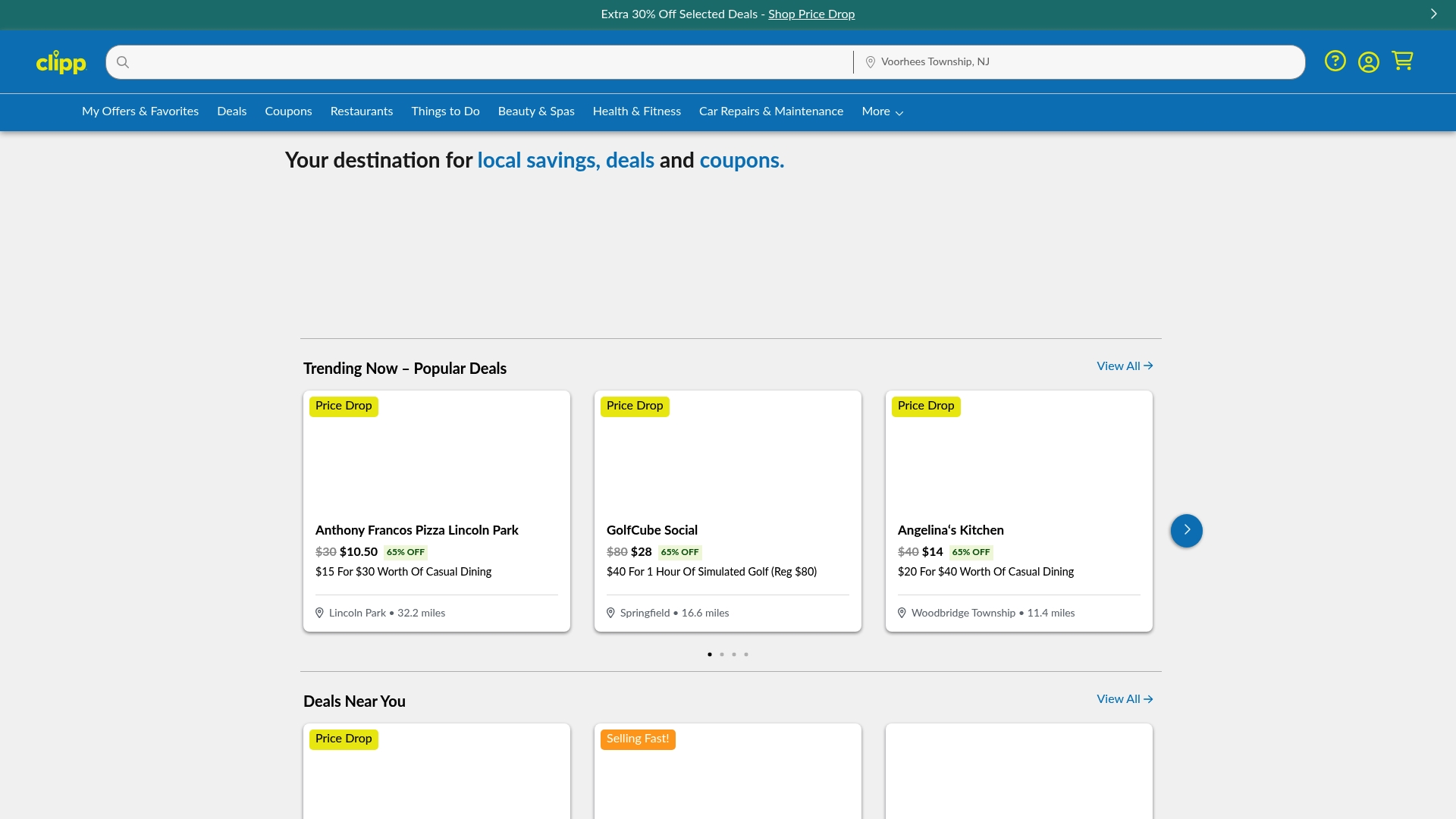
Clipp gives small business owners a ready-made audience of deal-seeking local consumers without the overhead of building a promotional infrastructure from scratch. Whether you are running a flash sale, a bundle offer, or a first-time customer discount, listing on Clipp puts your offer in front of buyers who are already in purchase mode. Browse local deals on Clipp to see how local businesses in your area are structuring their offers, or explore coupons available now to understand what formats resonate with local shoppers. The platform's "Trending Deals" and "Near You" sections give your promotion immediate visibility with the highest-intent audience available.
FAQ
What types of deals increase sales the most?
Limited-time discounts are the top purchase motivator for 62% of shoppers, followed by product bundles, which 45% of shoppers say incentivize purchases through perceived added value. Flash sales and free shipping thresholds also consistently lift conversion rates.
How do I discount without hurting my profit margin?
Calculate your break-even volume before setting any discount depth. At a 40% gross margin, a 20% discount requires doubling unit sales to maintain the same profit. Use segmented offers and bundle deals rather than sitewide cuts to limit margin exposure.
How often should a small business run promotional deals?
Deals should be used sparingly and tied to specific goals such as new customer acquisition or inventory clearance. Frequent discounting trains customers to wait for sales and devalues your full-price positioning over time.
How do I know if a deal actually drove sales or just coincided with them?
Run a holdout test by withholding the offer from a random 10% of your audience. Compare their purchase rate to the group that received the deal. The difference between the two groups represents your true incremental lift.
Which metrics should I track during a sales promotion?
Track revenue per session, average order value, and conversion rate by segment rather than total revenue alone. Total revenue during a promo period can be misleading because it does not account for margin erosion or purchases that would have happened anyway.