

TL;DR:
- Deal alerts automatically notify you when prices drop or promotions begin, saving time by replacing manual searching.
- They can be customized for products, categories, and local businesses, making deal tracking more efficient and relevant.
If you've ever missed a sale on something you actually needed, you already understand the core problem that deal alerts solve. A deal alert is an automatic notification that tells you when a price drops, a coupon goes live, or a limited-time promotion becomes available. Instead of checking websites repeatedly and hoping you get lucky, the alert does the watching for you. This guide breaks down the deal alert meaning in plain terms, shows you exactly how to set one up, and gives you practical strategies for turning notifications into real savings, including on local services near you.
Table of Contents
- Key takeaways
- What is a deal alert and how does it work
- How to set deal alerts on popular platforms
- Benefits and best practices of using deal alerts
- Types of deal alerts and tools for local discounts
- My honest take on using deal alerts wisely
- Start saving locally with Clipp
- FAQ
Key takeaways
| Point | Details |
|---|---|
| Deal alerts automate deal tracking | You get notified instantly when prices drop or promotions go live, so you never miss a deal. |
| Multiple channels deliver alerts | Notifications arrive via push alerts, email, or browser pings depending on your platform setup. |
| Customization prevents alert fatigue | Narrow alerts to specific products and realistic price targets to keep notifications useful, not overwhelming. |
| Local deal alerts find neighborhood savings | Location-based alerts surface discounts at nearby restaurants, gyms, salons, and more. |
| Deal alerts support smarter spending | Using alerts with a budget and shopping list turns passive notifications into deliberate savings. |
What is a deal alert and how does it work
A deal alert is a notification system that monitors prices or promotions on your behalf and contacts you the moment a qualifying deal appears. The simplest version is a price drop alert. You tell a platform what item you want and what price would make you buy. When the price hits that level, you get pinged.
The difference between a deal alert and manual deal searching is significant. Manual searching means you open a website, look around, and leave without finding anything useful, then repeat that process every few days. An alert flips that process. The platform searches continuously in the background, and notifications reach you through push notifications on apps, emails, or browser alerts depending on how you set things up.
What are deal alerts across different platforms? Here is what they typically look like in practice:
- Price drop alerts: You save a product to a wish list or watchlist. The platform monitors the price and notifies you when it falls below your target.
- Limited-time offer alerts: Flash sales and Lightning Deals have short windows. An alert lets you act before the window closes instead of stumbling on the deal after it expires.
- Coupon and promo code alerts: Some platforms track when new coupons appear for your favorite stores or product categories.
- Category alerts: Rather than watching a specific item, you set a broad alert for a category like "running shoes under $80" or "dining deals near me."
- Local deal alerts: Location-based platforms notify you about discounts at businesses in your actual neighborhood, from hair salons to pizza spots.
Deal alert apps range from large marketplaces to community-driven sites. Slickdeals lets users set alerts on specific items or product categories and relies on a community of deal hunters to surface and verify offers. Amazon runs its own native alert system within its app and wish list feature. Local-focused platforms pull together deals from nearby merchants and push them directly to you.
How to set deal alerts on popular platforms
Getting your first alert running takes less than five minutes on most platforms. Here is a practical walkthrough across the most common services.
-
Amazon Wish List alerts: Add an item to your Amazon Wish List and enable deal notifications from your account settings. Amazon will push a notification when that item sees a Lightning Deal or price drop.
-
Amazon Alexa app notifications: Open the Alexa app, go to Settings, then Notifications, then choose Amazon Shopping. Toggle on deal notifications to start receiving shopping alerts tied to your account.
-
Amazon Rufus price tracking: Amazon's AI tool Rufus can monitor price changes and notify you when an item hits your target price. Prime members can even set auto-buy rules, so the purchase happens automatically when the deal lands.
-
Slickdeals alerts: Create a free account on Slickdeals, search for the product or category you want, and hit "Create Alert." You can set a minimum discount threshold so you only hear about deals that actually clear your bar.
-
Local deal platform alerts: On platforms like Clipp, you can subscribe to deal notifications filtered by your city or neighborhood. Alerts then surface relevant local promotions for dining, wellness, home improvement, and more.
-
Browser and email preferences: Most platforms let you choose between push notifications on your phone, daily or weekly email digests, or both. Match the delivery method to how quickly you need to act on a particular type of deal.
Pro Tip: Set your price target about 10 to 15 percent below the current price rather than the absolute lowest you have ever seen. Extreme targets rarely trigger, which means you wait forever while the item sells at a price that would have already saved you meaningful money.
Benefits and best practices of using deal alerts
The biggest benefit of deal alerts is time savings. Flight price alerts make this point clearly: instead of checking prices obsessively every day, you set an alert and move on. The same logic applies to every other category. You stop refreshing websites and start living your life while the monitoring runs quietly in the background.
But the benefits go beyond convenience. Here is what using deal alerts well actually looks like:
- Avoiding impulse buys: When you set a price target before shopping, you create a rule for yourself. The alert only fires when the item hits your threshold, which removes the temptation to buy at a mediocre discount just because you saw the listing.
- Planning around major sales: Use alerts in the weeks before events like Black Friday or back-to-school season. Platforms often post early deals, and alerts catch these before they sell out. Pairing alerts with smart seasonal planning means you spend less and get more of what you actually wanted.
- Capturing local savings: Neighborhood businesses frequently run promotions that never appear on national deal sites. Local alert platforms fill this gap by focusing specifically on your area, making it possible to find 40 or 50 percent off at a salon or gym a few blocks away.
- Prioritizing fast action: Some deals expire in hours. A push notification lets you act while the window is open. An email digest that arrives the next morning is too late for flash sales, so match your notification format to the deal type.
The most common mistake people make is creating too many alerts with thresholds that are unrealistically low. You end up ignoring the constant stream of notifications, which means you also miss the ones that matter.
Pro Tip: Start with five alerts maximum. Pick the items or categories you genuinely plan to buy in the next 30 days and set realistic price targets. Once you feel the benefit, you can expand your list without getting buried in notifications.
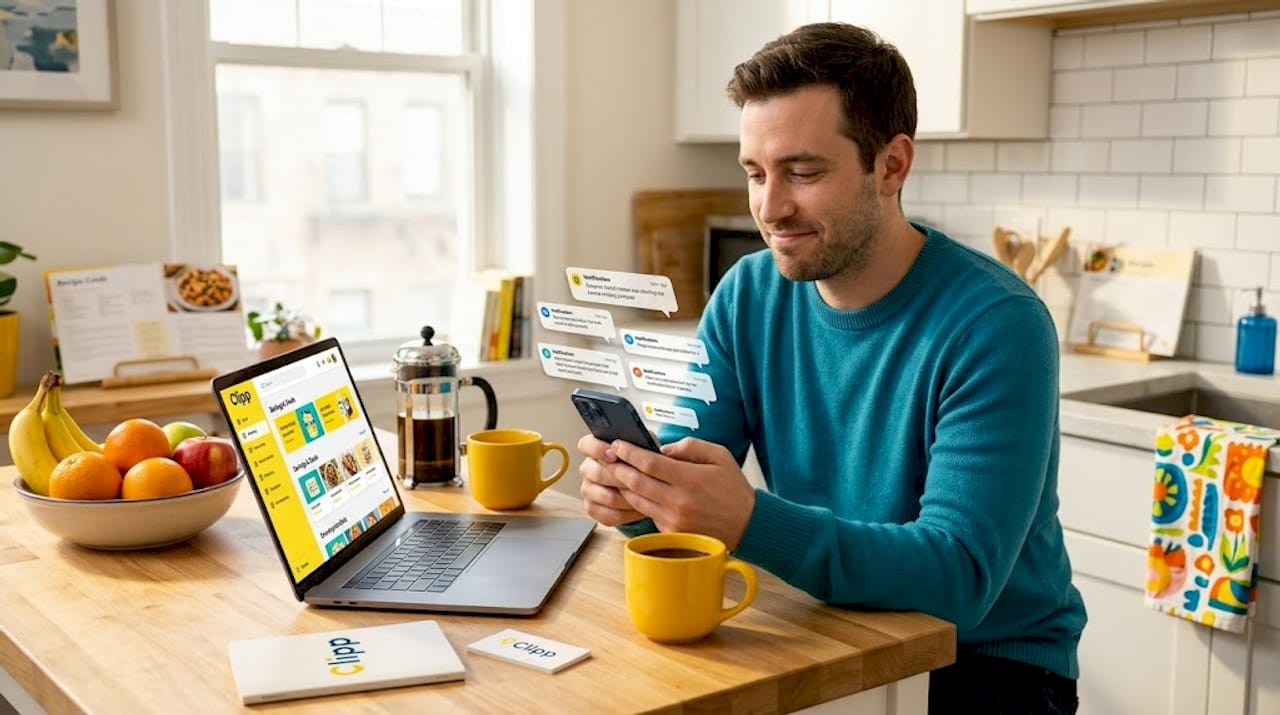
Customization is the key to keeping alerts useful long-term. Tailor each one to a specific product or tight category and revisit your list monthly to remove alerts for things you no longer need.
Types of deal alerts and tools for local discounts
Understanding the different types of deal alerts helps you choose the right tool for each situation. Not all alerts work the same way, and the best setup for online shopping looks different from the best setup for local savings.
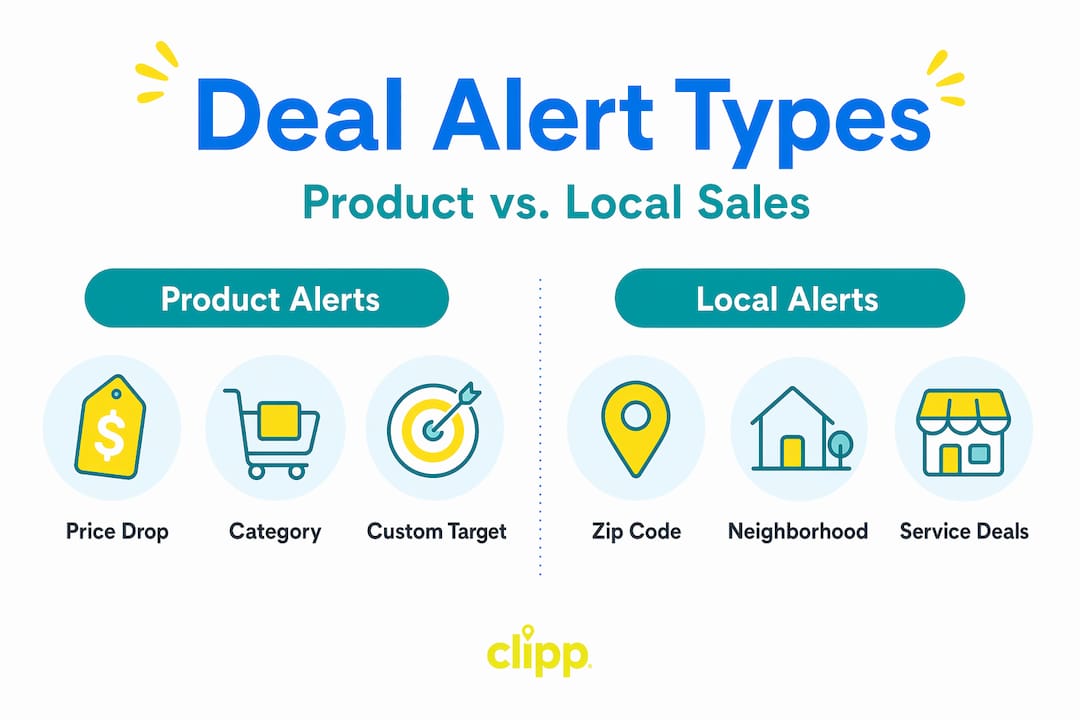
| Alert type | Best for | Example platforms | Notification speed |
|---|---|---|---|
| Price drop alerts | Specific online products | Amazon, Slickdeals | Real-time push notification |
| Limited-time offer alerts | Flash sales and clearance | Amazon, deal websites | Immediate, time-sensitive |
| Coupon and promo code alerts | Category or store savings | Deal community sites | Daily or weekly digest |
| Local deal alerts | Neighborhood businesses | Clipp, local apps | Real-time or daily roundup |
| Category alerts | Broad ongoing monitoring | Deal aggregators | Customizable frequency |
Local deal alerts deserve their own attention because they work differently from product-based alerts. Rather than tracking a specific SKU, they monitor what local businesses near you are offering right now. A restaurant might post a 40 percent off lunch special. A yoga studio might run a new member promotion. These deals move fast and do not appear on Amazon or general deal sites. A location-aware platform serves them directly to you.
Deal alert apps with location features use your zip code or city to filter what you see. You get neighborhood-focused deals rather than promotions from stores two states away. This makes the alerts feel immediately relevant rather than noise you have to filter through.
For people who want to go deeper, combining several alert types works well. Use a price alert for big planned purchases, a category alert for browsing deals in areas you shop regularly, and a local alert to stay connected to what is happening near you. You are running multiple simple systems rather than trying to track everything manually, and together they cover most of your real spending.
My honest take on using deal alerts wisely
I've watched a lot of people set up deal alerts with excitement and then quietly turn them all off within two weeks. The problem is almost never the alerts themselves. It's that they created too many, set impossible targets, or signed up for categories they don't actually shop.
In my experience, the best way to use deal alerts is to start with a clear shopping list. Not a wish list of things you might want someday. An actual list of things you plan to buy in the next 30 to 60 days. When your alerts are grounded in real purchasing intent, every notification feels relevant. When they're not, every notification feels like spam.
What I've learned after years of testing these tools is that deal alerts work best as a discipline tool, not just a money-saving tool. Setting a target price before you shop forces you to decide what something is actually worth to you before you see the discount. That single habit changes how you respond to promotions entirely.
I also think people underestimate local deal platforms compared to big marketplace alerts. Some of the best savings I've found were at local restaurants and service businesses that never show up on general deal sites. If you only use Amazon-style alerts, you're missing a real category of savings that exists right in your neighborhood.
The uncomfortable truth about deal alerts is that they amplify whatever habits you already have. If you shop impulsively, more notifications will make that worse. If you shop with a plan, alerts give that plan real financial leverage.
— Mehmet
Start saving locally with Clipp
You now understand what deal alerts are and how they work. The next step is finding a platform that actually serves your neighborhood.
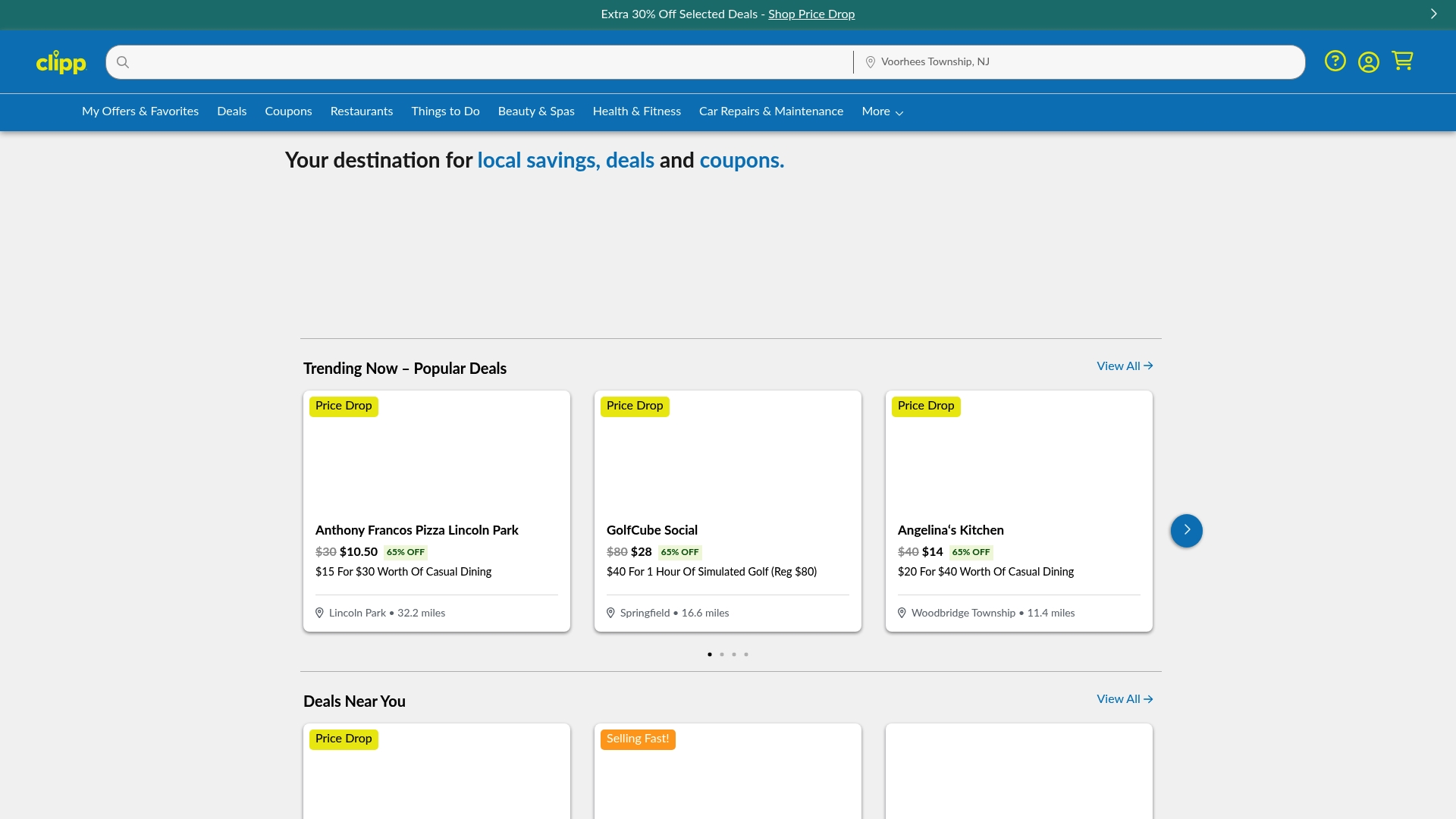
Clipp is built specifically for local savings. Unlike platforms focused on online retail, Clipp connects you with real deals near you across dining, wellness, home services, entertainment, and more. You can browse trending offers by category, find local coupons in Ashburn, and get notified when fresh promotions go live in your area. Whether you're looking for a great restaurant deal tonight or a discount at a gym you've been meaning to try, Clipp puts those savings in one place. The platform is easy to navigate on both desktop and mobile, so you can act on a deal the moment it appears. Explore what's available near you today and start putting local savings to work.
FAQ
What is the deal alert meaning?
A deal alert is an automatic notification that tells you when a price drops or a promotion becomes available on a product, service, or category you are watching. It replaces manual price checking with a background monitoring system.
How do I create a deal alert on Amazon?
Add items to your Amazon Wish List and turn on deal notifications in the Alexa app under Amazon Shopping settings. Amazon will notify you when those items see price drops or Lightning Deals.
What are the main benefits of deal alerts?
Deal alerts save time by monitoring prices automatically, help you avoid impulse purchases by locking in a target price first, and surface deals you would have missed by checking manually. Local alerts also expose neighborhood discounts that never appear on national platforms.
How do I avoid alert fatigue from deal notifications?
Keep your active alerts limited to items you genuinely plan to buy soon and set realistic price targets rather than unrealistically low thresholds. Choosing a daily email digest instead of real-time push notifications for non-urgent categories also reduces the feeling of constant interruption.
Can deal alerts work for local restaurant and service deals?
Yes. Location-based platforms like Clipp send neighborhood-specific alerts for businesses near you, including restaurants, salons, gyms, and local services, which are categories that standard price-drop tools do not cover.