

TL;DR:
- Effective deal promotions require thorough planning, including clear goals, targeted channels, and messaging. Monitoring redemption, sales, and customer data throughout the campaign optimizes results and prevents costly mistakes. Success depends on disciplined execution, team alignment, and honest post-campaign analysis.
Running a promotion sounds simple until you're three days out and the offer is confusing, the team is unprepared, and you've already spent half your budget on ads. A step by step deal promotion process is exactly what separates the businesses that see real sales lift from those that run a discount and wonder why nothing changed. In marketing, this structured approach is commonly called sales promotion planning, and it covers everything from defining your offer to measuring results. This guide gives you a practical, sequenced framework built specifically for local small business owners who want promotions that actually drive foot traffic and revenue.
Table of Contents
- Key Takeaways
- Step by step deal promotion: prep work that decides everything
- Designing and launching your promotion
- Monitoring and optimizing mid-campaign
- Common mistakes that derail promotions
- Verifying your results after the promotion ends
- My take on what actually matters
- How Clipp can help you promote deals locally
- FAQ
Key Takeaways
| Point | Details |
|---|---|
| Preparation beats discounts | Validating your audience and goals before launch produces better results than any price cut alone. |
| Channel choice drives results | Local deal promotion channels should match your budget and where your customers already spend time. |
| Structured steps prevent losses | Following a clear sequence from concept to launch reduces costly errors in setup, timing, and messaging. |
| Real-time monitoring matters | Tracking redemption rates and sales impact during the promotion lets you adjust before the window closes. |
| Documentation fuels improvement | Recording what worked and what failed gives you a concrete starting point for your next promotion. |
Step by step deal promotion: prep work that decides everything
Most promotion failures are decided before the first ad is published. The preparation phase is where you make or break the campaign, and most small business owners skip it entirely.
Define your goal and who you're targeting
Before you build an offer, write down one specific outcome: attract 30 new customers, move excess inventory in a specific product line, or increase weekday lunch traffic by 20%. Vague goals produce vague promotions. Once you have a goal, identify the specific local customer segment you're targeting. A gym owner running a January membership deal should think differently about messaging to lapsed members versus brand-new prospects.
Gather whatever data you have. Even simple purchase history, customer reviews, or foot traffic patterns tell you which offer format is worth testing. According to the Tremendous framework for sales promotion, discarding guesswork and focusing on disciplined execution consistently leads to better outcomes than relying on intuition alone.
Choose your channels before you build your creative
The Library of Congress Small Business Hub recommends starting with your owned channels: a current website, a verified Google Business Profile, active social media accounts, and a recent base of customer reviews. These cost nothing and reach people who are already looking for you locally.
Once organic channels are sorted, layer in paid or physical options only where the budget supports it. Direct mail through USPS, for example, can be highly effective for local reach, but USPS promotions require timely registration and design pre-approval integrated into your production schedule. Miss those deadlines, and you forfeit the discount entirely.
Here is a quick reference for matching channels to situations:
| Channel | Best for | Lead time needed |
|---|---|---|
| Google Business Profile | In-market local buyers | 1 to 2 days |
| Email list | Existing customers | 3 to 5 days |
| Social media posts | Community awareness | 2 to 3 days |
| USPS direct mail | Broad local households | 3 to 4 weeks |
| Google Merchant Center | Online product visibility | At least 5 days |
| Local deal platforms | New customer acquisition | 1 to 3 days |
Pro Tip: Build your channel plan before you finalize the offer. The channel shapes the message format, not the other way around.
Designing and launching your promotion
Once you've completed your prep work, you move into execution. This is where your local coupon marketing guide tactics come to life in a specific sequence.
The launch sequence, step by step
-
Build the offer. Decide on the discount type: flat dollar off, percentage discount, buy-one-get-one, or a bundle deal. Each has different profit implications. A 20% universal discount at a 40% margin requires roughly double the sales volume just to break even. Bundle mechanics, by contrast, preserve your average order value far better.
-
Set your budget and limits. Decide the maximum number of redemptions, the total dollar exposure, and whether you need extra inventory or additional staff hours. Be specific here. "We'll cap this at 50 redemptions" is a business decision. "We'll see how it goes" is not.
-
Write your messaging. Use plain language. The offer should be understood in under five seconds. State the discount, the qualifying condition, the expiration date, and one clear call to action. Urgency works only when customers trust the offer, so avoid fake scarcity.
-
Schedule your communications. For email, a three-step sequence works well: a launch announcement, a midpoint reminder, and a last-chance message. Add a short SMS alert for your last-chance send if you have a subscriber list.
-
Set up tracking. Assign a unique promo code or create a visible storefront display. If you list the deal on Google Merchant Center, submit the promotion feed at least 5 days before the sale starts to avoid missing the activation window. Make sure product IDs and promotion IDs are unique and correctly matched, since mismatched IDs cause disapprovals.
-
Brief your team. Aligning marketing, sales, and operations before launch is one of the most overlooked steps. Your front desk, kitchen, or fulfillment team needs to know what the promotion is, how to apply it, and how to handle edge cases.
-
Launch and monitor immediately. Watch your first hours of data. Early signal problems: zero redemptions after 24 hours, customer confusion questions, or inventory running out faster than expected.
Pro Tip: For any digital listing, treat your promotion ID the same way you treat a product SKU. Reusing old IDs is one of the most common reasons deals fail to display properly.
Monitoring and optimizing mid-campaign
Getting the promotion live is not the finish line. The window while a deal is running is when your decisions have the most leverage.
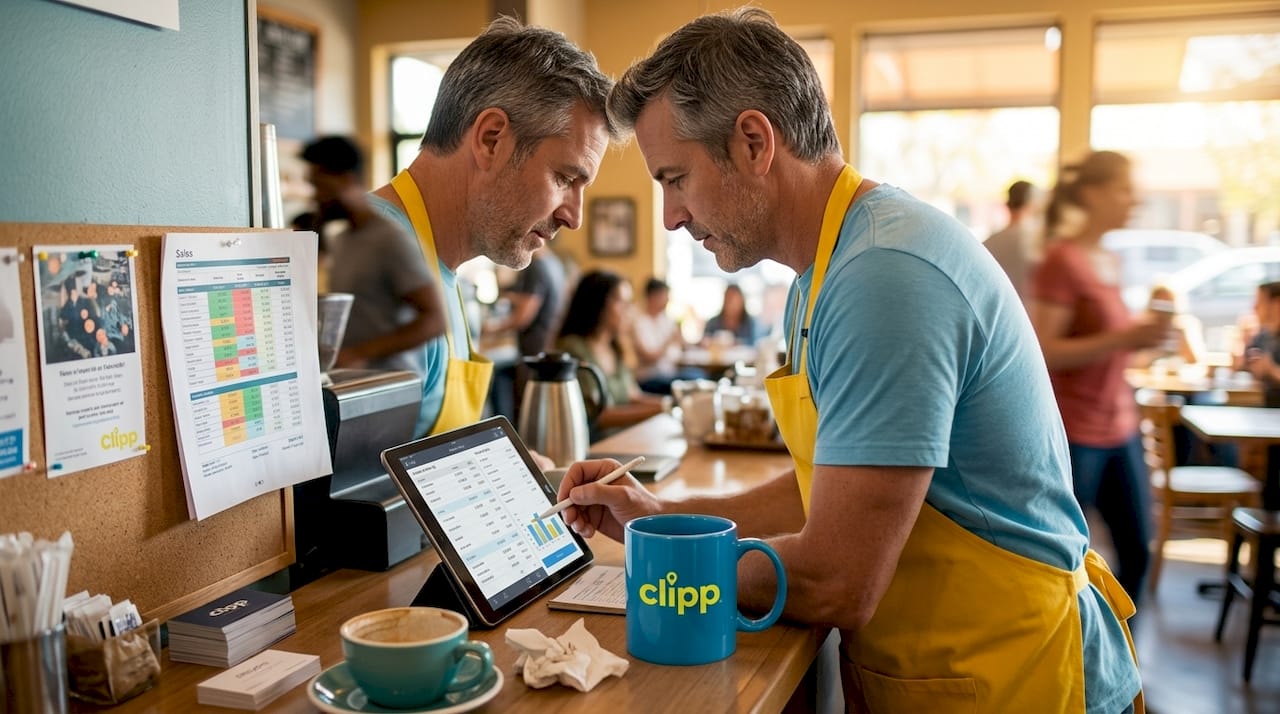
Watch three numbers above everything else: redemption rate (actual vs. projected), new versus returning customer split, and sales volume per day versus your baseline. If redemption is stalling, the problem is usually reach or messaging clarity. If volume is strong but profit is lower than expected, revisit your discount structure.
| Symptom | Likely cause | Quick fix |
|---|---|---|
| Low redemption rate | Weak reach or unclear offer | Boost organic posts, simplify CTA |
| High redemption, low margin | Discount too deep | Tighten eligibility rules mid-run |
| Customer complaints | Confusing terms or staff unaware | Team briefing, update FAQ post |
| Inventory shortage | Underestimated demand | Pause ads, update offer limits |
| No new customers | Promotion only reached existing base | Add a local deal platform listing |
Reassign budget during the campaign if one channel is clearly outperforming another. A social post getting organic traction is worth a small paid boost. An email series getting zero clicks needs a subject line rewrite before the reminder goes out.
Pro Tip: Build a daily five-minute check-in into your promotion calendar. You cannot optimize what you are not watching.
Common mistakes that derail promotions
Even well-prepared promotions run into problems. Here are the patterns that show up most often, along with quick fixes.
-
Skipping customer validation. Building an offer based on what you think customers want, rather than what your data or feedback shows, is the fastest way to run a promotion nobody redeems. Talk to five customers before you finalize the structure.
-
Late submissions on third-party platforms. Google Merchant Center needs at least 5 days of lead time. USPS direct mail programs require registration weeks in advance. Build a deadline calendar that works backward from your launch date.
-
Over-discounting without math. Run a break-even analysis before you publish. If a 20% discount at a 40% margin requires doubling your volume to break even, that is a known risk you should decide on consciously.
-
Team misalignment. Marketing launches a promotion the operations team does not know about. This creates negative customer experiences that hurt your brand more than the discount helps.
-
Inconsistent messaging. If the in-store sign says 25% off and the email says 30% off, customers lose trust immediately. Use a single source of truth document and distribute it to everyone involved.
Structured vendor and retailer collaboration around deal funding, with shared real-time data, reduces disputes and creates measurable promotion success. The same principle applies internally: shared data prevents confusion between your own teams.
Verifying your results after the promotion ends
When the promotion closes, your job is not done. Verification is what turns a single campaign into a repeatable system.
Look at these metrics after every promotion:
- Sales lift: Compare total revenue during the promotion period to the same period in the prior month or year.
- New customer count: Track how many first-time buyers or visitors the promotion generated. This is the metric that tells you whether the promotion grew your customer base or just gave discounts to existing ones.
- Redemption accuracy: Audit your promo codes or coupon redemptions against your actual discount costs to confirm the numbers match what you planned.
- Repeat visit rate: Did any new customers come back within 30 days? Promotions that attract one-time deal-seekers have limited long-term value. Promotions that convert new faces into regulars are worth scaling.
Document everything in a simple post-promotion report: what you offered, which channels you used, redemption count, cost, and revenue. Read the restaurant coupon types breakdown for a concrete example of how different deal mechanics produce different result profiles. Use each report to set the starting conditions for your next campaign.
My take on what actually matters
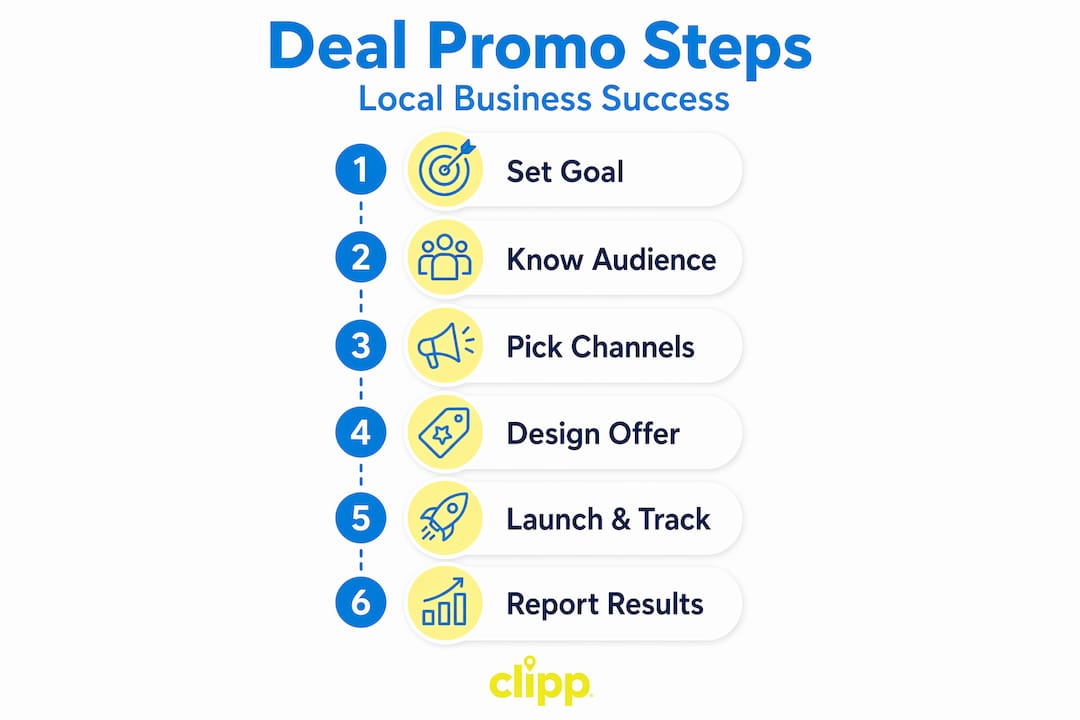
Running promotions for local businesses, I've seen every possible variation of this process play out. And here's what I keep coming back to: the businesses that run consistently successful promotions are almost never the ones with the biggest budgets or the deepest discounts. They are the ones who treat every promotion like a small experiment with a hypothesis.
The most common mistake I've seen is treating the discount amount as the main creative decision. Owners spend hours debating whether to offer 15% or 20% off, while skipping the question of whether the offer structure even matches what their customers actually respond to. That's backwards. The mechanics matter far more than the number.
I've also learned that local community involvement changes the math. A promotion tied to a neighborhood event, a local school fundraiser, or a community cause gets organic sharing that paid ads cannot buy. People promote things they feel connected to. That's not a marketing trick. It's just how trust works at a local level.
What I tell every small business owner I work with: run the math before you launch, brief your team like you brief a customer, and read the data honestly after. Skip any one of those three, and you'll spend money wondering what went wrong.
— Mehmet
How Clipp can help you promote deals locally
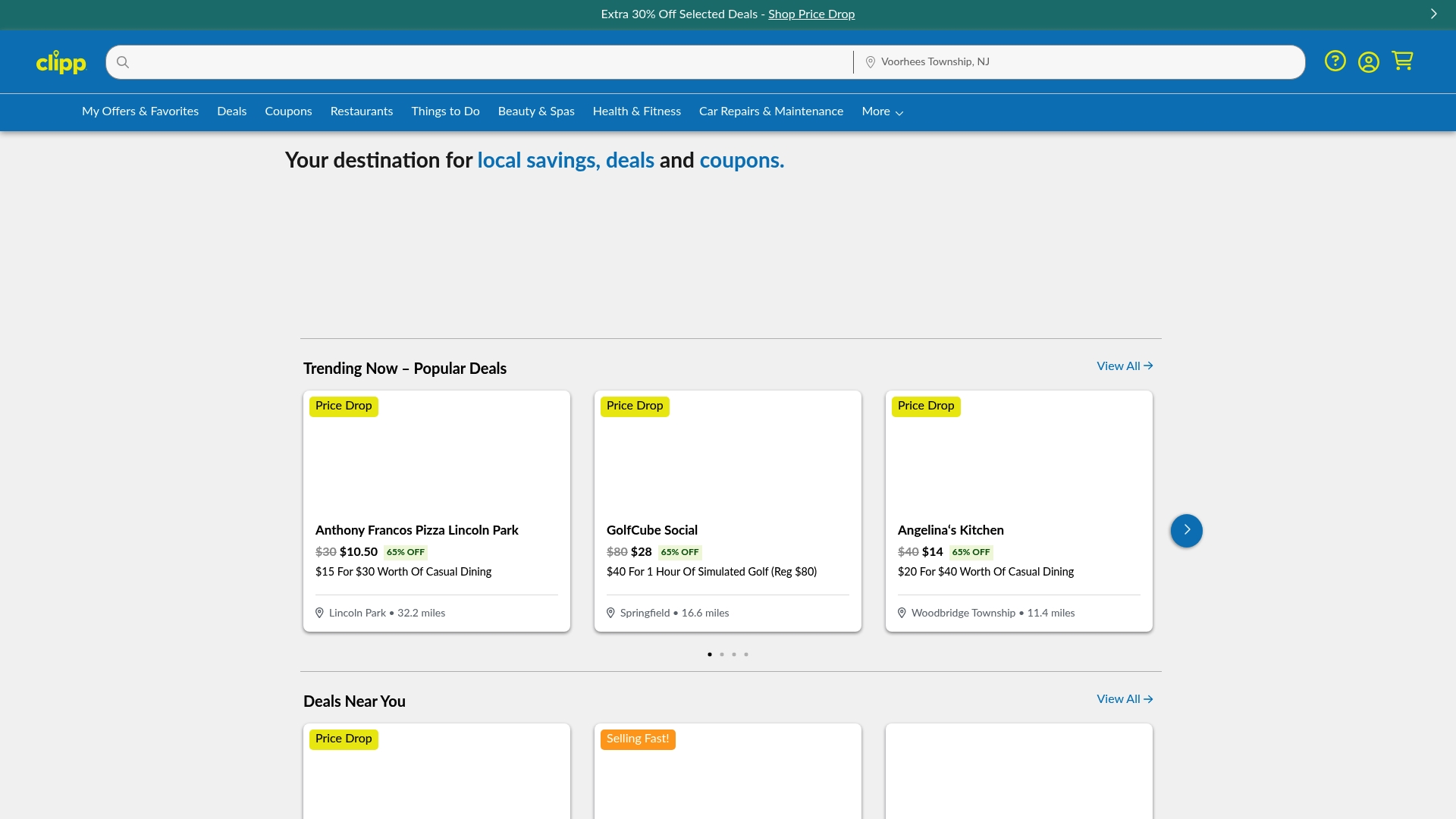
If you want your promotion in front of local buyers who are actively searching for deals right now, Clipp is built exactly for that. The platform connects local businesses with deal-seeking customers across dining, wellness, home services, and more in their immediate neighborhoods.
Listing your deal on Clipp puts it in front of a local audience that already has buying intent. You get category-level visibility without the overhead of running paid search campaigns from scratch. Browse the active local deals on Clipp to see how other businesses in your area are structuring their promotions, and use that as a reference point for your own offer design. Learn more about the coupon listing process to get your deal set up and visible fast.
FAQ
What is the first step in planning a deal promotion?
Define a specific, measurable goal before building any offer. Whether your goal is new customer acquisition or clearing inventory, the goal determines everything else: the discount structure, the channels, and the messaging.
How far in advance should I plan a deal promotion?
For most local promotions, two weeks of lead time is a reliable minimum. If you're using Google Merchant Center, plan at least 5 days ahead. USPS direct mail programs require registration and design approval several weeks out.
How do I avoid losing money on a discount promotion?
Run a break-even analysis before you launch. A 20% discount at 40% margin requires roughly double your normal sales volume to break even. Bundle deals and minimum-purchase thresholds protect margins better than flat percentage cuts.
What metrics should I track during a promotion?
Monitor redemption rate, daily sales volume versus baseline, and new versus returning customer split. These three numbers tell you whether the promotion is reaching the right people and whether the offer structure is working as planned.
How do I know if my promotion was successful?
Compare sales during the promotion period to a control period, track new customer count, and audit redemption accuracy against your projected costs. Document the results in a short post-promotion report and use it to set the baseline for your next campaign.