

TL;DR:
- Exclusive deals provide consumers with access to discounts, products, or experiences not available through regular channels. However, long-term exclusivity can lead to higher prices and reduced competition, potentially harming consumer interests. Short-term, time-limited deals offer genuine savings and promote healthy market competition when used strategically.
Exclusive deals are agreements that grant selected consumers special access to discounts, products, or experiences unavailable through standard retail channels. The role of exclusive deals in local dining and entertainment is significant: they can cut your bill at a favorite restaurant, unlock a members-only gym rate, or score you a limited-run experience before anyone else. Platforms like Amazon and Apple have used brand-gating agreements to restrict who sells their products and at what price. That same logic applies at the neighborhood level, where local merchants use exclusivity to attract loyal customers and fill seats. Understanding how these deals work protects your wallet and sharpens your choices.
What is the role of exclusive deals for consumers?
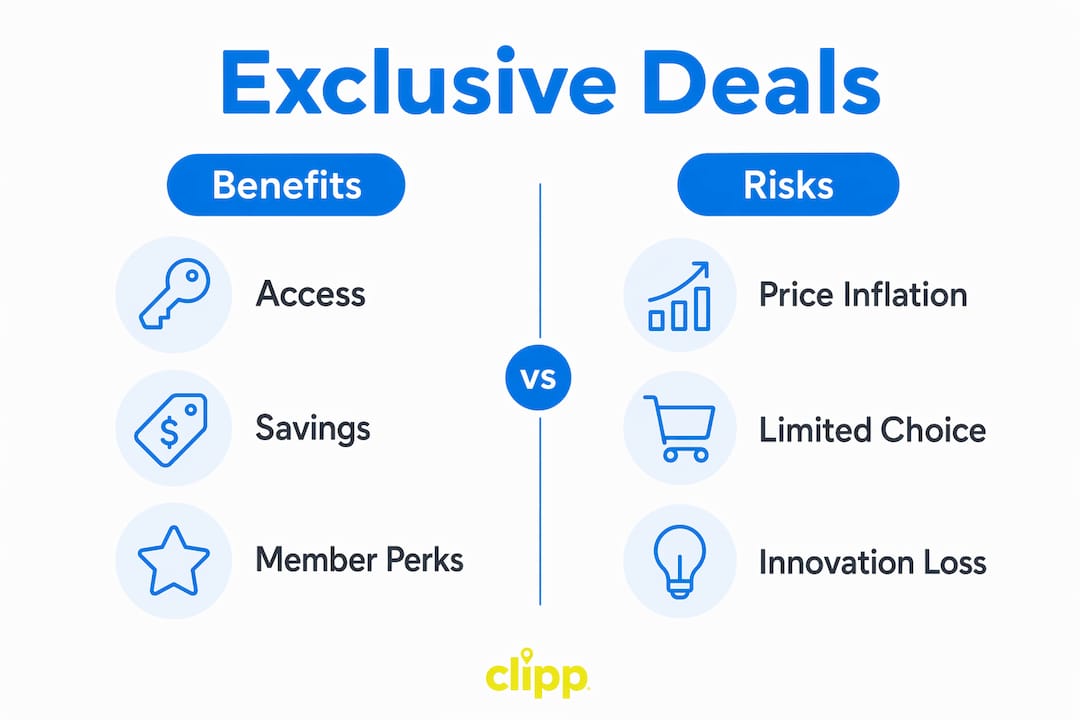
Exclusive deals serve one primary function for consumers: access. They give you something a non-member, non-subscriber, or casual shopper cannot get at the same price or at all. In local dining and entertainment, that access translates directly into savings and better experiences.
Exclusive distribution arrangements push retailers to invest more in store presentation, staff training, and after-sales support. A restaurant that holds an exclusive partnership with a local deal platform has a financial reason to deliver a strong experience. It needs repeat visits to justify the discounted offer. That incentive benefits you as the customer.
Exclusive offers also create urgency and desirability, boosting consumer engagement with products unavailable elsewhere. Think of a local brewery releasing a members-only tasting menu, or a spa offering a discounted package only through a curated deals app. These arrangements reward early action and loyalty, which is exactly the behavior deal seekers want to develop.
- Savings on dining: Exclusive restaurant deals through local platforms can cut meal costs by 20–50%, making regular dining out financially realistic.
- Entertainment access: Members-only pricing on concerts, escape rooms, and fitness classes gives loyal users first pick at the best rates.
- Quality incentives: Businesses in exclusive arrangements invest more per customer to protect the relationship and justify the partnership.
- Community connection: Local exclusives often spotlight neighborhood businesses, keeping spending close to home.
Pro Tip: Sign up for loyalty programs at your three or four most-visited local spots. Exclusive member pricing at those venues adds up faster than one-time deals at places you rarely visit.
What are the risks of exclusive deals for consumers?
Exclusive deals carry real downsides that most deal-seekers overlook. The biggest risk is price inflation. Prices rose nearly 30% for specific consumer goods in markets where exclusive agreements removed competing sellers. That is not a small premium. It means the "exclusive" label can cost you more than a standard competitive market would.
The Federal Trade Commission tracks this closely. Exclusivity levels exceeding 30–40% of a market, or foreclosing 70% of a customer base, trigger regulatory scrutiny. When one provider locks up that much of a market, rivals cannot reach the scale needed to compete. Less competition means fewer alternatives for you.
"Exclusivity is a double-edged sword that can reduce free-riding and costs short term but harm consumer choice long term." — FTC enforcement guidance
Long-term exclusivity can reduce innovation and lock consumers into arrangements where providers later raise prices or cut service quality. This is the lock-in effect: once a competitor is squeezed out, the exclusive provider faces no pressure to keep standards high.
Some exclusive deals show no measurable quality improvements while still driving prices up. The exclusivity serves the brand's market control goals, not your interests. Knowing this distinction is what separates a smart deal seeker from someone paying a premium for a label.
| Risk | What it means for you |
|---|---|
| Price inflation up to 30% | You pay more when competing sellers are removed from the market |
| Market foreclosure (30–40% threshold) | Fewer alternatives exist, reducing your negotiating power |
| Lock-in effects | Providers raise prices or reduce quality once rivals are gone |
| No quality improvement | Exclusivity may serve brand control, not consumer benefit |
| Hidden contract clauses | Minimum purchases or territorial limits restrict your options |
How do exclusive deal types differ in marketing and distribution?
Not all exclusive deals work the same way. The term covers several distinct structures, each with different effects on price, availability, and your freedom to shop around.

Distribution exclusivity means a brand sells only through one or a handful of retailers in a given area. A local restaurant partnering exclusively with one deals platform is a version of this. You get access through that platform or not at all.
Supply chain exclusivity locks a supplier into providing goods only to one buyer. This affects product availability at the shelf level. If a local farm sells exclusively to one grocery chain, other stores in your area simply cannot carry that product.
M&A exclusivity applies during business negotiations, where a seller agrees not to talk to other buyers for a set period. This is less visible to consumers but shapes which businesses survive and which get absorbed.
Exclusivity agreements commonly include no-shop clauses, minimum purchase volumes, and territorial protections that directly affect what products reach your neighborhood and at what price. These clauses are rarely advertised to consumers. They operate in the background, shaping your choices before you even open a menu or browse a deals app.
| Deal type | Typical duration | Consumer impact |
|---|---|---|
| Distribution exclusivity | 1–3 years | Limits where you can buy; may raise prices |
| Supply chain exclusivity | Multi-year contracts | Reduces product variety in local stores |
| Short-term collaborations | Weeks to months | Creates genuine savings and excitement |
| Loyalty discount programs | Ongoing | Rewards repeat customers; can foreclose rivals |
| M&A exclusivity | 30–90 days | Shapes local business ownership; indirect impact |
- Short-term deals deliver the clearest consumer benefit: real savings with no long-term price risk.
- Long-term distribution exclusives benefit brands more than shoppers in most documented cases.
- Territorial protections can mean a deal available in one zip code is completely unavailable two miles away.
Exclusive contracts in two-sided markets can prevent rivals from reaching the scale needed to compete, which limits both competition and product innovation over time. For local dining and entertainment, this matters when one platform locks up all the best restaurant deals in your area.
How to find and maximize value from exclusive deals
Getting real value from exclusive deals requires a specific approach. The goal is to capture the savings without getting trapped in arrangements that cost you more over time.
-
Prioritize short-term collaborations. Short-term exclusive collaborations offer genuine excitement and savings without the long-term price inflation risk of permanent exclusive deals. A restaurant's two-week promotion through a local deals platform is a better bet than a year-long subscription that locks you into one provider.
-
Use local deal platforms strategically. Apps and websites that aggregate exclusive local deals give you access to multiple businesses at once. You compare offers across restaurants, gyms, and entertainment venues before committing.
-
Check the terms before you commit. Hidden clauses like minimum spend requirements or blackout dates reduce the real value of a deal. Read the fine print on any offer before purchasing.
-
Evaluate alternatives before assuming exclusivity means best price. Exclusive agreements help brands build loyalty and increase margins by limiting availability. That margin comes from somewhere. Always check whether a comparable experience is available at a lower price through a non-exclusive channel.
-
Stack loyalty rewards with exclusive offers. Many local businesses run their own loyalty programs alongside platform deals. Combining both multiplies your savings without adding cost.
Pro Tip: Set a monthly budget for dining and entertainment deals before browsing. Exclusive offers are designed to create urgency. A budget keeps you from buying three deals you will never use.
Understanding why local restaurants offer discounts helps you spot which deals reflect genuine savings versus marketing tactics designed to move slow inventory or fill off-peak hours.
Key takeaways
Exclusive deals deliver real savings when structured as short-term, consumer-focused offers, but long-term exclusivity consistently favors brands over buyers.
| Point | Details |
|---|---|
| Savings potential is real | Short-term exclusive deals on dining and entertainment can cut costs by 20–50%. |
| Price risk is documented | Exclusive agreements have raised consumer prices by nearly 30% in some markets. |
| Regulatory thresholds exist | The FTC flags exclusivity that forecloses 30–40% of a market as a competition risk. |
| Deal type determines value | Short-term collaborations benefit consumers; long-term distribution exclusives favor brands. |
| Smart tactics protect you | Reading terms, comparing alternatives, and using deal platforms reduces your exposure to lock-in. |
My honest read on exclusive deals after years of watching them
I have spent a long time watching how exclusive deals play out for real consumers, not just in theory. My observation is this: the deals that genuinely help people are almost always time-limited and tied to a specific experience. A restaurant offering 40% off for two weeks through a local platform is trying to earn your repeat business. That is a fair trade.
The deals that quietly hurt consumers are the structural ones. When a brand locks up distribution across an entire region for multiple years, the savings disappear fast. You stop noticing the premium because there is nothing left to compare it to. That is exactly what the FTC's scrutiny of loyalty discount programs in two-sided markets is designed to catch.
My advice is to treat exclusivity as a signal, not a guarantee. Exclusive does not automatically mean better or cheaper. It means access is restricted. Sometimes that restriction works in your favor. Sometimes it works against you. The difference usually shows up in the contract duration and the number of alternatives left in your market.
For local dining and entertainment specifically, short-term exclusive offers through curated platforms are where the real value lives. They create competition among local businesses for your attention, which keeps prices honest and quality up. That is the version of exclusivity worth seeking out.
— Mehmet
Find exclusive local deals with Clipp
Clipp connects you with curated exclusive offers across local dining, entertainment, wellness, and more in your neighborhood. Every deal on the platform is vetted and time-limited, which means you get the savings without the long-term lock-in risks described above.
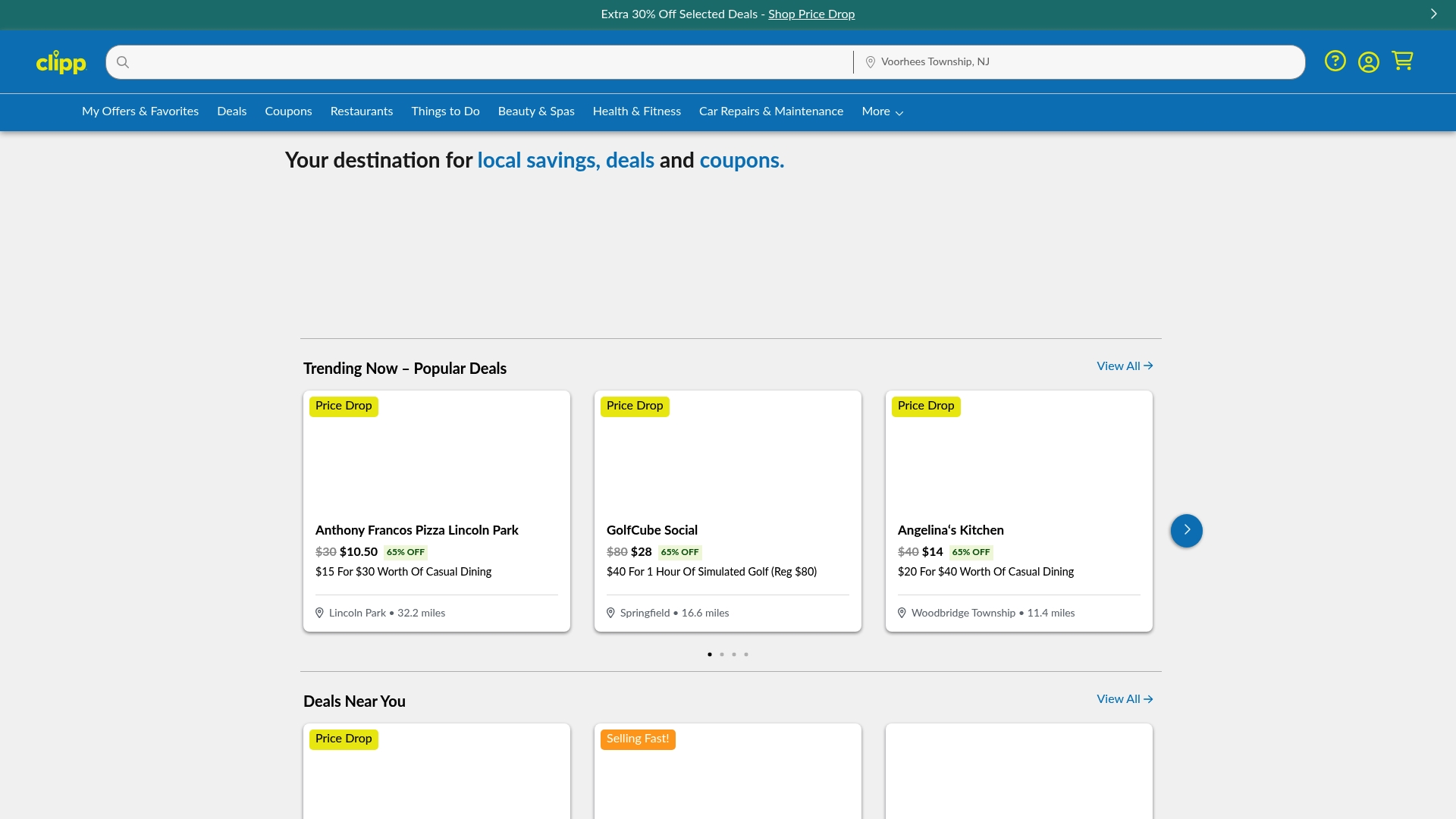
Browse local deals near you to find discounted restaurant offers, fitness memberships, and entertainment packages available right now. Clipp also offers local coupons for everyday savings across dozens of categories. The Clipp mobile app puts exclusive offers in your pocket so you never miss a limited-time promotion. If you want to understand which platforms consistently deliver the best local value, the guide to top deal websites for dining is worth your time.
FAQ
What are exclusive deals, exactly?
Exclusive deals are agreements that give selected consumers access to discounts, products, or experiences not available through standard retail channels. They are used by local businesses, national brands, and deal platforms to reward loyalty and drive traffic.
How do exclusive deals affect prices?
Exclusive agreements can raise prices by nearly 30% in markets where they remove competing sellers. The savings you see upfront may be offset by higher baseline prices over time.
Are exclusive deals regulated in the United States?
The FTC monitors exclusive contracts that foreclose 30–40% or more of a relevant market. Agreements that lock out 70% of a customer base trigger active regulatory review for anti-competitive behavior.
What types of exclusive deals benefit consumers most?
Short-term exclusive collaborations between local businesses and deal platforms deliver the clearest consumer benefit. They create genuine savings without the long-term price inflation risk tied to permanent distribution exclusives.
How can I find legitimate exclusive deals locally?
Use curated local deal platforms that aggregate time-limited offers across dining, entertainment, and wellness. Compare terms across multiple offers and check for minimum spend requirements or blackout dates before purchasing.