

The average consumer saves $1,200 per year using digital coupons and voucher codes, yet most people still leave money on the table because they don't fully understand how these codes work. There's a lot of confusion out there: Are voucher codes the same as promo codes? Do they work at local restaurants? What happens when a code fails at checkout? This article clears all of that up. You'll learn exactly how voucher codes work, which types save you the most, what rules to watch out for, and the smartest strategies for finding and redeeming deals on local dining, entertainment, and services.
Table of Contents
- What is a voucher code and how does it work?
- Types of voucher codes for dining, entertainment, and services
- Rules, limitations, and common pitfalls
- Real-world savings and redemption trends
- Taking advantage: Practical strategies for maximizing voucher code savings
- Ready to save more on local dining and entertainment?
- Frequently asked questions
Key Takeaways
| Point | Details |
|---|---|
| Voucher codes defined | Voucher codes are alphanumeric strings that give you discounts or special offers at checkout for local dining and services. |
| Types and restrictions | Common codes include percentage off, fixed amount, and BOGO offers, but each comes with eligibility and time limits. |
| Major annual savings | The average consumer saves about $1200 a year using voucher codes, with digital redemption rates increasing rapidly. |
| Redemption tips | To maximize savings, use mobile discovery, test codes before checkout, and always read the fine print for exclusions. |
| Promo page | Start your savings by finding verified local deals and coupon codes through Clipp.com and its mobile app. |
What is a voucher code and how does it work?
A voucher code is an alphanumeric string entered at checkout to unlock a discount, credit, or special offer. Think of it as a digital key that tells the checkout system: "This shopper gets a deal." The code can be a random string like SAVE20 or a branded phrase like CLIPP15. Either way, the mechanic is the same.
Here's how the process works in practice. You find a code online or in an app, add items to your cart, then enter the code in the "Promo" or "Voucher Code" field at checkout. The system validates it instantly and applies the discount if you meet the eligibility requirements.
For local deals, the process has a slight twist. Instead of a discount applied to an online cart, you often purchase a voucher first and then redeem it in person at the merchant. Here's a quick example:
| Step | What you do | What happens |
|---|---|---|
| 1. Find deal | Browse restaurant coupons on Clipp.com | See a 30% off voucher for a local bistro |
| 2. Purchase | Buy the voucher online | Receive a code or printable voucher |
| 3. Redeem | Show code or printout at the restaurant | Staff applies the discount to your bill |
| 4. Save | Pay the reduced total | Enjoy your meal at a fraction of the price |
Voucher codes are especially powerful for local spending because they connect you directly to nearby businesses. Unlike national retail discounts, local voucher codes often cover service voucher deals like haircuts, gym sessions, and home repairs, not just food.
Key insight: Voucher codes are not just for e-commerce. They're one of the most effective tools for saving on everyday local spending, from your Friday night dinner to your monthly massage.
The main benefit? You get a guaranteed discount before you even walk through the door. No haggling, no hoping for a sale. The savings are locked in.
Types of voucher codes for dining, entertainment, and services
Not all voucher codes are built the same. The main types for local dining and entertainment include percentage off, fixed dollar amount, buy one get one (BOGO), and free item offers. Each type has a different impact on your wallet depending on how and where you use it.
Here's a comparison of the most common types:
| Type | How it works | Best used for | Typical savings |
|---|---|---|---|
| Percentage off | Deducts a % from total | Larger bills, group dining | 10% to 50% off |
| Fixed dollar amount | Takes a set dollar amount off | Smaller purchases | $5 to $25 off |
| BOGO | Buy one, get one free or discounted | Restaurants, entertainment | 50% effective savings |
| Free item | Get a specific item free | Coffee shops, fast food | Varies |
| Min spend unlock | Discount activates above a threshold | Full-service dining | 15% to 30% off |
Percentage off codes tend to deliver the most value when your bill is high. A 25% off code on a $100 dinner saves you $25. A fixed $10 off code on the same bill saves you less. For group outings or special occasions, always prioritize percentage-based codes.
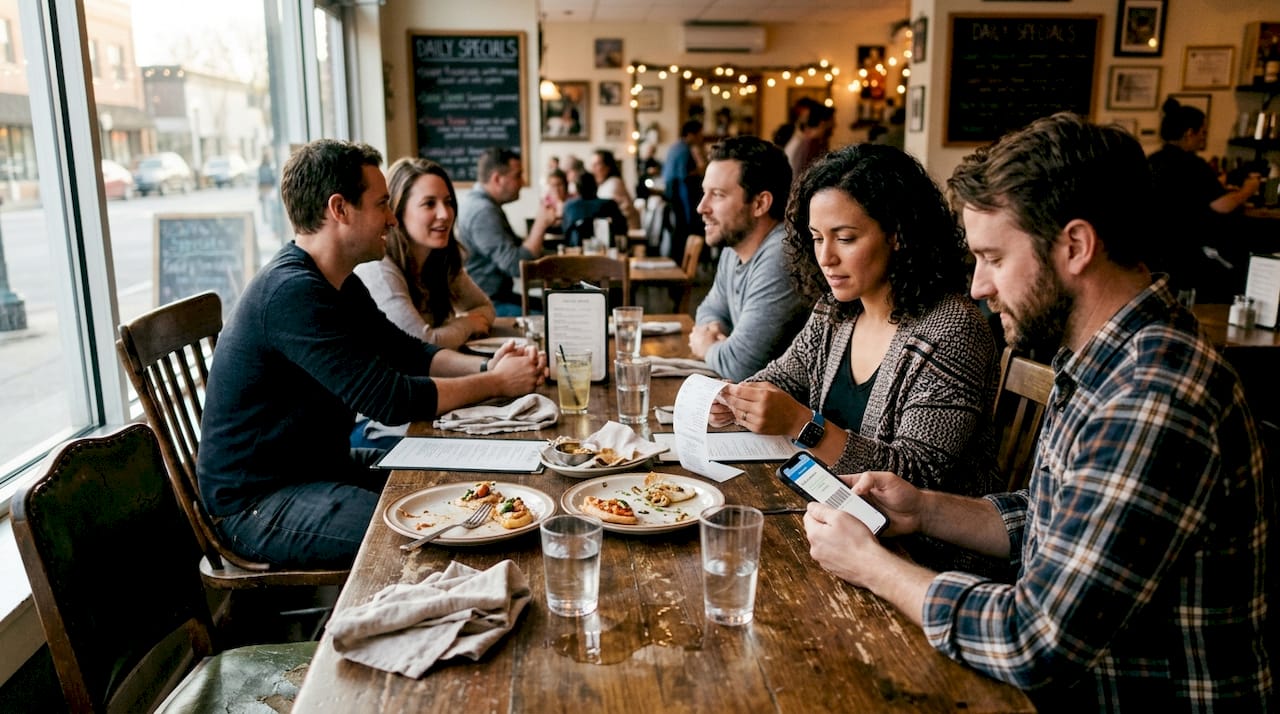
BOGO deals are the hidden gems of local entertainment. They work brilliantly for movie tickets, bowling, mini golf, and two-person dining. You essentially split the cost of one experience between two people.
Common restrictions to watch for:
- Time limits: Many codes expire within 24 to 72 hours of issue
- New customer only: Some deals are restricted to first-time buyers
- Minimum spend: You must hit a spending threshold before the discount activates
- Category exclusions: Alcohol, delivery fees, and service charges are often excluded
- Single use: Most codes can only be redeemed once per account
For food voucher deals and restaurant discounts, percentage off and BOGO codes consistently deliver the highest value. The key is matching the code type to the size and nature of your purchase.
Rules, limitations, and common pitfalls
Voucher codes come with fine print, and ignoring it is the fastest way to lose a deal. The most common issues are codes that are case-sensitive, expire quickly, or fail due to minimum spend requirements not being met. Understanding these rules upfront saves you frustration at checkout.
Here are the top reasons voucher codes fail:
- Expired code: The deal window closed before you used it. Always check the expiry date first.
- Wrong case: Entering "save20" instead of "SAVE20" will cause the code to fail. Copy and paste whenever possible.
- Minimum spend not met: Your cart total is below the required threshold. Add one more item or choose a different code.
- Already used: You or someone on your account already redeemed this code. One use per account is standard.
- Excluded items: The code doesn't apply to certain categories like alcohol, gift cards, or sale items.
- Wrong redemption channel: An online code won't work in-store and vice versa.
Stacking codes (using two or more at once) is rarely allowed. Most platforms and local merchants only accept one code per transaction. If you try to stack, the system will usually reject the second code without warning.
Watch out: For local redemptions, some vouchers require advance booking. If you show up without a reservation and the merchant is fully booked, your voucher may go unused and could expire before you get another chance.
Always read the voucher code terms before purchasing. Pay special attention to the expiry date, eligible locations, and any blackout periods like holidays or weekends.
Pro Tip: Before you build a full cart or commit to a local booking, test the code with a single item or call the merchant to confirm the voucher is still valid. This takes 30 seconds and prevents a lot of disappointment.
Real-world savings and redemption trends
The numbers behind voucher code usage tell a compelling story. Digital coupon redemption rates range from 7% to 25%, and users who actively seek out codes save an average of $1,200 per year. That's real money, not theoretical savings.
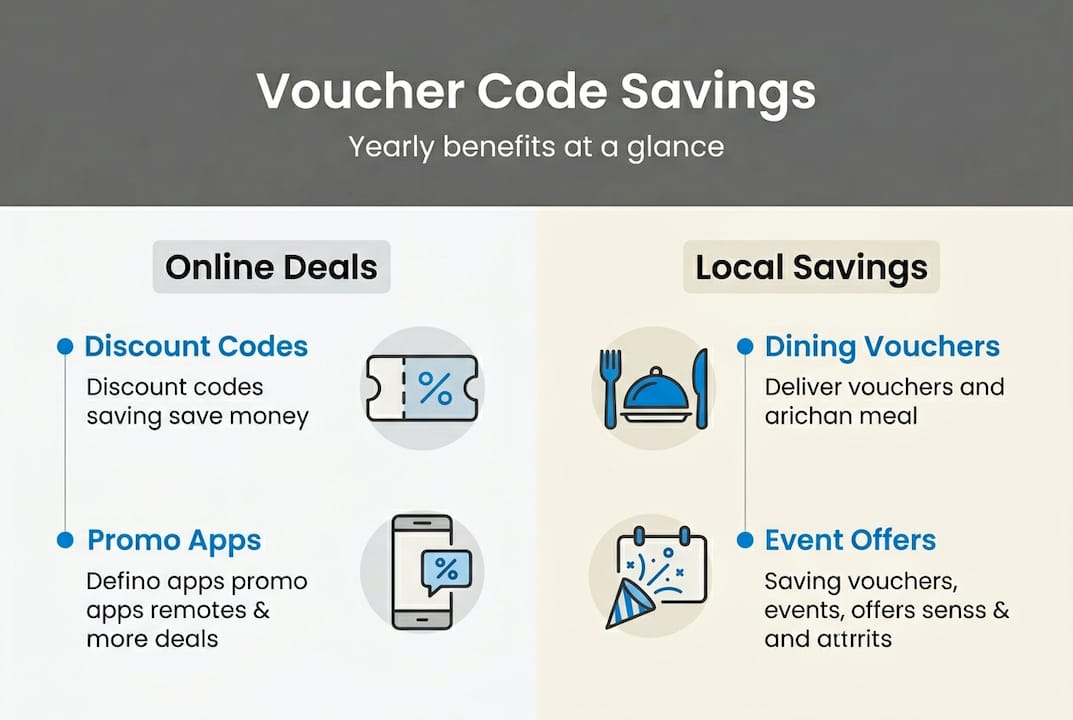
Here's how digital and paper voucher codes compare:
| Metric | Digital voucher codes | Paper voucher codes |
|---|---|---|
| Redemption rate | 7% to 25% | Under 1% |
| Discovery method | Apps, email, websites | Newspapers, mailers |
| Convenience | Instant, shareable | Requires printing |
| Mobile redemption | 10x higher than paper | N/A |
| Avg annual savings | $1,200 | Much lower |
The mobile advantage is striking. Mobile voucher redemption rates are 10 times higher than paper. This is partly because mobile apps make it effortless to find, store, and apply codes at the right moment. You're standing outside a restaurant, you pull up the app, and the code is right there.
Consumer behavior data adds more context. 67% of shoppers say a discount directly influenced their decision to make a purchase. Even more interesting: voucher users spend 24% more per transaction than non-voucher users. The discount lowers the psychological barrier to spending, which means you're more likely to order that extra dish or upgrade your entertainment experience.
Pro Tip: Set up email alerts or push notifications from your favorite local deal platforms. Codes for popular restaurants and entertainment venues sell out fast. Being first in line means you get the best deals before they're gone.
Taking advantage: Practical strategies for maximizing voucher code savings
Knowing that voucher codes save money is one thing. Actually capturing those savings consistently requires a system. The good news is that it doesn't take much effort once you build a few simple habits.
Here's what works:
- Use mobile apps first: Prioritize mobile for discovery because redemption rates are dramatically higher and codes are easier to manage
- Subscribe to email newsletters: 47% of consumers find their best codes via email. Sign up for alerts from local deal platforms and your favorite restaurants
- Test before you commit: Always enter the code before finalizing your cart or booking. Don't assume it works
- Read the terms carefully: Look for exclusions, minimum spend requirements, and expiry dates before you get excited about a deal
- Plan around deals: If you know you're dining out this weekend, search for codes on Thursday so you have time to find the best option
- Use one code at a time: Don't waste time trying to stack codes. Focus on finding the single best code for your purchase
The biggest mistake most people make is waiting until checkout to search for a code. By then, you're rushed, the best codes may already be expired, and you're more likely to enter the wrong characters. Search for codes before you decide where to eat or what to book.
For local services like salons, gyms, and home repair, codes are often tied to specific time slots or service packages. Read the fine print on what's included. A 40% off massage voucher that excludes weekend appointments isn't very useful if you can only go on Saturdays.
Pro Tip: Bookmark a local savings guide that aggregates verified deals in your area. Spending five minutes browsing before a night out can easily save you $20 to $50 on dining and entertainment.
Ready to save more on local dining and entertainment?
You now know how voucher codes work, which types deliver the most value, and the strategies that turn occasional savings into consistent wins. The next step is putting that knowledge to work with real, verified deals in your area.
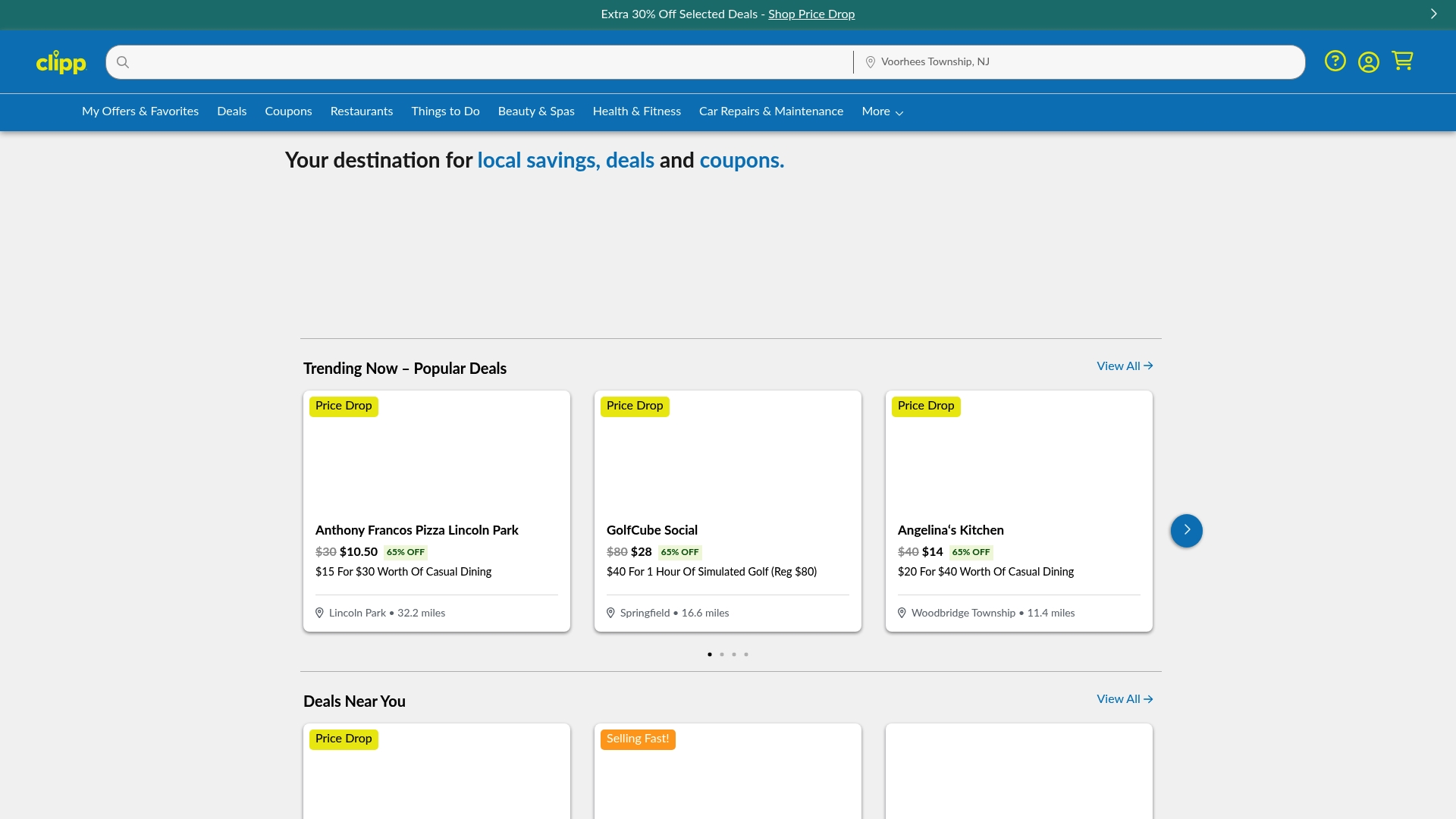
Clipp.com makes it easy to find local coupons and local deals for restaurants, salons, gyms, entertainment venues, and more, all in one place. The platform curates time-sensitive offers so you're always seeing the freshest discounts, not expired codes that waste your time. For the fastest experience, download the voucher code app and get deal alerts sent directly to your phone. With mobile redemption rates 10 times higher than paper, having Clipp.com in your pocket is the single easiest upgrade you can make to your savings routine.
Frequently asked questions
What exactly qualifies as a voucher code?
A voucher code is an alphanumeric string entered at checkout to receive a discount, credit, or special offer, and it's especially common for local dining and entertainment deals.
Do all voucher codes work for online and local redemptions?
No. Some codes are strictly for online purchases, while others require in-person redemption at the merchant, often needing advance booking or a printed voucher.
Why do voucher codes sometimes fail?
Codes fail when they're expired, already used, entered in the wrong case, or when your order doesn't meet the minimum spend or exclusion rules set by the merchant.
What's the best way to find voucher codes for local dining?
Mobile apps and email newsletters are the top sources. 47% of consumers discover their best codes via email, making newsletter subscriptions one of the highest-return habits for deal seekers.
Can you use more than one voucher code per order?
Almost never. Stacking codes is rare and most platforms, especially for local deals, only allow one code per transaction.