

TL;DR:
- Digital deals save families up to 70% through stacking coupons, rewards, and cashback.
- Access to digital deals is faster, more flexible, and often geo-targeted compared to paper coupons.
- Digital divide concerns mean some communities may miss out on savings without paper options.
Most families leave real money on the table every single week, not because they're careless, but because they haven't switched from paper coupons to digital deals. The shift is bigger than it sounds. Digital deal stacking with loyalty rewards, cashback, and promo codes can cut your bill by 50 to 70 percent on everyday purchases. This guide breaks down exactly what digital deals are, how they work in the real world, where to find the best ones near you, and how to make sure no one in your household gets left behind.
Table of Contents
- What are digital deals and why do they matter?
- How digital deals maximize your local savings
- Where to find the best local digital deals
- The digital divide: Who risks missing out and what to do
- Why digital deals are a local value revolution (and why the hype is justified))
- Get started: Your easiest path to local digital deals
- Frequently asked questions
Key Takeaways
| Point | Details |
|---|---|
| Digital deals work everywhere | You can save on local dining, entertainment, and services with digital offers—not just online purchases. |
| Stacking multiplies savings | Combine coupons, loyalty rewards, and promos to easily save 50% or more on local outings. |
| Access matters | Not everyone benefits equally; help bridge the digital divide by sharing tips and tools. |
| Use trusted deal sources | Sites and apps that verify their offers help families avoid expired or misleading deals. |
| Simplify for best value | Prioritize easy deals and instant discounts over chasing every possible rebate or promo. |
What are digital deals and why do they matter?
Digital deals are discount offers you access through a smartphone, computer, or app instead of clipping a coupon from a newspaper insert. They include digital coupons, mobile app offers, online promo codes, cashback portals, and loyalty reward points that you redeem at checkout, either online or in person at a local business. The format is different from paper, but the goal is the same: pay less for things you already buy.
What makes digital deals genuinely better than paper is speed and flexibility. A paper coupon expires in your junk drawer. A digital deal lives in your phone and often sends you a reminder before it disappears. You can also combine multiple digital offers in ways that paper simply never allowed, layering a restaurant promo code on top of a loyalty reward on top of a cashback app, all in one transaction.
The numbers back this up. Paper coupon issuance has dropped to roughly 39 billion by 2024, down by about one third from its peak, while digital deal adoption keeps climbing. Shoppers are voting with their phones.
For local families, this matters because most of your spending happens close to home. Restaurants, salons, gyms, entertainment venues, and service providers are all part of the local economy where digital deals have the most impact. Check out the types of local deals available near you to see how broad the coverage really is.
Here is a quick comparison of paper versus digital:
| Feature | Paper coupons | Digital deals |
|---|---|---|
| Access method | Newspaper, mail | Phone, app, browser |
| Stackable | Rarely | Often |
| Expiration reminders | None | Push notifications |
| Geo-targeted offers | No | Yes |
| Cashback integration | No | Yes |
Key advantages of digital deals for local shoppers:
- Instant access from anywhere
- Stackable with loyalty and cashback programs
- Personalized to your location and habits
- No printing, cutting, or carrying required
- Real-time updates when new offers drop
"Cities like San Diego now mandate paper alternatives to address access issues, recognizing that not every consumer can go fully digital yet."
Digital deals are not just a tech trend. They are a structural shift in how local value gets delivered to everyday shoppers.
How digital deals maximize your local savings
Knowing what digital deals are is one thing. Knowing how to use them together for the biggest payoff is where most people fall short. The strategy is called deal stacking, and it works by layering multiple discount types on a single purchase.
Here is how a typical stack works for a family dinner out:
- Find a restaurant coupon through a deal platform (20% off your total bill)
- Pay with a cashback credit card (3% back on dining)
- Earn loyalty points through the restaurant's own rewards app
- Apply a promo code from a deal aggregator at checkout
That single dinner could realistically save you 25 to 35 percent without much effort. Scale that across a month of dining, entertainment, and services, and the savings compound fast. Stacking digital coupons with loyalty rewards, cashback, and promo codes can reach 50 to 70 percent on the right purchases.

Loyalty programs are a key piece of this puzzle. 72% of consumers say loyalty programs with digital features make them more likely to spend with their preferred brands. That means local businesses are increasingly motivated to offer better digital perks, which is good news for you.
For more ideas on building a system that works, the coupon strategies for extra savings guide walks through proven approaches. You can also explore restaurant coupon types to see which formats deliver the most value at local spots.
The Consumer Reports digital coupon guide is also worth bookmarking for deeper research on stacking mechanics.
Pro Tip: Stacking fatigue is real. If assembling a deal requires more than three steps or ten minutes, the return often is not worth the effort. Focus on stacks that are fast and repeatable, not elaborate one-time setups that burn your time.
Where to find the best local digital deals
Finding quality deals is not about searching harder. It is about knowing which platforms are worth your time and which ones bury the real offers under noise.
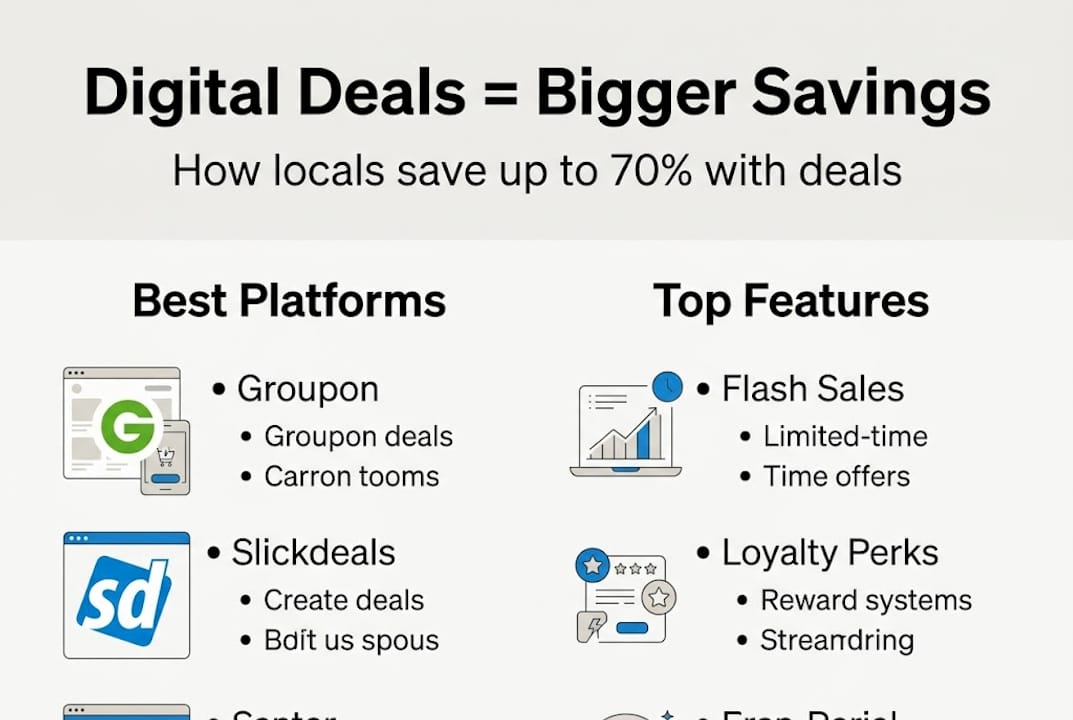
Platforms like Groupon, RetailMeNot, and Slickdeals aggregate verified local offers that are well suited for value shoppers. Each has a slightly different focus. Groupon leans heavily into local experiences, dining, and entertainment. RetailMeNot covers both online and in-store promo codes. Slickdeals is community-driven, meaning real users flag and verify deals before they gain traction.
Clipp is built specifically for local savings across dining, wellness, home services, and entertainment, making it a strong choice if you want curated deals without the clutter. Local loyalty programs tied to specific restaurants or service providers are also underrated. Many offer members-only digital coupons that never appear on third-party platforms.
Here is what to look for when picking a trusted deal source:
- Verified or community-rated offers (not just merchant-submitted)
- High app store ratings (4.0 or above is a reasonable baseline)
- Clear expiration dates and terms
- Coverage of local dining, entertainment, and services (not just e-commerce)
- Push notification options for flash deals and geo-targeted offers
- Regular updates so deals do not sit stale for weeks
For families focused on fun, the entertainment discounts section is a great starting point. And if you want deals delivered straight to your phone without hunting, the savings mobile apps page shows you what is available.
Pro Tip: Turn on push notifications for your top two or three deal apps. Flash deals and app-only offers often last just a few hours. Geo-targeted deals, which appear when you are near a participating business, are especially valuable for spontaneous dining or entertainment decisions.
Deloitte research on loyalty program design also confirms that consumers respond best to programs that feel immediate and easy, not ones that require long waits for rewards to kick in.
The digital divide: Who risks missing out and what to do
Not everyone has equal access to digital deals, and that gap is worth taking seriously. Seniors, low-income households, and people without reliable smartphones or internet access are the most likely to miss out on savings that others take for granted.
The digital divide disadvantages low-income and older adults who lack devices or data plans, and some cities are pushing back. San Diego, for example, has moved to require paper alternatives at certain businesses so that digital-only policies do not shut out vulnerable residents. It is a practical acknowledgment that the shift to digital has real costs for some communities.
If you have a family member or neighbor who is not comfortable with smartphones, here are some ways to help:
- Print digital coupons on their behalf from a home computer
- Add them to your loyalty account as a household member where programs allow
- Show them how to use a single, simple app like Clipp that does not require much setup
- Check whether their local library offers digital literacy classes
- Look for businesses that still accept printed versions of digital coupons
"The goal is not to force everyone onto a smartphone. It is to make sure the savings are accessible regardless of how someone gets there."
Community sharing matters here. A neighbor who knows how to stack deals can help someone who does not, just by printing an offer or walking them through a redemption. For a broader look at how to navigate both the benefits and pitfalls, the risks and smart tips guide covers what to watch for.
The digital deals revolution is real, but it only works for everyone if people look out for each other.
Why digital deals are a local value revolution (and why the hype is justified)
Here is our honest take after watching local savings trends for years: digital deals have genuinely changed what is possible for ordinary families. The old coupon-clipping routine required effort, planning, and a lot of paper for modest returns. Digital deals, done right, deliver faster savings with far less friction.
But the industry oversells the complexity. You do not need to master a twelve-step stacking system to win. Consumers prefer immediate discounts like instant percentage off or free shipping over complicated rebate structures, and the data shows diminishing returns once you go beyond a few stacked promos. The sweet spot is simple, fast, and repeatable.
Our real lesson from local savings trends: the families who come out ahead are not the ones chasing the deepest discounts on random purchases. They are the ones who use coupon tips for best value consistently on things they already love, local restaurants, neighborhood gyms, family entertainment. Win with local experiences, not just the biggest percentage off.
Get started: Your easiest path to local digital deals
You now have the knowledge. The next step is putting it to work in your own neighborhood.
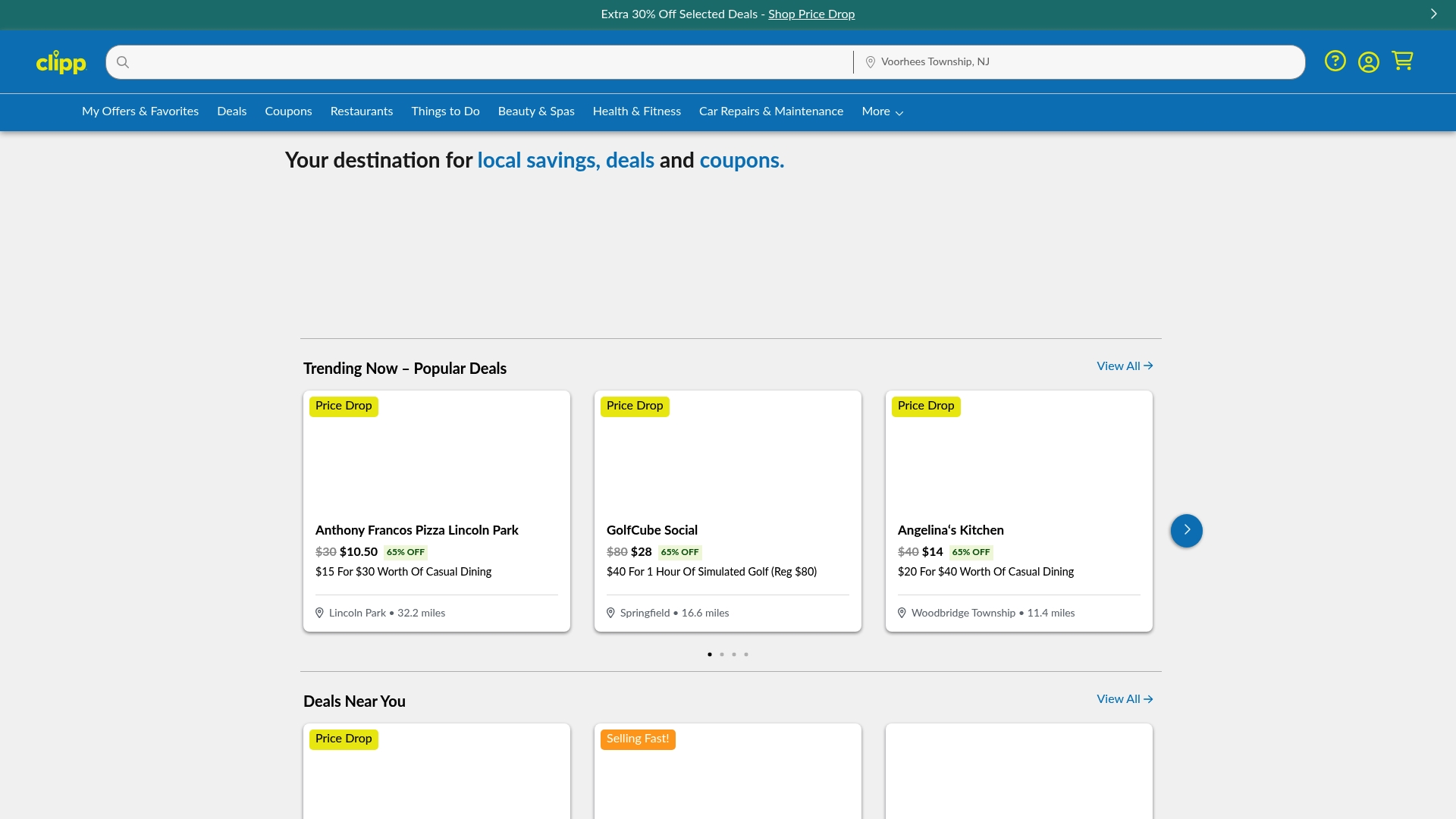
Clipp makes it straightforward to find local deals in Ashburn and surrounding areas, covering dining, entertainment, wellness, and more. Browse coupons for local spots to see what is available right now, including limited-time offers that sell out fast. For the best experience and access to app-only exclusives, download the Clipp mobile app and turn on notifications so you never miss a flash deal near you. Check back regularly because new offers drop constantly and the best ones go quickly.
Frequently asked questions
How do I stack digital deals for maximum savings?
Start by combining digital coupons, loyalty rewards, promo codes, and cashback offers. Many apps and browsers now automate part of this process, and stacking these tools can save you 50 to 70 percent on common purchases.
Are digital deals just for online shopping, or can I use them locally?
Most digital deals work for local dining, entertainment, and services, especially on region-focused platforms. Groupon connects local consumers to dining, entertainment, and service deals in their own neighborhoods.
What if I or someone I know doesn't have a smartphone for digital savings?
Some cities now require paper alternatives, and friends or family can access and share digital deals on your behalf. Cities like San Diego have mandated paper options specifically because of this access gap.
Which digital deal apps are best for families?
Apps like Clipp, Groupon, and RetailMeNot offer a solid mix of local restaurant, entertainment, and service deals. Platforms like these aggregate verified deals well suited to family budgets and local spending habits.