

TL;DR:
- Deal marketplaces connect consumers with vetted local merchants through curated discounts, earning via transaction fees. Platforms that process payments directly offer stronger protections and clearer refund pathways for buyers. To maximize savings, consumers should verify terms, compare prices independently, and focus on local offers they already trust.
A marketplace for deals is an online platform that connects multiple independent sellers with buyers, curating discounts, coupons, and special offers so consumers can find savings on local products and services without hunting across dozens of websites. Platforms like Travelzoo and Clipp operate as digital intermediaries rather than direct retailers, which means the deals you see come from vetted merchants rather than a single store's catalog. This structure gives you access to a wider range of offers, from restaurant discounts to gym memberships, all in one place. Understanding how these platforms work, what protections you have, and how to use them strategically puts real money back in your pocket.
What is a marketplace for deals and how does it differ from a store?
A deals marketplace is a platform that coordinates independent buyers and sellers, earns through transaction fees or commissions, and never takes ownership of the products or services being sold. That last point is the key distinction. When you buy from a traditional online store, one retailer owns the inventory and sets every price. A marketplace, by contrast, hosts many merchants simultaneously and creates a competitive environment where deals can be genuinely better.

This structure matters for consumers because it shifts the platform's incentive. A marketplace profits when transactions happen, so it has a reason to surface credible, attractive offers. A single retailer profits when its own margins hold. Travelzoo, for example, negotiates and vets deals directly with travel and local service providers before publishing them to millions of members, which is a fundamentally different model from a retailer simply marking down its own stock.
The industry term for what most people call a "deals platform" is a deal aggregator marketplace. Some platforms lean more toward aggregation, pulling offers from across the web. Others lean toward curation, negotiating exclusive rates. Most popular deal websites sit somewhere between the two, and knowing which type you are using helps you set the right expectations.
How do deal marketplaces work to connect buyers and sellers?
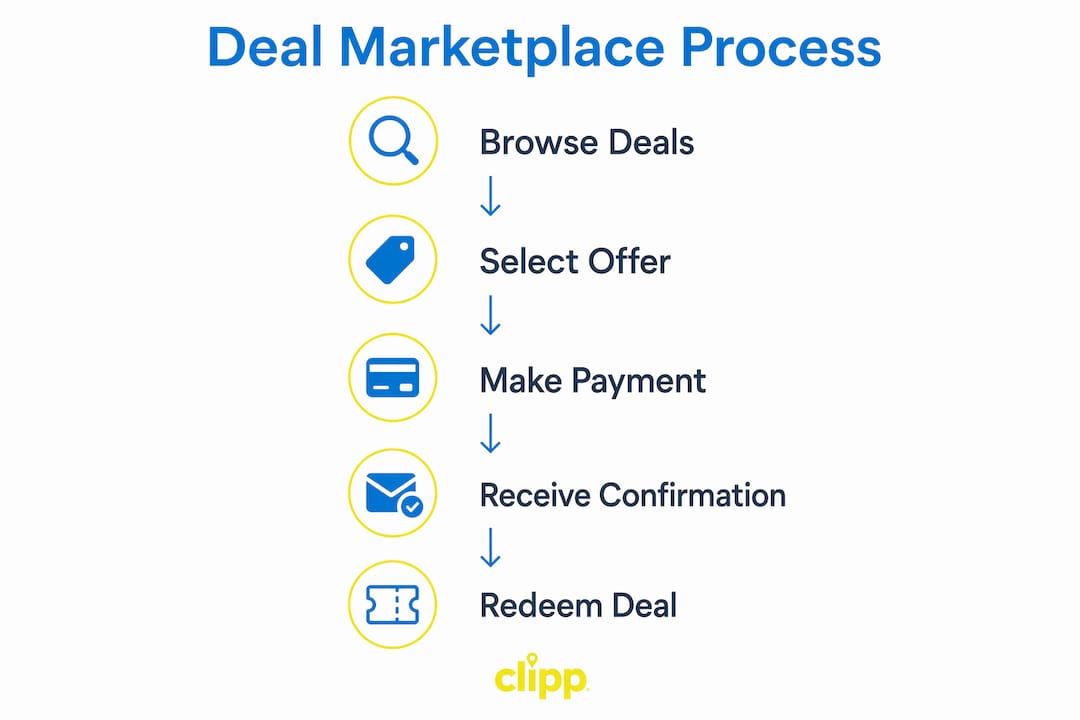
Marketplaces connect buyers and sellers by managing the transaction flow, building trust mechanisms, and handling payments, all without owning the underlying product or service. Here is what that looks like in practice on a deals platform:
- Merchant onboarding: Local businesses, restaurants, and service providers submit offers or negotiate terms with the platform. The platform reviews and approves listings based on quality and value standards.
- Deal curation: The platform organizes offers by category, location, or popularity, reducing the time you spend searching.
- Payment facilitation: When you purchase a deal, the platform processes your payment, holds funds, and releases them to the merchant after redemption or a set period.
- Trust and dispute resolution: Platforms that handle money directly become responsible for refund policies and dispute outcomes.
That payment role carries real weight. Some marketplaces facilitate payments fully in-house, controlling fund flow and payout scheduling, which makes them Payment Service Providers under financial regulations. This affects your rights as a consumer. If a platform processes your payment directly, it typically has clearer obligations around refunds and chargebacks than a platform that simply redirects you to a merchant's own checkout.
Revenue models vary. Most deal marketplaces charge merchants a commission per transaction or a flat listing fee. A few charge consumers a membership fee in exchange for access to exclusive rates. Neither model is inherently better, but understanding it tells you whose interests the platform is primarily serving.
Pro Tip: Before purchasing any deal, check whether the platform processed your payment or redirected you to the merchant. Platforms that handle payment directly give you a cleaner path to a refund if something goes wrong.
What types of deals can you find on a deals platform?
Deal marketplaces cover a wide range of categories, and the type of offer varies significantly depending on the platform's focus. The table below breaks down the most common deal types and what to expect from each.
| Deal type | Typical format | Best for |
|---|---|---|
| Coupons | Percentage or dollar-off codes | Everyday purchases, dining, retail |
| Flash sales | Limited-time deep discounts | Travel, electronics, experiences |
| Curated top deals | Negotiated, vetted offers | Travel, local services, events |
| Local service discounts | Fixed-price vouchers | Salons, gyms, home improvement |
| Cash-back offers | Rebate after purchase | Groceries, online retail |
Coupons are the most familiar format. They reduce the price of a specific product or service by a fixed amount or percentage, and they typically carry an expiration date and sometimes a minimum purchase requirement. Flash sales create urgency by running for hours or days, often on travel packages or entertainment experiences. Curated deal lists, like Travelzoo's weekly Top 20 deals, go a step further by negotiating rates directly with providers, so the discount is exclusive to the platform's members rather than publicly available.
Local service discounts are where platforms like Clipp specialize. These are fixed-price vouchers for neighborhood businesses: a $25 voucher for $50 worth of food at a local restaurant, or a discounted package at a nearby spa. They work well for consumers who want savings on recurring local spending rather than one-off purchases.
One nuance worth knowing: curated deal feeds reduce your search cost but the platform's selection criteria can shape what you see. A marketplace that earns higher commissions from certain merchants may surface those offers more prominently. This is not necessarily deceptive, but it is a reason to cross-check a deal against the merchant's own website before buying.
What are your rights and protections when using deal marketplaces?
Consumer protections on deal marketplaces are governed by a mix of FTC rules, platform policies, and payment network regulations. Knowing the basics keeps you from getting burned by a deal that looks better than it is.
-
Demand full price transparency. The FTC requires that online marketplaces disclose all fees so you can calculate the total cost before checkout. If a deal shows a low headline price but adds service fees, booking fees, or processing charges at checkout, that is a red flag and potentially a violation.
-
Read redemption terms before buying. Expiration dates, minimum purchase requirements, geographic restrictions, and blackout dates can all reduce the real value of a deal. The FTC specifically flags confusing redemption terms as a form of misleading advertising even when the headline discount is accurate.
-
Check the platform's refund policy. Platforms that handle payment in-house have clearer refund obligations than those that pass you to a third-party merchant. Look for a written refund policy before you complete a purchase.
-
Watch for ranking bias on comparison sites. Some deal comparison platforms rank offers based on how much merchants pay for placement rather than pure savings value. The FTC's consumer guidance on online shopping advises shoppers to treat top-ranked results with healthy skepticism and verify independently.
-
Use a credit card when possible. Credit cards add a layer of chargeback protection that debit cards and digital wallets often do not. If a merchant fails to honor a deal, a credit card dispute is your fastest resolution path.
Pro Tip: Screenshot the deal page, including the price, terms, and expiration date, immediately after purchase. If a dispute arises, this documentation is far more useful than a confirmation email alone.
How to use a deal marketplace to maximize local savings
Getting the most out of a deals platform requires more than clicking the first discount you see. A few deliberate habits separate consumers who save consistently from those who buy deals they never use.
- Use location filters first. Platforms like Clipp organize deals by neighborhood, so filtering by your zip code or city surfaces only offers you can realistically redeem. Buying a discounted massage at a spa 40 miles away is not a deal. It is a commitment.
- Combine curated lists with direct price checks. Combining curated deal feeds with independent comparison gives you the best of both worlds: reduced search time and confidence that the price is genuinely competitive. Check the merchant's own website and Google before committing.
- Set deal alerts for categories you use regularly. Most popular deal websites let you subscribe to category or location alerts. This means you see dining deals, gym offers, or home service discounts as soon as they go live rather than discovering them after they expire.
- Check for local dining savings on dedicated platforms. General deal sites cover many categories but often with less depth on local services. Platforms focused on neighborhood businesses tend to have better merchant relationships and more exclusive rates for dining, wellness, and entertainment.
- Stack deals where the platform allows it. Some platforms let you combine a coupon code with a cash-back offer or a credit card reward. Read the terms carefully, but when stacking is permitted, the combined savings can be substantial.
- Understand how daily deal sites work before buying in bulk. Purchasing multiple vouchers for the same business is tempting when the discount is steep, but many platforms limit redemption to one per visit or one per household. Buying five and using one is not a saving.
The benefits of using deals platforms for local spending are well documented: lower prices on services you already use, discovery of new neighborhood businesses, and the ability to try something new at reduced risk. The key is treating the platform as a tool rather than a destination. You are there to save money on things you actually need, not to collect discounts.
Key takeaways
A marketplace for deals saves you money by connecting you with vetted merchant offers, but your savings depend on reading terms carefully and verifying prices independently.
| Point | Details |
|---|---|
| Definition of a deal marketplace | An online platform connecting multiple independent sellers and buyers through curated discounts and payment facilitation. |
| Payment role matters | Platforms that process payments directly offer stronger consumer protections and clearer refund paths. |
| Read all redemption terms | Expiration dates, minimums, and geographic limits can reduce a deal's real value significantly. |
| Cross-check before buying | Combining curated deal feeds with direct price checks maximizes savings and avoids ranking bias. |
| Local focus delivers more value | Platforms specializing in neighborhood businesses offer more exclusive rates on dining, wellness, and services. |
Why most people use deal marketplaces wrong
I have spent years watching consumers treat deal platforms like lottery tickets: browse quickly, click the biggest number, and hope for the best. The result is a drawer full of expired vouchers and a vague sense that these sites do not really work. They do work. The problem is the approach.
The single most common mistake is buying a deal for a business you have never visited. A 60% discount on a restaurant you have never tried sounds exciting, but you have no idea whether you will like the food, whether the service is good, or whether the location is convenient. You are not saving money. You are gambling it. My rule: use deal platforms to save on places you already know and like, and use the discount as a reward for loyalty rather than an incentive to try something unknown.
The second mistake is ignoring the fine print. I have seen deals that look like 50% off but include a mandatory service charge that brings the real saving down to 15%. The FTC's rules on fee disclosure exist precisely because this practice is common enough to warrant federal attention. Read every line before you buy.
The third mistake is platform loyalty without skepticism. Some deal sites rank offers based on merchant payments rather than consumer value. I cross-check every deal I buy against the merchant's own pricing. It takes 90 seconds and has saved me from overpaying more times than I can count. A good deal marketplace makes this easy by being transparent about how it curates offers. If a platform cannot explain its selection criteria, that tells you something.
— Mehmet
Find verified local deals on Clipp
Clipp is a deals and coupon platform built specifically for local savings, connecting you with verified offers on dining, wellness, home services, pet care, and entertainment in your neighborhood.
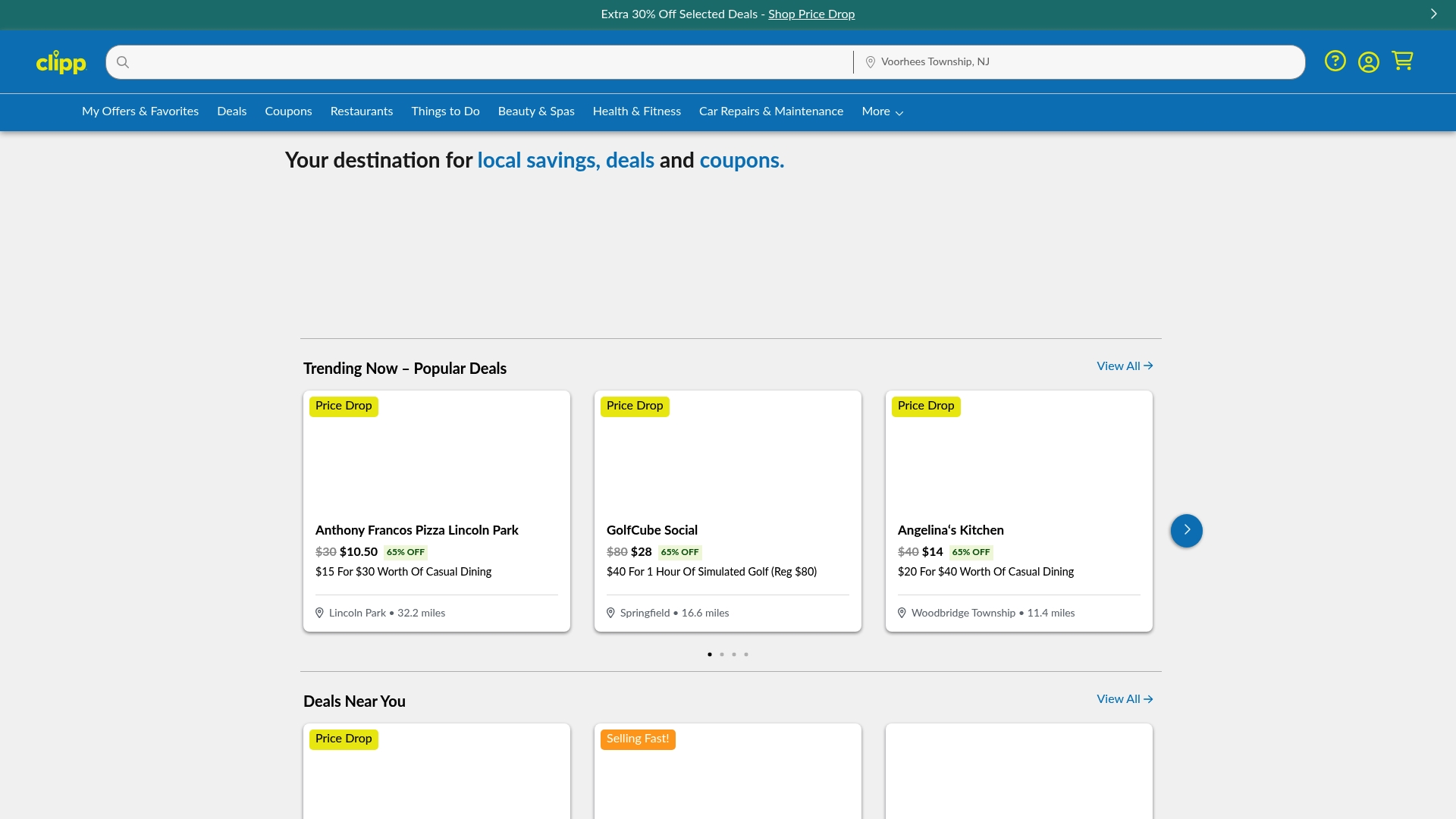
Unlike general deal aggregators, Clipp focuses on the businesses closest to you, with sections like "Trending Deals" and "Near You" that surface the most relevant offers without requiring you to scroll through irrelevant national promotions. Every deal is curated, and the platform is designed so you can go from browsing to redeeming in minutes. Browse local deals near you or explore coupons in your area to start saving on the services and restaurants you use every week.
FAQ
What is a marketplace for deals, exactly?
A marketplace for deals is an online platform that connects multiple independent merchants with consumers, offering curated discounts, coupons, and special offers rather than selling products directly. It earns revenue through transaction fees or commissions rather than product markups.
How do deal marketplaces make money?
Most deal marketplaces charge merchants a commission on each sale or a flat listing fee. Some charge consumers a membership fee for access to exclusive negotiated rates, as Travelzoo does with its member-only Top 20 deals.
Are deals on these platforms actually legitimate?
Reputable platforms vet their merchants and are required by the FTC to disclose all fees and accurate pricing. Always read redemption terms, check expiration dates, and verify the price against the merchant's own website before purchasing.
What should I check before buying a deal?
Check the expiration date, minimum purchase requirement, geographic restrictions, and the platform's refund policy. The FTC flags incomplete pricing and confusing redemption terms as forms of misleading advertising, so full transparency before checkout is your baseline standard.
What types of local deals can I find on a deals platform?
Local deal platforms typically offer coupons, fixed-price vouchers for services like dining and wellness, flash sales on experiences, and cash-back offers. Platforms like Clipp specialize in neighborhood businesses, covering categories from restaurants and salons to gyms and home improvement services.