

TL;DR:
- Effective daily deal use requires evaluating discounts, fine print, and merchant reputation.
- Different platforms offer varying savings, categories, and redemption processes; choose wisely.
- Strategic, selective purchasing and organization maximize savings and foster ongoing local engagement.
Every week, thousands of deals land in your inbox, pop up on your phone, and scroll past you on social media. Some are genuinely great. Others look amazing but bury the real cost in fine print smaller than a restaurant receipt. Knowing which is which can mean the difference between a memorable night out at half price and a frustrating experience where hidden minimums wipe out your savings. This guide breaks down exactly how to evaluate, compare, and use daily deals so your money actually stretches further on dining, entertainment, and everyday local services.
Table of Contents
- What makes a great daily deal? Key criteria for savvy shoppers
- Top daily deals platforms for local savings
- Daily deals compared: Where should you hunt for the best value?
- How to get the most from daily deals (and avoid the pitfalls))
- What most shoppers miss (and how to truly win with daily deals))
- Find your next local deal, start saving today
- Frequently asked questions
Key Takeaways
| Point | Details |
|---|---|
| Evaluate deal criteria | Check savings, fine print, and fees before buying any daily deal. |
| Compare top platforms | Side-by-side comparisons help you find the best deals for your favorite local spots. |
| Watch for hidden traps | Look out for minimum spends, blackout dates, and undisclosed charges even after FTC rules. |
| Use deals strategically | Maximize value by stacking, timing, and planning purchases around your real needs. |
| Think long-term savings | Build a sustainable habit of deal-hunting without falling for impulse offers or scams. |
What makes a great daily deal? Key criteria for savvy shoppers
Now that you're ready to hunt for deals, let's first identify what separates a real value from a fleeting discount.
Daily deals platforms like Groupon offer local consumers prepaid vouchers for discounts on dining, entertainment, and services from nearby businesses, typically 15 to 90% off, delivered via app, email, or website with daily refreshes. That range is wide enough to include genuinely transformative savings and barely noticeable ones. So the first thing you need is a short checklist to separate the real from the routine.
The core criteria every smart shopper should apply:
- Discount depth: Is the percentage off meaningful? A 15% discount at a restaurant with a $20 minimum spend may save you $3. A 50% off spa voucher worth $60 saves you real money.
- Fine print clarity: Check for expiration dates, blackout days, excluded menu items, and whether the deal applies to the full bill or just specific items.
- Redemption ease: Can you redeem via your phone, or do you need to print something out and hand it over awkwardly at the register? Simpler is almost always better.
- Local convenience: A great deal at a restaurant 45 minutes away is rarely worth it once you factor in gas and time. Proximity matters.
- Merchant reputation: Read reviews before purchasing any prepaid voucher. A discounted experience at a poorly rated business is still a bad experience.
- Repeat value: Does this merchant offer services or food you'd realistically return for? Deals work best when they introduce you to a place you'll keep visiting.
There are also dozens of types of local deals available in any given week, from two-for-one dinner promos to discounted gym trials, which means having criteria helps you filter fast.
Pro Tip: The FTC's 2025 rule now requires businesses to disclose total pricing upfront, with no hidden mandatory charges. If a deal page doesn't show you the complete cost before purchase, that's a red flag worth taking seriously.
"Not every big percentage signals a big saving. Always calculate your actual out-of-pocket cost after minimum spends and restrictions before clicking 'buy.'"
This framework takes less than two minutes to apply and can save you from buyer's remorse more often than you'd expect.
Top daily deals platforms for local savings
With criteria in mind, it's time to review the leaders and rising stars among daily deal platforms.
The mechanics of most major platforms follow a similar structure. Consumers purchase vouchers that merchants honor upon redemption. Groupon, for example, promotes up to a set number of vouchers per deal, retains roughly a 50% fee from each sale, and no longer requires a minimum number of buyers to activate a deal since 2016. Redemption typically happens via a code or printout, usually within a six-month window, with fine print that may restrict certain days or add-ons.

Understanding how daily deal sites work helps you use them more strategically rather than just reacting to whatever shows up on your feed.
Here are the major platform types worth knowing:
-
National voucher platforms (Groupon, LivingSocial style): These offer the widest selection of categories, from restaurants and spas to escape rooms and oil changes. The trade-off is a sometimes clunky redemption process and fine print that takes time to read carefully. Discounts typically run from 20% to 60% off, with occasional flash deals hitting higher.
-
Local deal apps and city guides: These are increasingly popular in mid-size and larger cities. They surface real-time offers, often tied to slow business periods like Tuesday lunch specials or early weeknight dinners. The downside is limited geographic coverage outside major metros.
-
Restaurant-specific apps and loyalty programs: Some chains and independent restaurants run their own deal ecosystems, sometimes stacked with points or reward multipliers. Entertainment discounts sometimes appear through these channels too, particularly for venues that host live events or movie nights.
-
Deal aggregator platforms (like Clipp): These bring together curated offers from multiple sources into one browsable feed, organized by category and location. This approach saves time and reduces the need to hop between five different apps.
What to compare across platforms:
- Speed of deal refresh (daily vs. weekly vs. whenever)
- App usability and notification settings
- Breadth of categories covered locally
- Refund and expiry policies
- Whether the merchant is verifiable and rated
Research on paid local advertising shows that restaurants using targeted promotions see real increases in foot traffic, which means deal platforms genuinely benefit participating merchants when used well. That's good news for you because motivated merchants tend to honor deals more generously.
Pro Tip: Stack a platform deal with a restaurant-specific coupon when the merchant allows it. Not every business permits this, but those that do can deliver 30% to 40% total savings off your bill, especially on larger group outings.
Daily deals compared: Where should you hunt for the best value?
Knowing your best options is helpful but seeing them side by side can make your decision easier and smarter.
One challenge with daily deal platforms is that merchants may impose unadvertised limits or use inflated base prices that make the "discount" less impressive than it appears. Variable costs during demand surges can make deals unprofitable for merchants, which sometimes leads to lower-quality service during redemption periods. Low repeat rates from price-sensitive customers are also a real concern for small businesses. Add auto-renew traps and minimum spend requirements that quietly negate savings, and you can see why reading terms carefully is non-negotiable.
Common pitfalls to watch for before purchasing any deal:
- Minimum spend thresholds that push your bill above what you'd normally spend
- Blackout dates that exclude weekends and holidays, the times you most want to go out
- "New customers only" restrictions buried in paragraph four of the terms
- Vouchers that expire in 30 days instead of the typical six months
- Add-ons (gratuity, service fees) that aren't included in the deal price
The FTC junk fee rules enacted in 2025 now protect consumers by requiring full upfront price disclosure, which is a meaningful change for the deal industry. Platforms and merchants that pre-date this rule may still have confusing pricing structures, so staying vigilant is still your best defense.
Side-by-side platform comparison:
| Platform type | Discount range | Categories | Redemption | Fine print risk | Best for |
|---|---|---|---|---|---|
| National voucher apps | 20% to 60% off | Broad | Code or printout | Medium to high | First-timers, variety seekers |
| Local deal apps | 10% to 40% off | Narrow | App or code | Low to medium | Frequent local diners |
| Restaurant loyalty apps | 5% to 25% off | Dining only | Automatic | Low | Regular customers |
| Deal aggregators (Clipp) | 15% to 70% off | Very broad | Code or link | Low | Efficiency-focused shoppers |
Knowing where to look is half the battle. Applying solid coupon strategies on top of that is what separates occasional savers from people who consistently pay 30 to 50% less for the same local experiences. And combining deal platforms with restaurant coupons can stretch your dining budget further than either approach on its own.
How to get the most from daily deals (and avoid the pitfalls)
With the best options in hand, let's focus on how to extract the greatest benefit while dodging common pitfalls.
The daily deal economy has evolved significantly from its early flash-sale roots. Daily deals evolved from Groupon-style group buys into a permanent fixture within restaurant and service marketing, embedded in apps and loyalty programs across major chains and local businesses alike. But the risks remain: fine print traps, low merchant profitability, and non-repeat customer patterns still create friction on both sides of the transaction. Consumers who build habits around reading terms and using FTC rules for transparency as their benchmark consistently get better outcomes.
Actionable steps to maximize your deal savings:
-
Read the full voucher terms before purchasing. Not after. Spend 90 seconds on this and you'll avoid the majority of redemption surprises.
-
Check the expiration window. Six months is common. Thirty days is a red flag. Only buy what you know you'll use within the timeframe.
-
Confirm total price before checkout. Under the FTC's 2025 rules, all mandatory fees must appear before you pay. If the total isn't visible until checkout, note any added fees and factor them into your actual savings calculation.
-
Set deal alerts across multiple apps. Different platforms surface different merchants. Using two or three apps with location-based alerts means you catch more relevant offers without spending hours browsing.
-
Watch for auto-renew subscriptions. Some platforms bundle deal access with a monthly membership that auto-renews. Cancel what you don't use actively.
-
Rate merchants after redemption. This creates accountability in the ecosystem and helps other shoppers make better choices. Platforms with strong review cultures tend to attract better merchant participation.
Beyond tactics, the variety of local savings available in any given week is genuinely impressive, from pet grooming and yoga trials to escape rooms and winery tastings. The key is staying organized so you're buying deals you'll actually use rather than collecting digital vouchers that expire untouched.
Notable statistic: Shoppers who set specific deal categories (rather than browsing all deals randomly) report higher satisfaction rates and fewer unused vouchers. Intentional browsing beats impulsive clicking every time.
Pro Tip: Build a simple weekly deal calendar. On Sunday, check your preferred platforms and note any deals relevant to your plans for the next seven days. Buy only those. This single habit dramatically reduces wasted spending on exciting-sounding deals you never redeem.
What most shoppers miss (and how to truly win with daily deals)
We've explored the practical steps. Now, let's consider a smarter long-term approach that most deal-seekers overlook.
Here's the honest truth: chasing every deal is actually a losing strategy. The best deal shoppers aren't the ones who buy the most vouchers. They're the ones who apply proven coupon strategies selectively, buying only deals that align with what they were already going to spend money on.
The merchant side of this equation matters too. Research on deal profitability shows that merchants often gain new customers and useful data from deal campaigns, but they frequently lose on margins unless those customers return and pay full price. Experts recommend time-based use of deal marketing tied to revenue management, not just broad discounting. That context should matter to you as a consumer. If you love a local restaurant or salon, returning as a full-price customer occasionally (not just when a deal is available) supports the business that gave you a great experience. Deal platforms work best when they create mutual value, not just a one-time transaction.
Establishing personal deal rules is a smart move that most shoppers skip entirely. Consider these as your operating guidelines. Only buy deals for categories you already spend in. Avoid impulse purchases just because a spa voucher looks exciting on a Tuesday afternoon. Set a monthly deal budget and treat it like any other line item. And recognize that the best deals are often the ones you find for services you genuinely need, not experiences you're convincing yourself to try.
Restaurant remarketing research reinforces this point. Merchants who use deals strategically see the best results from customers who return after a first discounted visit. That means the whole ecosystem works better when you treat daily deals as an introduction to local businesses you might genuinely love, not just a way to eat out for as little as possible.
Think of daily deals as a tool that enhances your local lifestyle, not a replacement for it. The goal isn't to never pay full price. It's to pay full price for things that are worth it and use deals to discover new places, try new services, and occasionally treat yourself or your family without wrecking your budget.
Find your next local deal, start saving today
Ready to use what you've learned? Here's where to start saving today.
Everything covered in this guide gets a whole lot easier when you have a trusted, well-organized platform doing the curation work for you. At Clipp, we bring together the best local deals in Ashburn and your surrounding area into one clean, easy-to-browse feed updated regularly with fresh promotions across dining, wellness, entertainment, home services, and more.
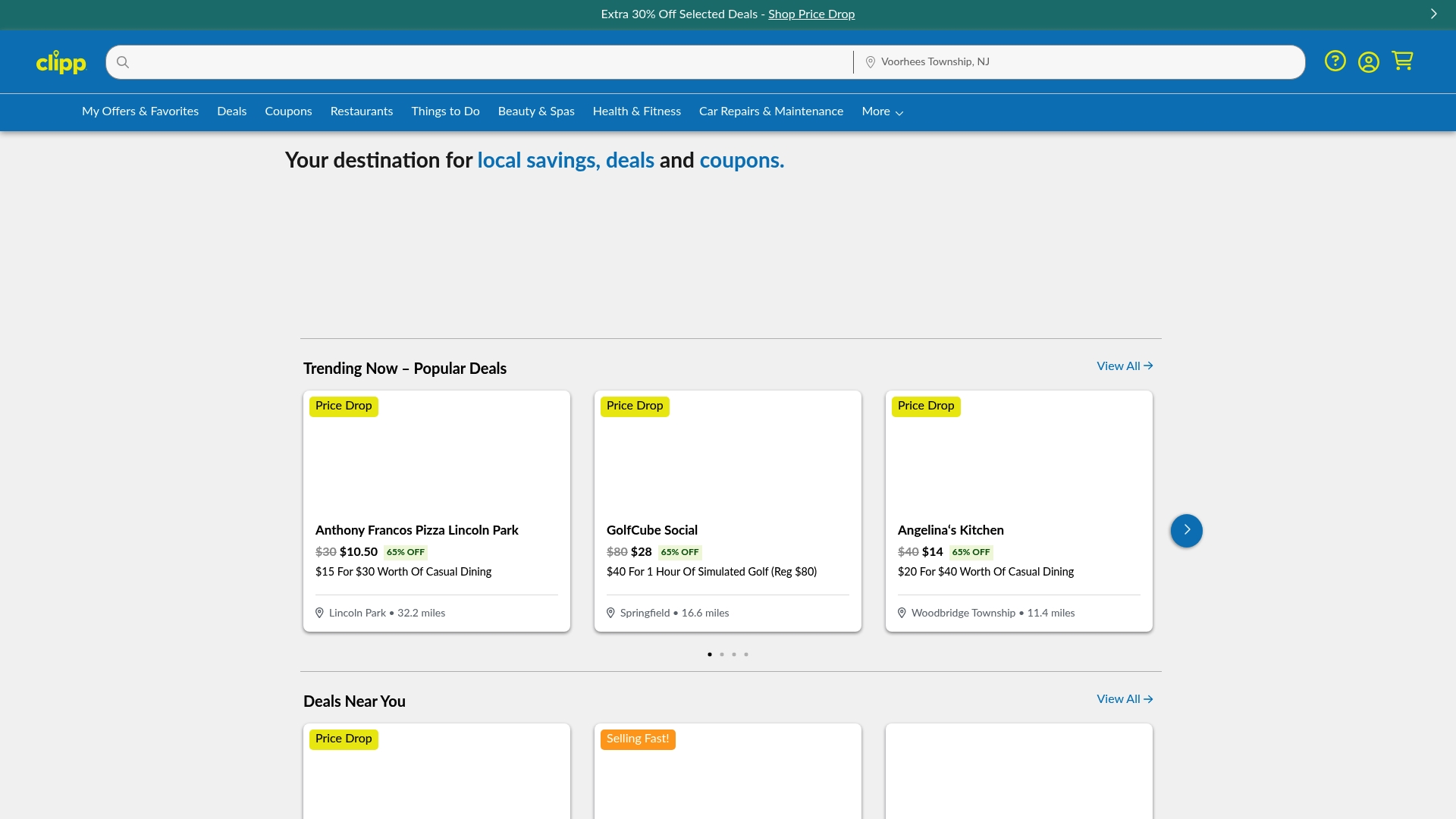
You can browse local coupons by category or location, set alerts for the types of deals you actually use, and check verified merchant listings before committing to any purchase. No jumping between five apps. No sifting through national deals that don't apply to your neighborhood. The Clipp savings homepage is built for exactly the kind of intentional, smart deal-hunting this guide describes. Start there, apply your new checklist, and watch your local spending go further every single week.
Frequently asked questions
How do I know a daily deal is legit and not a scam?
Look for deals on reputable platforms with verifiable merchant profiles and user reviews. Reading all fine print before purchasing and checking deal legitimacy via merchant ratings are your two strongest defenses.
What fees or charges should I watch out for with daily deals?
Under the FTC's 2025 rule, all mandatory fees must be disclosed before purchase, so any platform hiding costs until checkout is now violating federal standards. Always check deal terms for service charges, gratuity expectations, or minimum spend requirements that affect your real savings.
Can daily deals be combined with restaurant loyalty rewards or coupons?
Most platforms prohibit stacking with other offers, and voucher redemption terms usually spell this out clearly. However, some independent local merchants may allow it, so it's always worth asking the restaurant or service provider directly before you arrive.
What happens if a business closes before I redeem my deal?
Reputable deal platforms typically offer refunds or credits when a merchant closes unexpectedly, but the specific policy varies by platform. Always check the refund and guarantee terms before purchasing prepaid vouchers from any new platform.