

TL;DR:
- Discount platforms aggregate verified deals, cashback offers, and coupons to help families save money systematically. Combining multiple tools like deal aggregators, cashback portals, and local platforms can save hundreds annually with minimal effort. Habitual use of these platforms enhances financial behavior, reduces purchase anxiety, and provides year-round savings for families.
Discount platforms are defined as digital tools that aggregate verified deals, coupons, cashback offers, and price comparisons into one accessible place for consumers. The role of discount platforms goes far beyond clipping coupons. Platforms like Rakuten, RetailMeNot, and Slickdeals have turned everyday shopping into a systematic savings practice, with verified discount codes delivering 15–25% off retail prices per transaction. For families managing dining, entertainment, and local service budgets, that kind of consistent return adds up fast. These platforms reduce purchase anxiety, increase perceived value, and give shoppers the confidence to spend where it counts.
What is the role of discount platforms in everyday shopping?
Discount platforms serve two functions at once. They save money on purchases you were already planning to make, and they connect you with local businesses and brands you might never have found otherwise. Brands use deal platforms to reach high-intent shoppers, making these sites performance-marketing channels, not just discount boards. That dual role benefits consumers directly. More competition for your attention means more verified offers, better deals, and broader category coverage across dining, wellness, home services, and entertainment.

The industry term for these tools is "deal aggregation platforms," though consumers commonly call them coupon websites or savings apps. Both terms describe the same core function: pulling verified offers from multiple sources and presenting them in one place. Clipp operates exactly this way, curating local deals across categories like restaurants, salons, gyms, and recreational activities so families can find savings without hunting across a dozen different sites.
How do discount platforms work?
Four main types of discount platforms exist, and each works differently.
- Deal aggregators like Slickdeals collect offers from across the web and surface the best prices on products and services. They rely on community submissions and editorial curation.
- Cashback portals like Rakuten pay you a percentage of your purchase back after you shop through their link. The cashback comes from retailer referral fees.
- Browser extensions like Honey (now part of PayPal) apply coupon codes automatically at checkout. You shop normally and the extension tests codes in the background.
- Price trackers like CamelCamelCamel monitor product prices over time and alert you when a price drops to your target level.
Each tool targets a different friction point in the shopping process. Deal aggregators handle discovery. Cashback portals handle rebates. Browser extensions handle code application. Price trackers handle timing. Combining 3–4 of these tools takes less than 5 minutes to set up and can save hundreds of dollars annually. That setup time is the entire time cost. After that, the savings run on autopilot.
Pro Tip: Set up Rakuten for cashback, install a browser extension for auto-applied codes, and bookmark a local deal platform like Clipp for dining and entertainment. That three-tool stack covers online retail, in-store purchases, and neighborhood services without any daily effort.
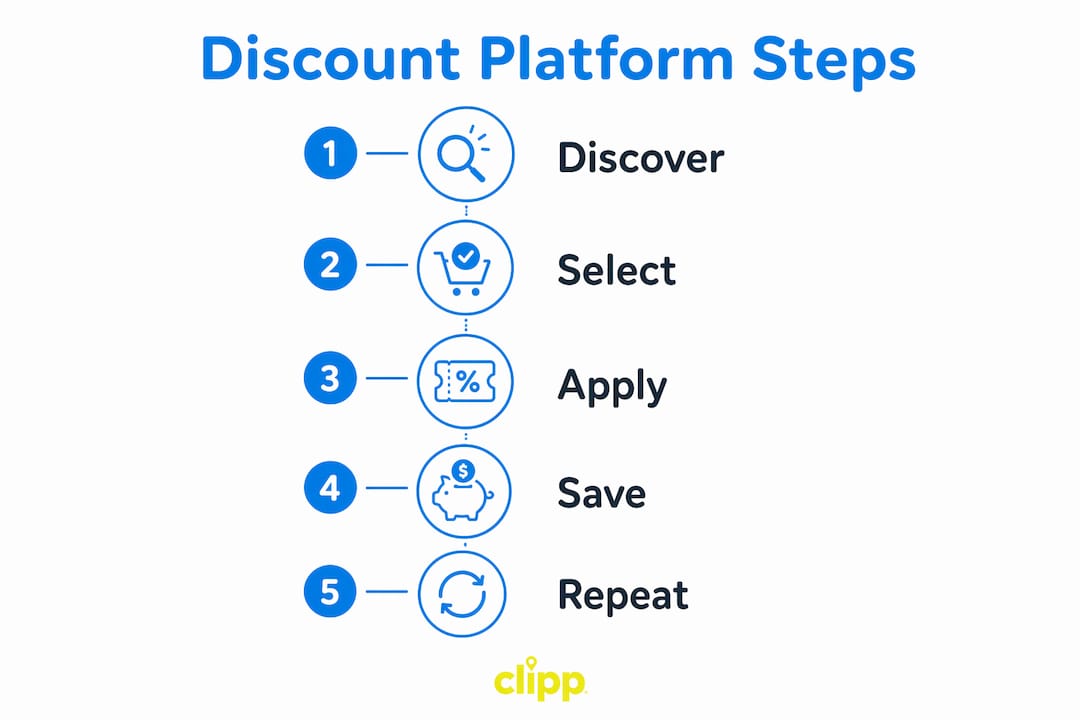
Smart platform design minimizes friction at checkout, making habit formation sustainable. The platforms that embed discounts directly into the checkout flow see the highest long-term usage rates. This is why browser extensions have grown so quickly. They remove the step where most people give up.
Why do discount platforms matter for your finances?
Discount platforms change how consumers think about spending, not just how much they spend. Consumers increasingly compare prices and read reviews on coupon sites before making a purchase. That behavior shift makes shoppers more deliberate and less impulsive. The result is better financial decisions across the board, not just lower receipts.
Applying a verified discount functions like earning an investment return on your spending. Every dollar saved through a coupon or cashback offer is a dollar that did not leave your household budget. Over a year of habitual use, those returns compound in a way that mirrors disciplined saving.
The fintech savings perspective reframes discounts as financial tools rather than marketing tricks. Coupon aggregators now operate alongside high-yield savings accounts and automated investing platforms as standard consumer finance tools. That positioning matters because it changes how seriously families treat the habit. Checking for a deal before you buy is not bargain hunting. It is rational financial behavior.
Discount platforms also provide a reward sensation that eases purchase anxiety and improves satisfaction after the buy. Shoppers who use verified deals report feeling better about their purchases. That emotional benefit reinforces the habit, which is why major shopping seasons like Black Friday drive usage spikes but most consumers now check for deals year-round, not just during sales events.
Comparing discount platform types: which one fits your goals?
Different savings goals call for different tools. The table below compares the four main platform types across the criteria that matter most to families.
| Platform type | Best for | Savings potential | Effort required | Top examples |
|---|---|---|---|---|
| Deal aggregator | Product discovery, big purchases | High | Low to medium | Slickdeals, RetailMeNot |
| Cashback portal | Online retail, recurring purchases | Medium to high | Very low | Rakuten, TopCashback |
| Browser extension | Everyday online shopping | Low to medium | Minimal (auto) | Honey, Capital One Shopping |
| Local deal platform | Dining, entertainment, services | High | Low | Clipp |
| Price tracker | Electronics, appliances, books | Variable | Low | CamelCamelCamel |
Local deal platforms like Clipp stand out for families because they cover the spending categories that repeat most often: restaurants, gyms, salons, and local events. A 50% off dining deal used twice a month delivers more annual value than a one-time cashback rebate on a large purchase. Frequency matters as much as percentage saved.
The most effective approach is stacking multiple tools: deal aggregators for discovery, cashback portals for rebates, and automatic code applications for frictionless savings. Stacking is not complicated. It means using more than one platform on the same purchase when possible.
Pro Tip: Avoid checking every platform for every purchase. Assign each tool a role and stick to it. Use Clipp for local dining and services, Rakuten for online retail, and a browser extension for everything else. That division prevents deal fatigue and keeps the habit sustainable.
How can families use discount platforms for dining and entertainment?
Practical savings on dining and entertainment require a slightly different approach than online retail. Local deals are time-sensitive, category-specific, and often tied to physical locations. Here is a step-by-step setup that works for busy families.
- Bookmark a local deal platform. Clipp lists verified offers for restaurants, entertainment venues, and local services near you. Check it before booking a dinner or planning a weekend activity.
- Search by category, not just by discount size. A 30% off deal at a restaurant you already love beats a 50% off deal somewhere you would never go. Filter by category first.
- Stack with a cashback portal when booking online. If you reserve a table or buy tickets through a website, activate your cashback portal before completing the purchase.
- Set alerts for recurring services. Gyms, salons, and pet care services run seasonal promotions. Sign up for deal alerts on Clipp or RetailMeNot so you catch offers before they expire.
- Use mobile apps for on-the-go savings. Clipp's mobile app lets you pull up deals at the restaurant door, not just at home on a laptop.
Families who build this routine into their planning can realistically cut dining and entertainment costs significantly. The step-by-step approach to dining discounts shows how combining platform types can push savings up to 50% on food and beverage purchases. That figure requires intentional stacking, not passive browsing.
A few additional habits make the difference between occasional savings and consistent ones:
- Check Clipp's "Trending Deals" and "Near You" sections weekly, not just when you are already planning to spend.
- Share deal finds with family members so everyone contributes to the household savings habit.
- Track what you save each month. Seeing the number builds motivation to keep the habit going.
The variety of restaurant coupon types available through platforms like Clipp includes buy-one-get-one offers, percentage discounts, fixed dollar amounts off, and free item promotions. Each type suits a different dining scenario, so knowing which to look for before you go saves time at the point of decision.
Key takeaways
Discount platforms are financial tools, not marketing gimmicks. Families who stack deal aggregators, cashback portals, and local platforms like Clipp build a savings system that compounds across every spending category.
| Point | Details |
|---|---|
| Role of discount platforms | They aggregate verified deals, cashback, and coupons to reduce purchase costs systematically. |
| Stacking multiplies savings | Combining 3–4 tools takes under 5 minutes to set up and saves hundreds annually. |
| Local platforms fill a gap | Platforms like Clipp cover dining and services, where families spend most frequently. |
| Habit beats occasion | Year-round habitual use outperforms seasonal deal hunting in total annual savings. |
| Emotional benefit is real | Using verified discounts reduces purchase anxiety and improves satisfaction after buying. |
Why I think most families underestimate these tools
Most people treat discount platforms as something you use when you remember to. That is the wrong mental model. After years of watching how families actually spend, I am convinced that the gap between occasional users and habitual users is not effort. It is framing.
When you frame a coupon as a financial return rather than a lucky find, the behavior changes. You check before you buy the same way you check your bank balance before a big purchase. The fintech savings ecosystem has already made this shift at the industry level. Coupon aggregators sit alongside budgeting apps and investment platforms in the personal finance stack now. Families who adopt that framing early will save meaningfully more over time.
Technology is accelerating this. Browser extensions already apply codes without any user action. Local platforms like Clipp are getting better at surfacing deals based on your neighborhood and spending patterns. The friction is nearly gone. The only thing left is deciding to make it a habit.
My honest advice: start with one local platform and one cashback portal. Use them for 30 days on purchases you were already planning. Then look at what you saved. That number will do the convincing better than any argument I can make.
— Mehmet
Clipp makes local savings simple for families
Families looking for verified deals on dining, entertainment, and local services do not need to search across dozens of sites.
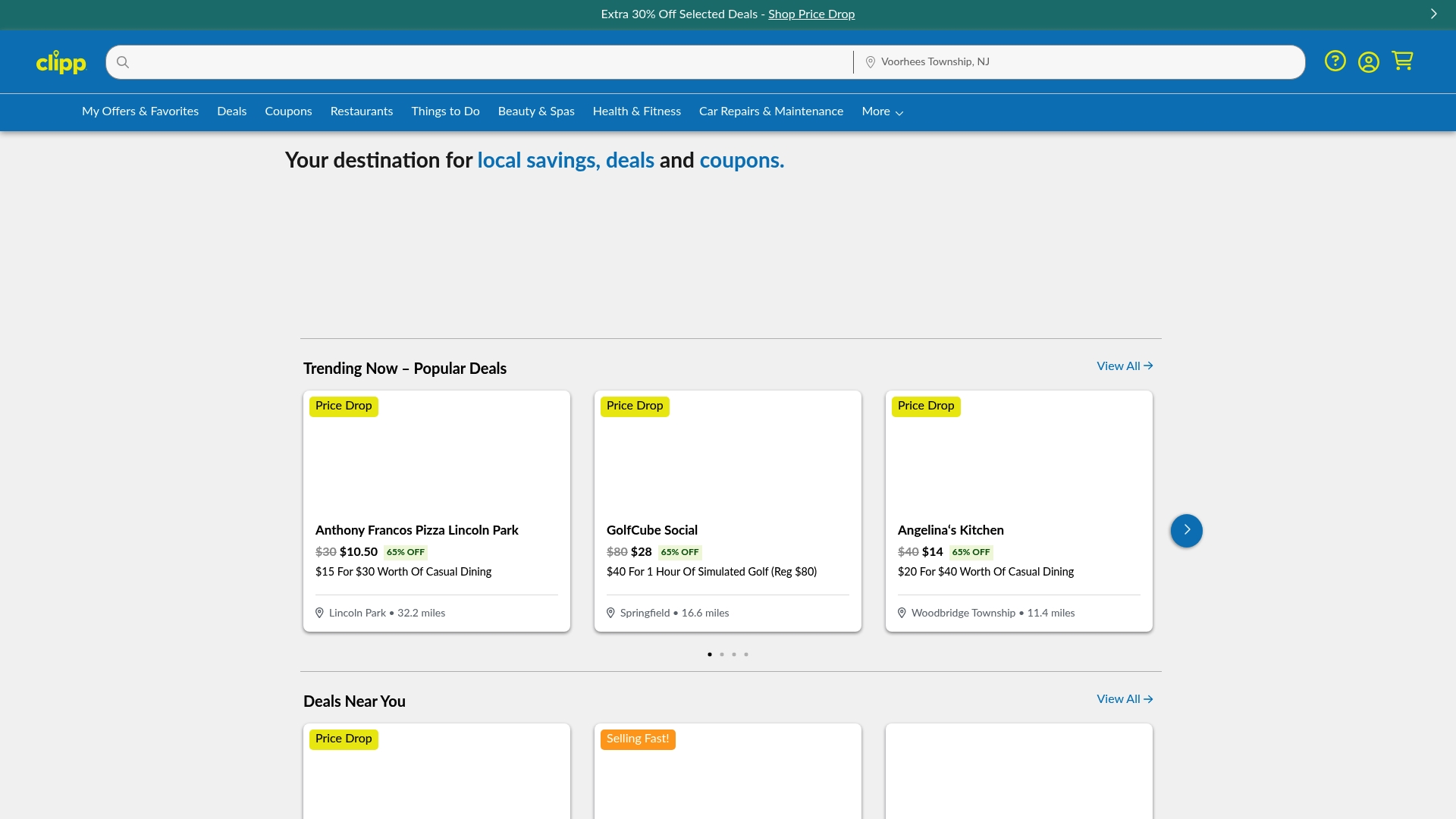
Clipp brings curated local offers together in one place, with deals near you updated regularly across categories like restaurants, gyms, salons, and recreational activities. Shoppers in Virginia, Texas, Massachusetts, and Colorado can find 50% off local savings on the services they use most. The platform is built for quick browsing, with sections like "Trending Deals" and "Near You" that surface the best current offers without any searching. Check Clipp before your next dinner out or weekend plan and see what is available in your area.
FAQ
What is the role of discount platforms for families?
Discount platforms aggregate verified coupons, cashback offers, and local deals so families can reduce costs on dining, entertainment, and services they already use. Habitual use builds consistent annual savings without requiring significant time or effort.
How do discount platforms work for local dining deals?
Local deal platforms like Clipp list verified offers from nearby restaurants and service providers, which consumers redeem in-store or online. Stacking a local deal with a cashback portal on the same purchase maximizes the total discount.
What is deal stacking and why does it matter?
Deal stacking means using multiple discount tools on a single purchase, such as a local coupon combined with a cashback portal and an auto-applied browser extension code. Combining 3–4 tools takes under 5 minutes to set up and can save hundreds of dollars per year.
Are discount platforms useful year-round or just during sales events?
Discount platforms are a year-round savings tool. While Black Friday and Cyber Monday drive usage spikes, most consumers now check for deals habitually before any purchase, regardless of the season.
Which type of discount platform is best for dining and entertainment?
Local deal platforms are the best fit for dining and entertainment because they cover the categories families use most frequently. Clipp specializes in exactly these categories, offering verified offers for restaurants, gyms, salons, and local events across multiple U.S. states.