

TL;DR:
- Layered dining discounts combine loyalty programs, coupon codes, gift cards, and cashback apps to save up to 50% on restaurant bills. Following a specific sequence ensures maximum savings, avoiding common pitfalls like applying discounts after ordering or stacking promo codes improperly. Timing visits on weekdays and using pre-visit checklists further enhance savings, making frequent dining more affordable.
Step by step dining discounts are layered savings methods that combine loyalty programs, coupon codes, discounted gift cards, and cashback apps to cut your restaurant bill by 10% to 50% per meal. This is not a one-time trick. It is a repeatable system that local diners use every week to keep more money in their wallets. Platforms like Restaurant.com and Rakuten, along with gift card resale sites like Raise.com, are the core tools in this process. When you stack these methods correctly, families can reach up to 50% savings on a single meal.
What tools do you need for step by step dining discounts?
Before you walk into any restaurant, you need the right accounts set up. Think of this as your savings toolkit. The more tools you have ready, the more layers of discount you can apply.

The four core tool types are loyalty apps, coupon aggregator sites, discounted gift card platforms, and cashback apps. Each one works differently and targets a different part of your bill.
| Tool Type | Example Platform | Primary Benefit |
|---|---|---|
| Loyalty App | Restaurant.com | Exclusive member discounts and points |
| Coupon Aggregator | RetailMeNot, Honey | Promo codes and percent-off offers |
| Gift Card Resale | Raise.com | Buy gift cards at 5%–20% below face value |
| Cashback App | Rakuten, Ibotta | Earn money back after dining |
| Email Newsletter | Local restaurant lists | First-access deals and birthday offers |
Setting up these accounts takes about 20 minutes total. Rakuten and Ibotta are free to join and pay out quarterly. Raise.com sells gift cards for popular chains and local spots at a discount, so you are spending less before you even order. Restaurant.com offers certificates for local restaurants, often at steep reductions.
Pro Tip: Sign up for email newsletters from your five most-visited local restaurants. Birthday and anniversary offers from these lists frequently deliver 20%–30% off that you cannot find anywhere else.
One often-overlooked step is checking your credit card's dining rewards category. Cards like the Chase Sapphire Preferred or the American Express Gold Card offer 3x to 4x points on restaurant spending. That is not a coupon, but it is real money returned to you on every dollar spent.
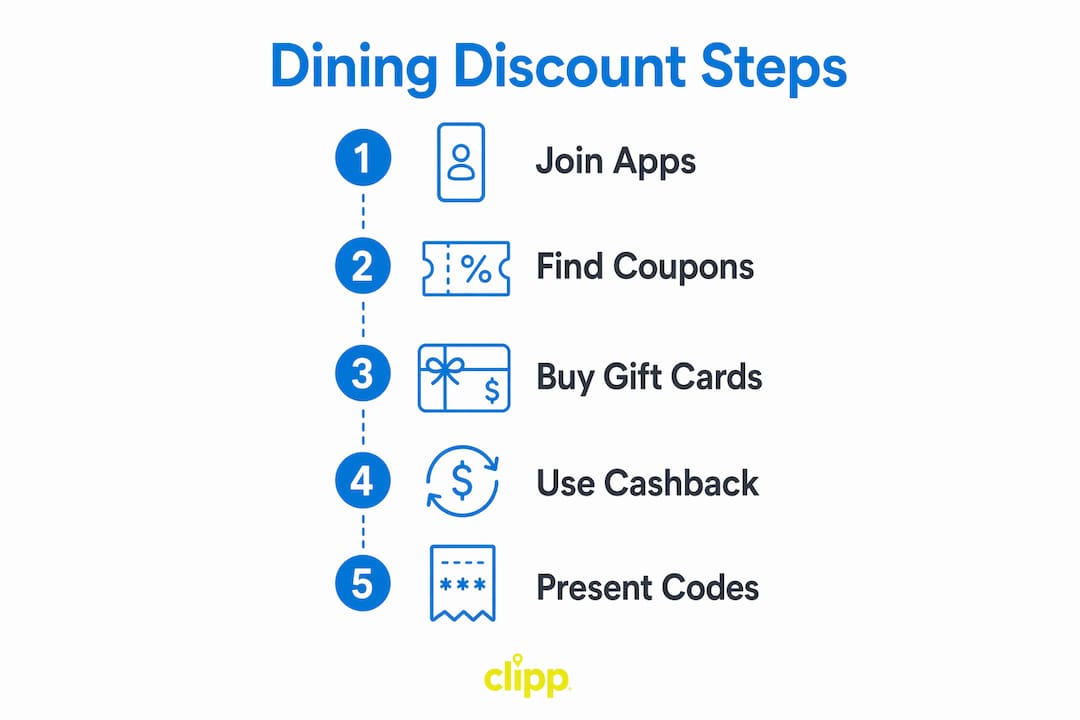
How do you execute a stepwise dining savings process?
The actual step-by-step process for maximizing dining savings follows a clear sequence. Skipping steps costs you money. Follow this order every time you plan a restaurant visit.
- Search for active offers. Check Restaurant.com, RetailMeNot, and your loyalty app for current deals at your chosen restaurant. Do this at least 24 hours before your visit so you have time to purchase gift cards if needed.
- Activate loyalty app discounts. Open your restaurant's loyalty app or email offer and activate any available reward before you arrive. Many apps require activation before the transaction, not during it.
- Purchase a discounted gift card. Visit Raise.com or a similar platform and buy a gift card for your restaurant at below face value. A $50 gift card purchased for $42 saves you $8 before you touch a coupon.
- Pay with a dining rewards credit card. Use a card that earns bonus points on restaurant spending. This stacks on top of your gift card purchase and any coupon applied.
- Earn cashback through Rakuten or Ibotta. If the restaurant is listed on either platform, activate the offer before paying. Some offers require you to link your credit card; others use a receipt scan.
- Time your visit strategically. Lunch menus and midweek visits (Monday and Tuesday) deliver 25%–40% lower prices compared to weekend dinners. Combine this with your digital discounts for the deepest savings.
The key insight behind this sequence is that you are mixing discount types, not stacking multiple promo codes. Combining gift card discounts with loyalty rewards and timing discounts sidesteps the technical restrictions most platforms place on stacking identical coupon types. You are not breaking any rules. You are using each tool for what it was designed to do.
Pro Tip: Before you finalize your restaurant choice, run a quick 3-minute pre-checklist: confirm the coupon is valid today, verify the gift card balance, and check that your cashback app has an active offer. This habit alone can save $15–$30 per transaction.
What mistakes derail your dining discount strategy?
Common errors reduce or eliminate your savings entirely. Knowing these pitfalls ahead of time keeps your discount system running without friction.
- Presenting discounts after ordering. POS systems rarely allow retroactive discount application once a bill is printed. Always show your coupon, loyalty code, or gift card to your server before you order, not after.
- Trying to stack multiple promo codes. Most restaurant platforms prohibit combining two percentage-off promo codes. The workaround is to mix discount types: one promo code plus a gift card plus a cashback app is usually permitted.
- Ordering expensive appetizers expecting savings. Appetizers carry high markups and are considered menu traps by restaurant pricing experts. A discounted appetizer still costs more per ounce than most entrees. Focus your discount on the total bill, not on individual high-margin items.
- Forgetting to activate cashback offers before paying. Rakuten and Ibotta require offer activation before the transaction. Activating after you pay disqualifies the cashback entirely.
- Not confirming deal eligibility with your server. Some restaurant coupons exclude certain menu items, alcohol, or weekend service. Ask your server to confirm before you order to avoid a surprise at checkout.
The fix for most of these mistakes is simple: do your prep before you arrive. A quick review of the coupon terms takes two minutes and prevents the frustration of a discount being declined at the table. For a deeper look at why discounts get rejected, understanding restaurant pricing logic helps you pick the right offers from the start.
Does timing your visit actually increase your savings?
Timing is one of the most underused tools in any restaurant discount guide. Choosing when you dine can add 25%–40% in savings on top of whatever digital discounts you already hold.
Lunch menus at full-service restaurants typically run 20%–30% below dinner prices for comparable dishes. The same pasta dish that costs $22 at dinner often appears on the lunch menu for $14. Restaurants run specials on Monday and Tuesday specifically to fill seats on slow days, frequently discounting appetizers and desserts to move inventory before spoilage.
| Dining Scenario | Typical Price Level | Discount Potential |
|---|---|---|
| Weekend dinner | Highest | Lowest (peak demand) |
| Weekday dinner | Moderate | Moderate |
| Weekday lunch | Lower | High (10%–30% below dinner) |
| Monday/Tuesday special | Lowest | Highest (25%–40% savings) |
| Restaurant Week event | Variable | High (prix-fixe bundling) |
Restaurant Week events, held in most major cities twice a year, offer prix-fixe menus at fixed prices well below normal costs. Cities like New York, Chicago, and Houston run these events in january and july. Pairing a Restaurant Week prix-fixe with a dining rewards credit card and a cashback app stacks three discount layers without violating any stacking rules.
For high-end dining, paying a corkage fee on a personal bottle of wine is often cheaper than the restaurant's markup on the same bottle. Set menus bundle multiple courses at a lower combined price than ordering each dish individually. These two strategies apply the same stepwise logic to upscale restaurants that loyalty apps apply to casual chains.
Key takeaways
Stacking gift card discounts, loyalty rewards, and timing strategies delivers the deepest dining savings because each method targets a different part of your bill without triggering promo code restrictions.
| Point | Details |
|---|---|
| Set up your toolkit first | Create accounts on Restaurant.com, Raise.com, Rakuten, and Ibotta before your next restaurant visit. |
| Follow the six-step sequence | Search offers, activate loyalty discounts, buy gift cards, pay with rewards cards, earn cashback, and time your visit. |
| Mix discount types, not codes | Combine gift cards, loyalty rewards, and timing deals to bypass promo code stacking limits legally. |
| Present discounts before ordering | POS systems rarely apply discounts retroactively, so show all codes and cards before you place your order. |
| Time visits for maximum savings | Monday and Tuesday specials and lunch menus deliver 25%–40% lower prices compared to weekend dinners. |
My honest take on building a discount dining habit
When I first started using layered dining discounts, the process felt like homework. I would forget to activate the cashback offer, or I would show up without the gift card loaded on my phone. The savings were real, but inconsistent.
The shift happened when I stopped treating each discount as a separate task and started running a single 3-minute pre-checklist before every restaurant visit. That checklist covers four items: confirm the coupon is active, check the gift card balance, activate the cashback app, and note the best timing for the visit. Spending 3 minutes pre-meal to verify stacking can save $15–$30 per transaction. That math adds up fast across a month of dining.
The insight most people miss is that value in dining is not just about the lowest price. It is about choosing the right courses, the right day, and the right payment method together. A diner who orders a heavily marked-up appetizer and pays full price on a Saturday night is leaving money on the table even with a coupon in hand. Treating discount use as a repeatable savings habit rather than a one-time search is what separates consistent savers from occasional ones.
— Mehmet
Find local dining deals faster with Clipp
Clipp connects local diners with curated restaurant discounts, digital coupons, and limited-time offers in their neighborhoods. Instead of searching five different platforms manually, you can browse deals organized by location and category in one place.
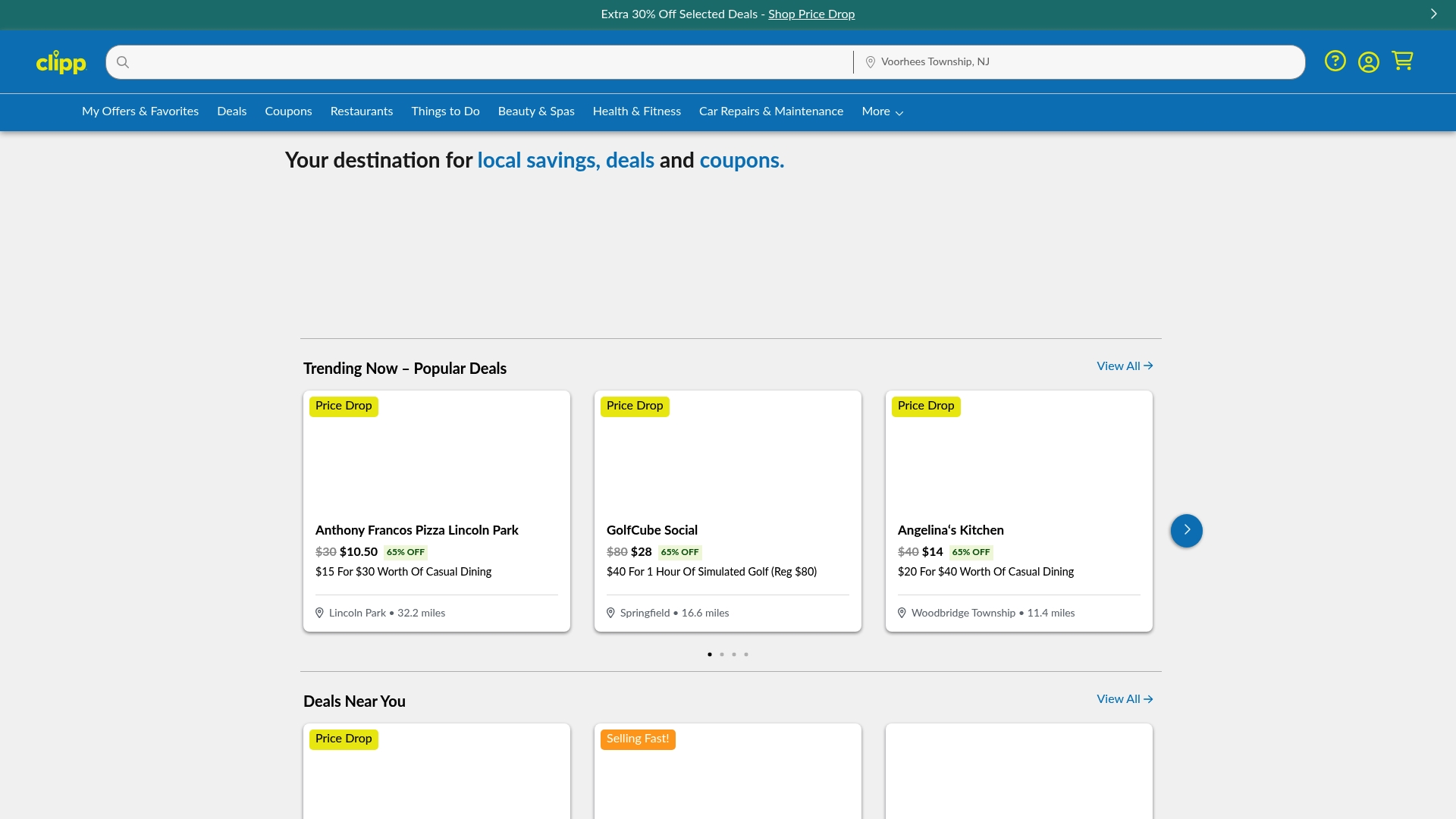
Clipp's "Near You" and "Trending Deals" sections surface the best-value restaurant promotions in your area, including fast-selling offers that disappear quickly. If you are in Texas, the local dining deals page lists current discounts from restaurants near you, updated regularly. For diners in Florida or Virginia, Clipp covers local restaurant savings across both states with the same easy-to-clip format. Start browsing now and apply your first discount before your next meal.
FAQ
What are step by step dining discounts?
Step by step dining discounts are a layered savings method where you combine loyalty app offers, coupon codes, discounted gift cards, and cashback apps in sequence to reduce your restaurant bill by 10%–50%.
Can you stack multiple discount codes at one restaurant?
Most platforms prohibit stacking two promo codes simultaneously. The legal workaround is mixing discount types: one promo code combined with a discounted gift card and a cashback app is typically permitted.
When should you present a coupon at a restaurant?
Present all discount codes and gift cards to your server before you order. POS systems rarely allow discounts to be applied after the bill is printed.
Which days offer the best dining savings?
Monday and Tuesday deliver the deepest off-peak savings, with restaurants running specials to fill slow-night seats. Lunch menus on any weekday also run 20%–30% below dinner pricing for comparable dishes.
How much can a family save using stacking strategies?
Families using stacked discounts, including gift cards, loyalty rewards, and cashback apps, can reach up to 50% savings on a single meal, making this the most effective approach for groups dining out regularly.