

TL;DR:
- Maximizing wellness coupons involves setting up accounts on coupon sites, understanding discount types, and stacking deals strategically.
- Timing purchases around sales events and leveraging employer or insurance credits can significantly reduce wellness expenses.
Wellness spending adds up fast. Gym memberships, supplements, massage appointments, fitness gear — the costs hit your budget before you even notice. Knowing how to maximize wellness coupons can change that entirely. Most people grab a code here or there and call it done, but the real savings come from a system: knowing which types of wellness discounts exist, where to find them, how to stack them, and when to use them. This guide walks you through every step, from setup to final verification, so you stop leaving money on the table.
Table of Contents
- Key takeaways
- How to maximize wellness coupons: your setup foundation
- Where to find the best wellness deals and discounts
- Tactical execution: stacking and redeeming coupons for maximum savings
- Common pitfalls and how to avoid them
- Verifying your savings and measuring what works
- My take on maximizing wellness coupons
- Find local wellness deals on Clipp
- FAQ
Key takeaways
| Point | Details |
|---|---|
| Set up accounts first | Create profiles on coupon aggregator sites and wellness portals before you shop to unlock exclusive offers. |
| Stack discounts strategically | Combine manufacturer coupons, store promotions, and loyalty points for the largest possible savings. |
| Time purchases around sales events | Major events like Memorial Day deliver 15 to 50% off wellness brands, so plan big purchases accordingly. |
| Leverage employer wellness programs | Many large employers offer monthly wellness credits up to $250 that most employees never fully use. |
| Track and verify your savings | Keep records of deals used and use price history tools to confirm you actually got the best price. |
How to maximize wellness coupons: your setup foundation
Before you redeem a single coupon, the right setup makes everything easier and more profitable. Think of it as building a couponing infrastructure. Without it, you miss deals, lose track of codes, and waste time hunting.
Know the types of wellness discounts available
Not all wellness coupons work the same way, and understanding the types of wellness discounts is step one.
- Manufacturer coupons: Issued directly by the brand (printed or digital). These work at any participating retailer and often offer the highest face value.
- Retailer or store coupons: Specific to one store. They stack with manufacturer coupons at many chains, which is where the real magic happens.
- Digital promo codes: Entered at online checkout. These expire fast and often have single-use restrictions.
- Loyalty rewards: Points earned through store programs redeemable for discounts. According to consumer couponing research, holding 2,000+ points before redeeming and applying coupons during point multiplier events maximizes your return far more than cashing out early on small items.
- Insurance or employer wellness credits: A category many consumers overlook entirely (more on this below).
Tools and accounts to set up now
Create free accounts on at least two to three coupon aggregator sites before you start shopping. Install a cashback browser extension like Honey or Rakuten so it runs automatically at checkout. Set up price tracker alerts on any wellness equipment you plan to buy. Organize digital coupons in a dedicated browser bookmark folder or a free app like Coupon Sherpa so nothing expires unused.
| Setup task | Why it matters |
|---|---|
| Coupon aggregator account | Centralizes offers across hundreds of brands in one place |
| Cashback browser extension | Captures automatic savings you would otherwise miss |
| Price tracker alert | Tells you if a "sale" price is actually the lowest it has been |
| Loyalty program enrollment | Unlocks member-only coupons and stacking opportunities |
Pro Tip: Read the stacking policy for every retailer you frequent. Some allow manufacturer + store + loyalty coupons combined. Others limit you to one. Knowing in advance stops frustrating rejections at checkout.
Where to find the best wellness deals and discounts
Finding high-value wellness coupons is not about luck. It is about knowing where to look and when. The best coupon sources include official manufacturer websites, verified retailer portals, and influencer codes that are validated as legitimate, not expired placeholders.
Here is where to search systematically:
- Manufacturer websites and email newsletters: Sign up for the mailing list of every wellness brand you buy regularly. Brands routinely send 15 to 20% off codes to subscribers before those deals appear anywhere else.
- Coupon aggregator apps and sites: Platforms that aggregate local and national deals can surface offers you would never find by browsing individually. Learning how digital coupon aggregators work helps you pick the right ones for wellness categories.
- Social media and influencer codes: Follow the brands you buy on Instagram and TikTok. Many run flash sales exclusively for followers or distribute influencer promo codes that offer 10 to 25% off without a minimum purchase.
- Seasonal sale events: Memorial Day 2026 features 15 to 50% sitewide discounts from major wellness brands, with savings up to $1,800 on high-ticket items like treadmills and saunas. Plan large purchases around these windows instead of buying impulsively.
- Employer and insurance wellness portals: This is where the biggest money hides. 46% of large employers offer wellness participation incentives, and 59% provide rewards for completing health risk assessments, with monthly credits reaching up to $250. Log into your HR portal today and see what you are missing.
- Health insurance member portals: Gym discounts through health insurance range from $19 to $144 monthly, and digital fitness subscriptions often drop to roughly $10 per month through member perks programs.
Pro Tip: Set a monthly calendar reminder to check your employer wellness portal. Most credits reset quarterly, and unused balances rarely roll over.
Tactical execution: stacking and redeeming coupons for maximum savings
Finding coupons is only half the job. How you use them determines your actual savings. This is where explaining wellness deals goes beyond basics into real strategy.
Follow this order when redeeming at any wellness retailer:
- Confirm retailer stacking policy. Call or check the website before checkout. Stacking varies widely by retailer. Some chains allow manufacturer plus store plus loyalty coupons simultaneously. Others cap you at one discount type.
- Apply the highest-value coupon first. When you layer discounts, order matters. Some systems calculate percentage discounts on the post-coupon price. Applying a dollar-off coupon first reduces the base price before a percentage discount calculates.
- Activate loyalty points during multiplier events. Do not burn points on routine small purchases. Waiting for promotional multiplier events and stacking a coupon at the same time produces exponentially better returns.
- Add a cashback portal link before checkout. After stacking all store discounts, make sure your cashback browser extension is active. This adds 2 to 8% back on top of existing savings without any additional codes.
- Screenshot everything before you submit. Capture the coupon terms, your cart total, and the final price. This matters more than most people realize.
- Verify the final receipt matches expectations. Do not assume the system applied every discount correctly. Check the itemized receipt before you leave the store or close the browser tab.
| Discount layer | Typical savings | Notes |
|---|---|---|
| Manufacturer coupon | $1 to $5 off | Works at any participating retailer |
| Store coupon | 10 to 20% off | Store-specific, often stackable |
| Loyalty points | 5 to 15% off | Best redeemed during multiplier events |
| Cashback extension | 2 to 8% back | Applies on top of all other discounts |
| Employer wellness credit | Up to $250/month | Often missed and expires unused |
Use bulk purchasing and subscription programs when you find a product you buy consistently. Many wellness subscription services (think protein powder or supplements delivered monthly) offer 10 to 15% off plus free shipping, and manufacturer coupons often apply on top of the subscription price.

Pro Tip: Never enter a coupon code you found on a random results page without verifying it on the brand's official site or a trusted aggregator. Fraudulent codes waste time and sometimes trigger checkout errors that clear your cart.
Common pitfalls and how to avoid them
Even experienced deal seekers hit walls. Understanding the most common couponing errors saves frustration and protects your wallet.
- Ignoring expiration dates and usage limits: A coupon that expired yesterday is worth nothing. Many digital coupons also have single-use limits. Check both before planning a purchase around a specific deal.
- Misreading exclusions: Wellness coupons frequently exclude sale items, specific sizes, or new products. Read the fine print, not just the headline discount.
- Assuming all stacking is allowed: Retailer policies differ significantly. Applying timing strategically during allowed stacking periods rather than randomly reduces checkout errors and wasted effort.
- Not escalating errors correctly: If a coupon was not applied correctly, stay calm. Ask the cashier, then the manager. For online purchases, contact chat support and have your screenshot of coupon terms ready. Most brands will honor a verified discount with proof.
- Ethical couponing matters: Do not use expired coupons by altering dates, buy products solely to resell with coupon winnings, or exploit system glitches. These practices violate retailer policies and increasingly trigger account bans.
Proactive engagement with wellness programs can unlock premium discounts and spending credits that meaningfully lower your healthcare and wellness costs over time, but only when you use those programs as designed, not as loopholes. Source: Wellhub
Verifying your savings and measuring what works
Many people save money without ever knowing exactly how much. That matters because you cannot improve a system you are not measuring.
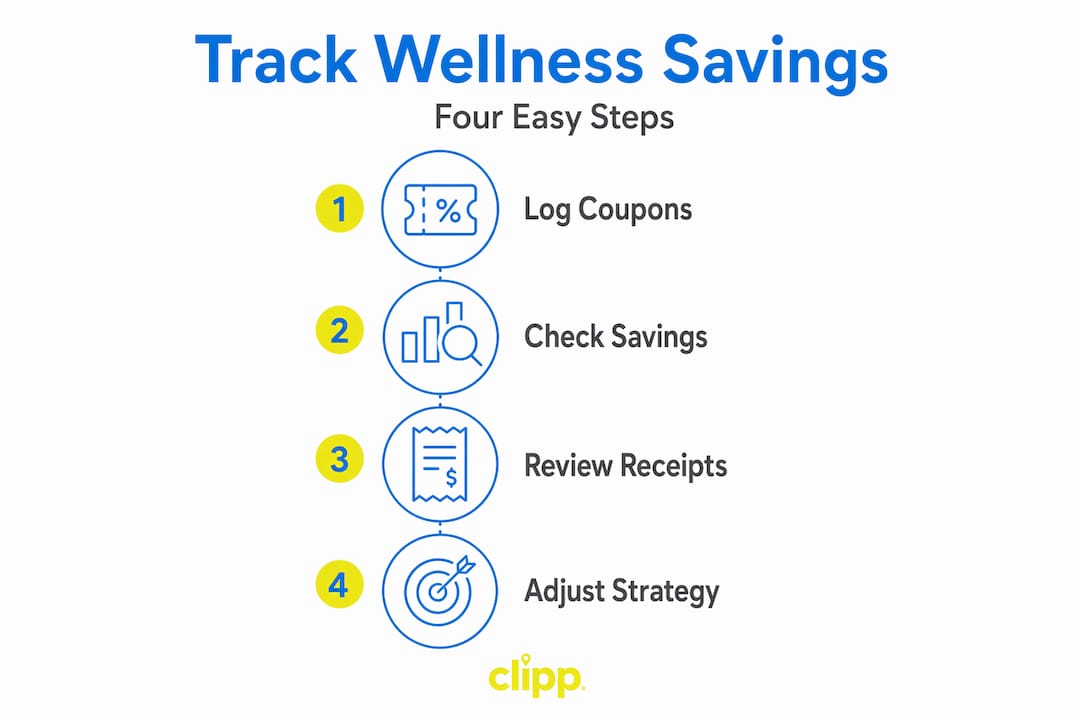
| Tracking method | What it tells you |
|---|---|
| Savings log (spreadsheet or app) | Running total of discounts captured per month |
| Price history tool (e.g., CamelCamelCamel) | Whether the "sale price" was actually a deal |
| Receipt folder (photos or digital) | Proof for disputes and ROI calculation |
| Employer portal statement | Wellness credits earned vs. credits used |
Price tracking tools and purchase documentation serve a dual purpose: they confirm you actually received the savings you expected, and they become your evidence file when disputes arise. If a store applies a coupon incorrectly and you have a screenshot of the original terms, resolution is straightforward. Without it, you are arguing from memory.
Adjust your strategy seasonally. Wellness brands run their deepest promotions in January (New Year health resolutions), May (Memorial Day), and around back-to-school season in August. Track when specific products you buy tend to discount and time your restocking accordingly.
Also factor in indirect benefits. Education, incentives, and consistent engagement increase wellness program participation 40 to 60%, and 70% of employees say rewards actively motivate them to engage. If participating in your employer's wellness program gets you a $150 gym reimbursement per quarter, that is $600 per year with zero coupon hunting required.
Pro Tip: Set a 15-minute "savings audit" once a month. Review your receipts, check unused credits, and confirm loyalty point balances. Most people discover they are sitting on significant unredeemed value.
My take on maximizing wellness coupons
I've watched people approach couponing two ways. The first group grabs every deal they spot impulsively, applies codes at random, and ends up confused about why their savings never seem to add up. The second group treats it like a system. They set up their tools once, learn the stacking rules for the three or four retailers they actually shop, and then execute consistently.
In my experience, patience beats hustle here. Timing a single large purchase around a seasonal sale event, layering in your insurance gym credit and a manufacturer coupon, produces more savings than clipping dozens of small coupons all year. I've also seen people leave employer wellness credits completely untouched for months. That is not a coupon problem. That is a habit problem. Once you build the monthly check-in into your routine, it takes ten minutes and pays real money.
The uncomfortable truth is that holding points until thresholds and applying coupons during multiplier events is genuinely more profitable than the impulsive small-redemption approach most people default to. Slow down. Think one or two purchases ahead. The savings compound fast when you do.
— Mehmet
Find local wellness deals on Clipp
Clipp makes it straightforward to find wellness deals in your neighborhood without sifting through expired codes or unreliable sources. The platform curates promotions for gyms, spas, salons, and local health services, surfacing trending offers before they sell out.
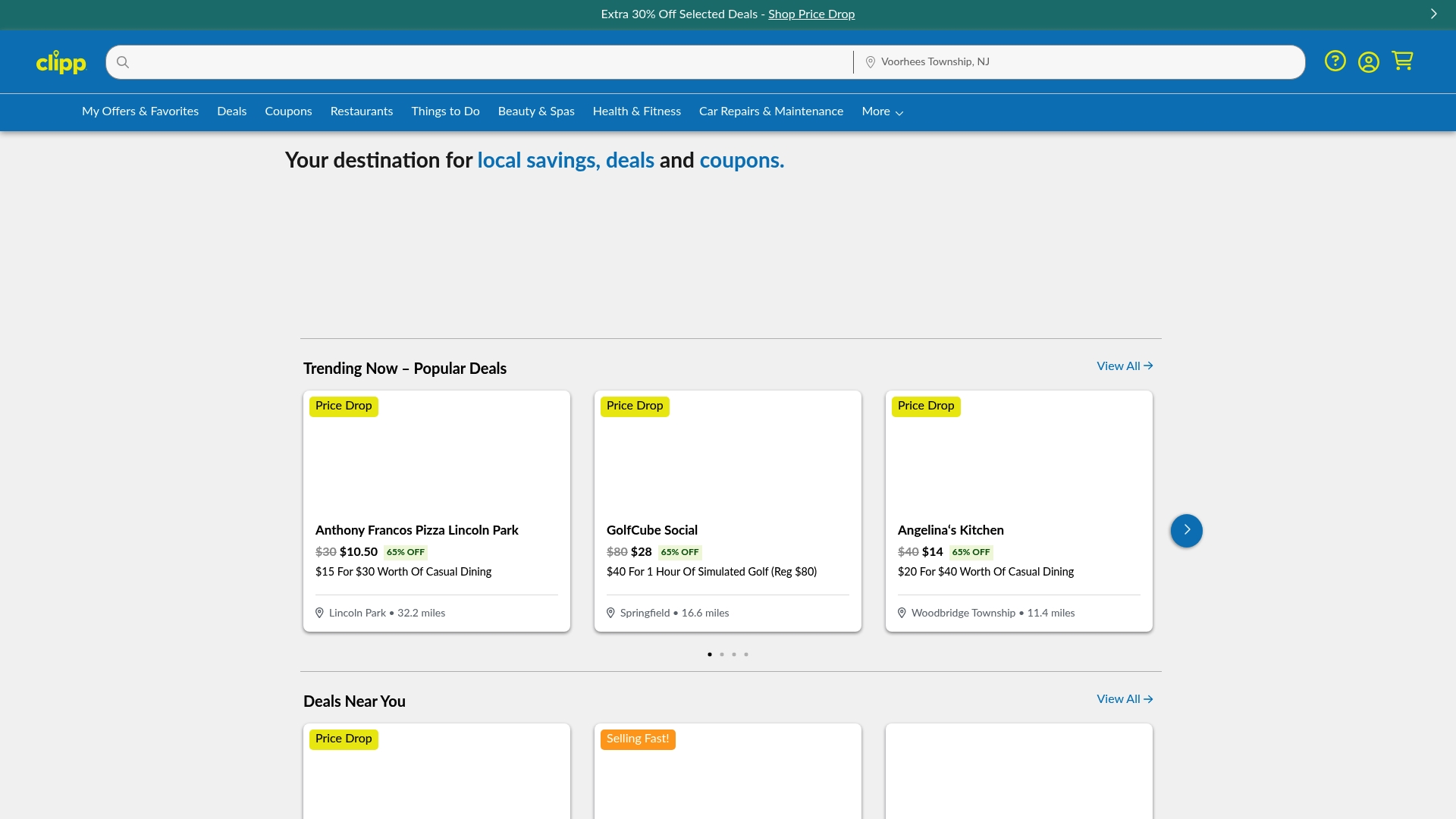
If you live in Texas, Virginia, Florida, or another major state, Clipp's state-specific wellness savings surface the highest-value local deals with real expiration dates you can plan around. For on-the-go access, the Clipp mobile app puts active coupons in your pocket so you can redeem in-store without printing anything. You can also explore local service coupons to find wellness-specific promotions near you. If you want a step-by-step reference while you shop, Clipp's couponing strategy guide walks through proven methods for getting the most from every deal.
FAQ
What does coupon stacking mean for wellness products?
Coupon stacking means applying more than one discount to a single purchase, such as combining a manufacturer coupon with a store promotion and loyalty points. Whether it is allowed depends entirely on the retailer's policy, so always confirm before checkout.
How do I find employer wellness discounts I might be missing?
Log into your company's HR or benefits portal and look for a wellness program or incentive section. Many large firms offer participation incentives worth up to $250 monthly that employees simply never claim.
When is the best time to buy wellness products with coupons?
January, May (Memorial Day), and August offer the deepest seasonal discounts on wellness products. Timing a major purchase around these windows and layering in available coupons and credits produces the largest combined savings.
How do I handle a coupon that was not applied correctly?
Take a screenshot of the coupon terms before checkout. If the discount does not appear on your receipt, show the screenshot to a cashier, manager, or online customer support agent. Price tracking documentation and receipts are your strongest tools for resolving disputes quickly.
Are influencer promo codes for wellness products legitimate?
Many are, but verify before using them. Check the code on the brand's official website or a trusted coupon aggregator. Codes posted months ago on random forums are usually expired and occasionally linked to phishing sites.