

TL;DR:
- Deal aggregators compile offers from multiple sources into a single, real-time searchable platform, enhancing local savings and reducing search time. They differ from coupon sites and marketplaces by normalizing deal data without owning the products, focusing on discovery and relevance through geolocation and personalization. Using trusted platforms and verifying deal validity ensures maximum benefit in finding current, neighborhood-specific discounts effortlessly.
If you have ever opened five browser tabs trying to find the best discount on a local restaurant or gym membership, you have already felt the problem a deal aggregator is designed to solve. A deal aggregator is a platform that pulls offers from multiple sources into a single, searchable feed so you stop hunting and start saving. Most people assume these are just basic coupon websites. They are not. Understanding what deal aggregation actually does changes how you shop, how much you save, and which platforms are worth your time.
Table of Contents
- Key takeaways
- What is a deal aggregator, exactly?
- Why you should use a deal aggregator
- Types of deal aggregators and what they offer
- How to get the most out of deal aggregators
- My honest take on deal aggregators
- Start saving locally with Clipp
- FAQ
Key takeaways
| Point | Details |
|---|---|
| Aggregators collect, not create | Deal aggregators pull offers from many sources into one place without owning the deals themselves. |
| Real-time updates matter | The best platforms refresh deals daily or hourly, so you always see current offers rather than expired ones. |
| Local deals are the sweet spot | Aggregators focused on your neighborhood give you relevant savings on dining, wellness, and services near you. |
| Personalization improves savings | AI-powered platforms surface deals that match your location and habits, reducing irrelevant browsing. |
| Verify before you buy | Always check expiration dates and terms directly on the deal page before redeeming an offer. |
What is a deal aggregator, exactly?
A deal aggregator is an intermediary platform that collects, organizes, and displays offers from multiple merchants or affiliate networks in one place. It does not own the products or services being discounted. It owns the discovery experience. Think of it like a search engine for savings: it does not sell you anything directly, but it connects you to the right deal at the right moment.
The term "deal aggregation" describes the technical process behind this. Aggregators use data feeds and APIs to pull promotional content from retailers, restaurants, service providers, and affiliate networks. Those feeds arrive in different formats, so the platform normalizes them, meaning it standardizes prices and branding to create a consistent, readable experience for you regardless of where the deal originated. Expiration dates, discount amounts, category tags, and tracking links all get formatted into a uniform structure through a process the industry calls deal-feed normalization.
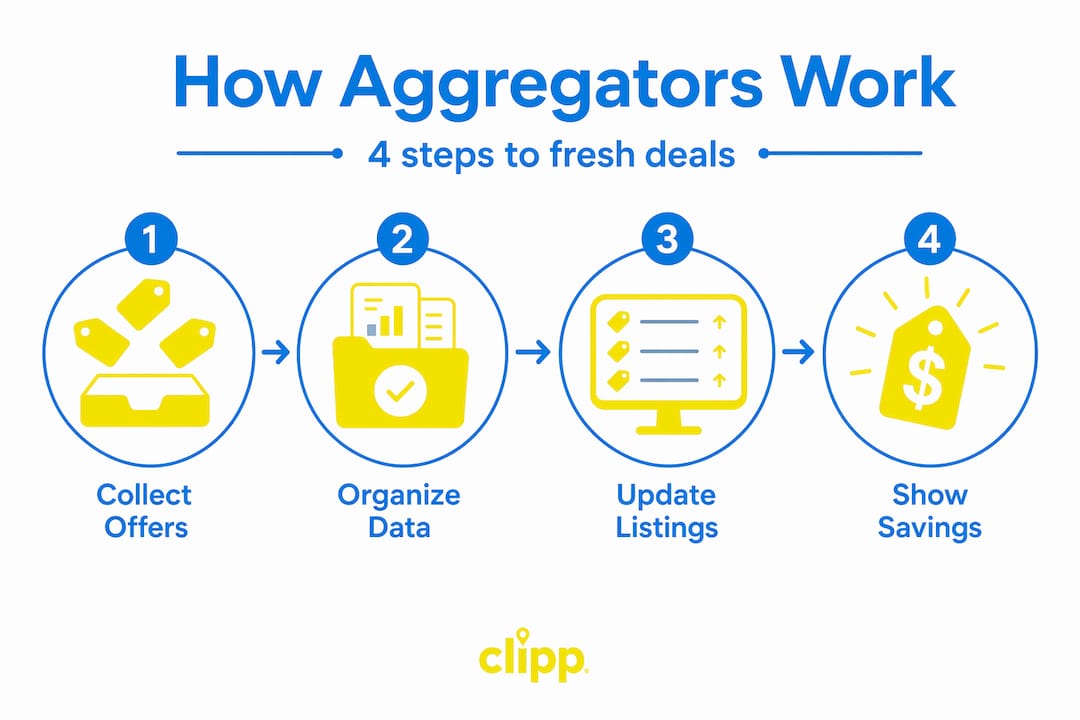
Here is where deal aggregator websites differ from coupon sites and marketplaces. A coupon site typically hosts static discount codes that users submit or brands upload manually. A marketplace like Amazon actually sells inventory. An aggregator sits between those two. Like Uber or Airbnb, aggregators manage listings without owning the underlying product, which means they can scale across dozens of categories without carrying any inventory risk.
What keeps the content fresh? The best deal aggregator platforms use incremental API updates. Rather than refreshing every single deal from scratch multiple times a day, they fetch only changed deals since the last pull. That approach keeps the system fast and the feed current without overwhelming the servers. Some platforms refresh hourly. Others go daily. The frequency directly affects whether the deals you see are real or already gone.
Pro Tip: When evaluating any deal aggregator platform, look for a "last updated" timestamp on individual deal listings. If you cannot find one, assume the deals may be stale.
Key differences at a glance:
- Coupon sites: User-submitted codes, often static, focused on online retailers
- Marketplaces: Sell their own inventory or host third-party sellers who do
- Deal aggregators: Pull and normalize offers from many sources, focused on discovery
Why you should use a deal aggregator
The most obvious benefit is time. Comparison shopping for a local service without an aggregator means visiting multiple business websites, checking their current promotions, comparing terms, and hoping none of it expired yesterday. A deal aggregator collapses that process into a single search. That reduction in comparison friction is genuinely significant in markets where prices shift frequently, like dining, entertainment, and wellness services.
Here are the core reasons deal aggregators consistently deliver value for everyday shoppers:
- Single-source comparison. You see multiple competing offers in one view rather than bouncing between websites. A gym deal and a spa deal from the same neighborhood sit side by side so you can decide quickly.
- Localized relevance. The best platforms use geolocation to surface offers near you rather than flooding your screen with discounts from businesses 200 miles away.
- Standardized deal information. Aggregators display consistent details: discount percentage, expiration date, category, and any restrictions. You know what you are getting before you click through.
- Timing advantages. Many deals on aggregator platforms are limited-time or limited-quantity offers. Seeing them in one place means you catch them before they sell out, which matters when you are buying a discounted experience at a local restaurant or salon.
- Personalized feeds. Modern platforms use AI and machine learning to prioritize relevant offers based on your browsing habits, location, and preferences. Over time, your feed gets smarter.
Pro Tip: Turn on location permissions for any deal aggregator app you use. Without them, you will see national offers instead of the neighborhood deals that are actually useful to you.
There is also a confidence factor. When a platform maintains well-curated offer pages with accurate terms and current availability, you trust it enough to act quickly. That trust translates directly into savings you would have otherwise missed because you second-guessed the deal.

Types of deal aggregators and what they offer
Not every aggregator covers the same ground. The category you care about shapes which platform is worth your attention. Here is a practical comparison of common deal aggregator types:
| Type | Focus area | Example feature | Best for |
|---|---|---|---|
| Local services aggregator | Dining, wellness, home services | Geolocation, neighborhood filters | Finding deals near your zip code |
| Gaming deal aggregator | Video games and software | Daily updates from Steam and Epic Games | Gamers tracking price drops |
| E-commerce deal aggregator | Online retail across categories | Price history, coupon codes | Shopping for products online |
| Food and dining aggregator | Restaurants and delivery | Cuisine filters, limited-time menus | Saving on meals and experiences |
Local service aggregators are where the most practical, everyday savings live for most people. Platforms in this space pull deals from local businesses including restaurants, gyms, salons, pet care providers, and entertainment venues. Clipp does exactly this. It offers localized deals from restaurants, services, and retailers with savings of up to 50% off, organized into categories like dining, wellness, and home improvement so you find what you need without scrolling through irrelevant offers.
The business model behind most deal aggregator websites relies on affiliate programs. When you click through and complete a purchase, the aggregator earns a small commission from the merchant. That means the service stays free for you while merchants pay only for actual customer traffic. It is a model that aligns incentives: the aggregator wants to show you deals you will actually use, and merchants want customers who are ready to buy.
Features worth looking for on any top deal aggregation service:
- Geolocation or zip code filtering for neighborhood relevance
- Expiration date visibility on every listing
- Category browsing so you can explore dining, wellness, or entertainment separately
- Mobile app with push notifications for time-sensitive deals
- User reviews or ratings for the merchant, not just the deal
You can find practical examples of how local deal discovery works across different platforms if you want to compare your options side by side.
How to get the most out of deal aggregators
Using a deal aggregator well is a skill, not just a habit. The people who save the most are not the ones who browse the longest. They are the ones who use the tools correctly.
Start by choosing platforms that update frequently. An aggregator that refreshes its feed daily gives you a meaningfully better experience than one that updates weekly. Deal-feed APIs that support incremental updates are a sign that a platform takes freshness seriously. If you cannot find information about how often deals are updated, test it yourself by checking the same deal twice in one week.
- Set your location precisely. Use your actual zip code rather than your city to get the most relevant neighborhood offers.
- Use category filters. Do not scroll everything. If you want dining deals, go directly to that category so your time stays focused.
- Cross-check expiration dates. Always confirm the deal is still valid on the merchant's own website or app before heading out or completing a purchase.
- Stack deals where possible. Some aggregator platforms let you combine a percentage-off deal with a loyalty card or separate coupon code. Not all merchants allow this, but it is always worth checking the terms.
- Watch for data security. If a platform asks for more personal or financial information than necessary to show you a deal, that is a red flag. Aggregator fraud risk is real, particularly on platforms that store payment data without transparent security policies.
Pro Tip: Bookmark two or three aggregator platforms that cover different categories rather than relying on one. A general local deals platform like Clipp handles dining and services well. A specialized one might do better for software or travel. Using both costs nothing and covers more ground.
Learning how to save big across dining, entertainment, and services takes a bit of practice, but the pattern becomes second nature quickly once you have the right platforms in your rotation.
My honest take on deal aggregators
I have watched the deal aggregator space evolve significantly, and my honest read is that most people underestimate how much the quality gap between platforms matters.
In my experience, the biggest frustration users have is not with deal aggregators as a concept. It is with platforms that show expired deals, irrelevant offers, or suspiciously vague terms. That erodes trust fast. When someone clicks through to a restaurant deal and finds out it expired two weeks ago, they stop using the platform. The aggregators that have figured out freshness and localization are the ones worth sticking with.
What I find genuinely impressive is how far personalization has come. Platforms that use AI to surface relevant deals based on your habits are not just convenient. They change the way you think about discretionary spending. Instead of impulse-buying full-price experiences, you start waiting for a deal on something you actually wanted. That behavioral shift adds up over a year.
My take on where this is all heading: local is the future. National discount codes for big-box retailers are becoming less interesting as people prioritize neighborhood businesses and experiences. The aggregators that focus on connecting consumers with local restaurants, wellness providers, and service businesses are building something more durable than the generic coupon sites of a decade ago.
The best advice I can give is simple: find one local aggregator you trust, set your location, and check it before booking anything in your area. The savings are there. Most people just never look.
— Mehmet
Start saving locally with Clipp
If you are ready to put what you have learned into practice, Clipp is worth your time. Clipp.com (formerly Local Flavor) is a local deal aggregator built specifically for finding discounts on the businesses you already use in your neighborhood.
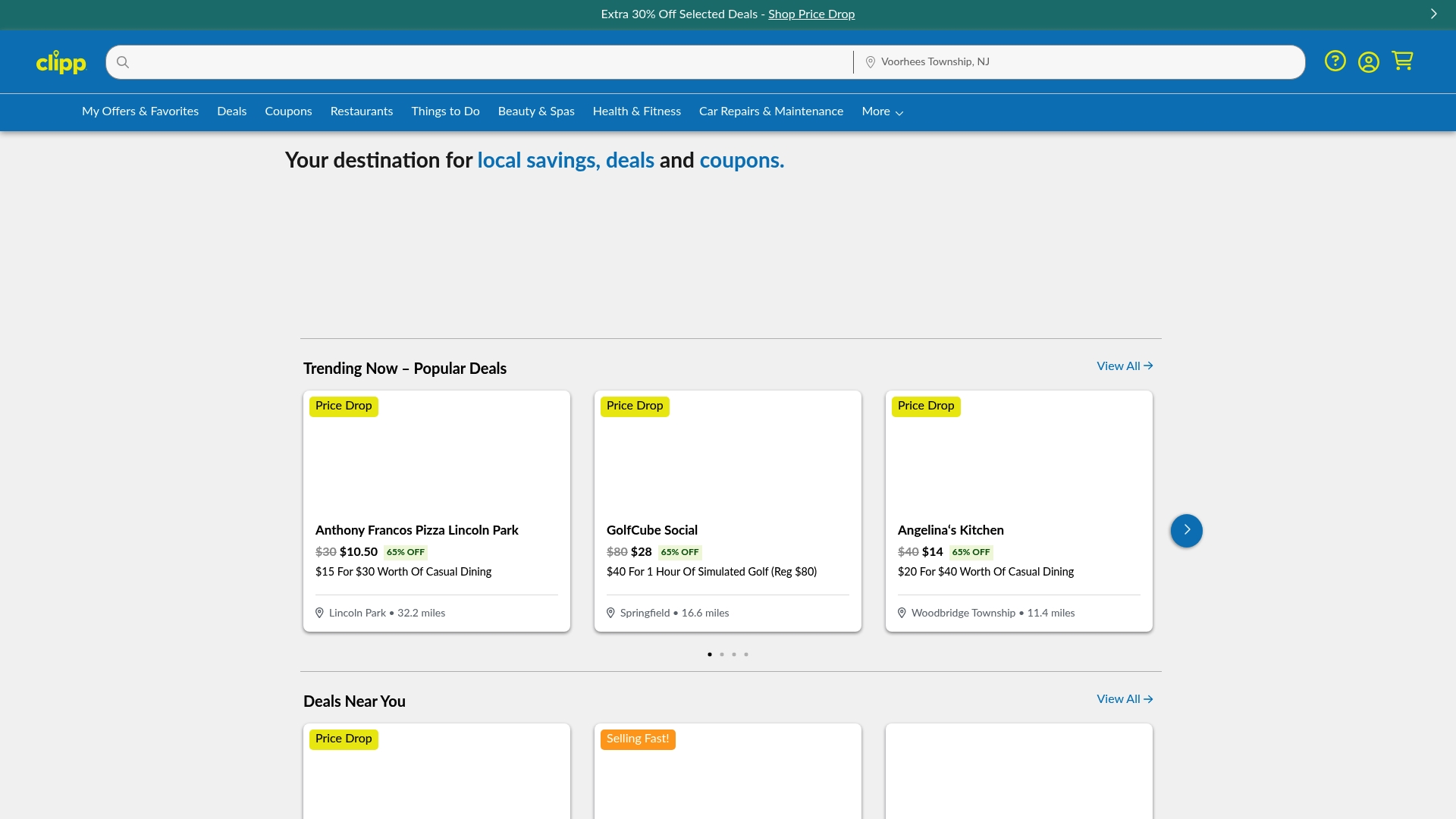
Clipp features up to 50% off local savings across categories including dining, wellness, home improvement, pet care, and entertainment. The platform is designed for fast browsing, with sections like "Trending Deals" and "Near You" that surface the most relevant offers without making you work for them. Whether you are looking for a discounted dinner at a neighborhood restaurant, a reduced-price gym membership, or a deal on a local spa day, Clipp pulls it all into one place. You can also browse deals by location to find exactly what is available near you right now. The mobile app makes it easy to grab a deal on the go before it expires.
FAQ
What does a deal aggregator do?
A deal aggregator collects offers from multiple merchants or affiliate networks and displays them in one searchable platform. It does not own the deals; it organizes and presents them for easy comparison.
How do deal aggregators make money?
Most deal aggregator websites earn revenue through affiliate commissions. When a user clicks through and completes a purchase, the aggregator receives a small fee from the merchant, keeping the service free for consumers.
Are deals on aggregator platforms always current?
Not always. The best platforms use real-time or daily-refreshed data feeds to keep offers current. You should always verify the expiration date on the deal listing and confirm availability on the merchant's site before redeeming.
What is the difference between a deal aggregator and a coupon site?
A coupon site typically hosts static codes submitted by users or brands. A deal aggregator pulls and normalizes offers automatically from multiple sources using data feeds or APIs, giving it broader coverage and more frequent updates.
Is it safe to use deal aggregator apps?
Reputable deal aggregator apps are generally safe, but you should be cautious about platforms that request unnecessary financial information. Stick to well-reviewed platforms with clear privacy policies and avoid sites that seem to store payment data without transparent security practices.