

TL;DR:
- Most shoppers overlook the importance of reading deal terms, risking overpaying despite discounts.
- Using digital coupons and apps allows stacking and saving 20 to 40% on groceries while avoiding paper coupon hassles.
Finding real savings close to home sounds simple until you're staring at a stack of mailers, three apps, and a grocery circular, wondering if any of it actually adds up. The frustration is real. Most shoppers leave money on the table not because deals don't exist, but because they lack a clear system for evaluating which offers are worth their time. This guide cuts through the noise and gives you a practical, proven framework for spotting, comparing, and stacking local deals across dining, groceries, services, and wellness so your next shopping trip puts cash back in your pocket.
Table of Contents
- How to spot the best local deals: Key criteria
- Dollar stores and discount chains: Are you really saving?
- How to use digital deals and grocery couponing apps locally
- Finding deep discounts on dining, entertainment, and wellness
- Don't overlook local service deals: Repairs, wellness, and more
- What most deal hunters miss about local savings
- Find your next local savings with Clipp.com
- Frequently asked questions
Key Takeaways
| Point | Details |
|---|---|
| Always compare deal terms | Not every deal is stackable or usable for every shopper, so read restrictions before you buy or redeem. |
| Use weekly ads and digital coupons | Grocery and discount store savings can add up fast by combining circular ads with app-based discounts. |
| Major deal apps offer instant savings | Platforms like Groupon and Clipp.com let you save 50–70% on restaurants, services, and more without hassle. |
| Act fast but verify eligibility | Local service deals can disappear quickly—always confirm your eligibility and coupon terms before payment. |
How to spot the best local deals: Key criteria
Before you clip a single coupon or tap a single app, you need to know what separates a genuinely great deal from a headline that just looks impressive. Not all discounts are created equal, and the biggest percent-off badge doesn't always mean the most money saved.
Local savings generally fall into four main types:
- Coupons (paper or digital) applied at checkout for a set dollar or percent discount
- Weekly circulars from grocery and retail chains advertising short-term price drops
- Daily or limited-time deals that expire within hours or a single day, often through local deal platforms
- App-exclusive offers only accessible when you download a retailer's or deal platform's app
Knowing the type helps you plan. Circulars, for example, are reliable and predictable. App-exclusive deals often have deeper discounts but require more active monitoring. You can explore the full range of types of local coupons to understand how each category works in real-world scenarios.
Once you identify the type, evaluate the actual terms. This step is where most shoppers slip up. Real coupon terms, like those from a local automotive service coupon, often specify a limit of one per customer, require you to present the coupon before payment is processed, prohibit stacking with other promotions, and restrict redemption to a single location. A 20% off offer that can't be combined with your loyalty points may be worth less than a 10% offer that can stack with a manufacturer rebate.
Pro Tip: Always scroll past the headline discount to the fine print. Look for four things every time: expiry date, stacking rules, per-customer limits, and whether the offer is valid only at specific locations or on specific products. Thirty seconds of reading can save you from checkout surprises and wasted trips.
Finally, never assume the biggest discount equals the lowest final price. Run the math. If a 50% off coupon applies to an item priced higher than a competitor's everyday price, you may still be paying more than necessary. Compare final totals, not percentage badges.
Dollar stores and discount chains: Are you really saving?
Armed with deal criteria, let's test them where you shop most: discount chains and dollar stores. These stores have built a reputation as automatic money-savers, but the reality is more nuanced and interesting than most shoppers realize.
Dollar Tree, Family Dollar, and similar chains do offer genuine value on certain items. Party supplies, greeting cards, cleaning products, and seasonal decorations often cost significantly less than at traditional grocery stores. But the savings aren't universal. AARP research on dollar stores highlights that dollar store chains use weekly circulars and coupons for extra savings and provides concrete price comparison examples showing that sometimes dollar stores win on price, and sometimes supermarkets do.
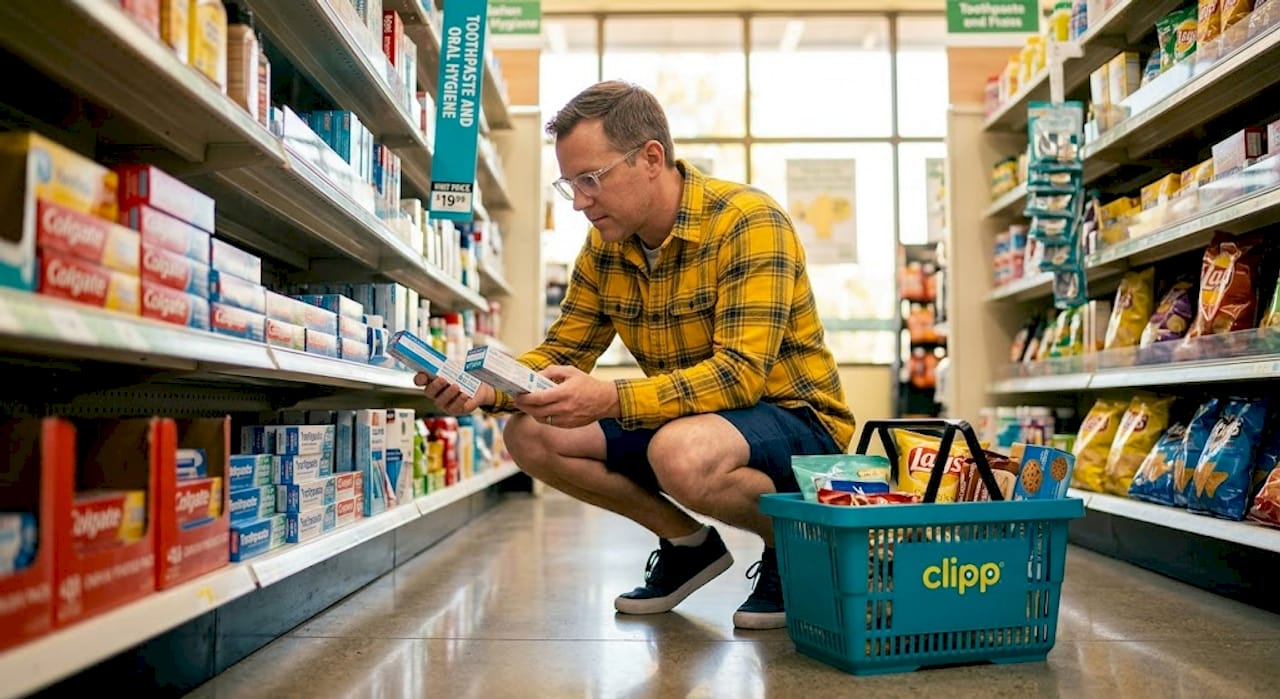
The key metric is per-unit cost, not shelf price. A dollar store tube of toothpaste might cost $1.25, but if it contains 4 ounces, you're paying $0.31 per ounce. A supermarket selling a 6-ounce tube for $1.89 works out to $0.32 per ounce. Nearly identical. Now add a supermarket coupon or BOGO deal, and the grocery store wins by a clear margin.
Here's a quick sample comparison to illustrate:
| Item | Dollar Store Price | Supermarket Price | Supermarket with Coupon |
|---|---|---|---|
| Toothpaste (4 oz) | $1.25 | $1.89 (6 oz) | $0.99 (6 oz) |
| Envelopes (25 ct) | $1.00 | $3.49 (100 ct) | $2.49 (100 ct) |
| Paper towels (1 roll) | $1.00 | $1.29 | $0.89 with app coupon |
The table shows a pattern: dollar stores can win at face value, but circulars and coupons often flip the advantage to larger retailers. For items where you can use bulk grocery savings strategies, buying in larger quantities at a grocery chain with a stacked coupon frequently beats the dollar store option outright.
"Dollar store deals aren't always the cheapest, but weekly circulars can tip the balance."
The practical takeaway: use dollar stores strategically for specific categories where their pricing is structurally lower (party goods, gift wrap, basic cleaning supplies), and use circulars plus coupons everywhere else to level the playing field or beat them outright.
How to use digital deals and grocery couponing apps locally
Dollar stores aren't the only way. Let's see how you can leverage smartphones for fast, reliable savings nearby. The rise of grocery and retail apps has made coupon stacking faster and more accessible than at any point in history, and the results are measurable.
According to ConsumerAffairs' couponing guide for Publix, a simple, repeatable system using BOGO deals, store ads via the app, and layered coupon types (manufacturer plus store coupons) can save families 20 to 40% on their grocery bills without spending hours clipping paper coupons.
Here's a straightforward system you can apply at most major grocery chains:
- Download the store app and create a free loyalty account if required
- Browse weekly digital deals and clip any that match your shopping list
- Identify BOGO (buy one, get one) offers on items you regularly buy, since these represent a true 50% savings when used on items you need
- Layer manufacturer coupons on top of store deals where permitted by the app
- Check the app at checkout to confirm all clips have been applied before the cashier finalizes the sale
This system works because it doesn't rely on luck or remembering to bring paper coupons. The app tracks everything. Pair this approach with meal planning apps that help you build shopping lists around what's on sale rather than buying at full price and then searching for a coupon.
You can also find curated selections of the top five grocery coupons to identify which categories and deal types consistently deliver the deepest savings.
Pro Tip: Turn on push notifications for your grocery app so you hear about new BOGOs the moment they go live. Limited-time digital deals, especially on meat, dairy, and produce, often have tight windows. Also double-check whether a coupon is app-only or also valid in-store, since some promotions work differently depending on how you redeem them.
Finding deep discounts on dining, entertainment, and wellness
Having mastered groceries, let's look at how to slash costs on everything from dinners out to yoga or movie nights. This category is where the biggest single-transaction savings appear, and where the most mistakes also happen.
Major deal platforms list dining, entertainment, and wellness offers at 50 to 70% off on average, with instant app redemption and the ability to read verified reviews before booking. That kind of discount on a spa day or a date-night dinner represents genuine savings of $30, $50, or more per visit.
Here's how these platforms compare:
| Feature | National deal apps | Local deal platforms | DIY couponing |
|---|---|---|---|
| Average discount | 50 to 70% | 20 to 50% | 10 to 30% |
| Coverage | Wide, national chains | Hyper-local businesses | Varies by circular |
| Ease of use | Very high (app-based) | Moderate | Low (manual tracking) |
| Best for | Restaurants, spas, activities | Neighborhood shops | Groceries, everyday items |
The advantages of using deal apps for dining and entertainment are clear:
- Instant savings with no need to print or carry anything physical
- Verified reviews help you pick quality restaurants rather than guessing
- Easy sharing with family members or friends splitting the bill
But there are real pitfalls to watch for as well:
- Limited redemption windows that make midweek lunches your only valid option
- Blackout dates covering weekends and holidays when you're most likely to go out
- Minimum spend requirements that push you to order more than you planned
- Non-transferable or one-time-use codes that expire if you cancel or reschedule
Explore top local deal websites for a curated breakdown by category, and check out dedicated restaurant coupon tips for tactics specific to dining out.
Pro Tip: Before booking any dining or entertainment deal, confirm the redemption address matches your intended location, check the expiry date, and read two or three recent customer reviews. A deal that saves you 60% at a restaurant that's an hour away or recently changed ownership isn't the bargain it appears to be.
Don't overlook local service deals: Repairs, wellness, and more
It's not just about products. Let's explore how families and neighbors can save on local services with a little extra vigilance. Auto repairs, HVAC tune-ups, salon visits, and fitness memberships all carry meaningful price tags, and local deals in these categories can generate serious savings.
Neighborhood platforms like Nextdoor allow local businesses to post short-term promotions directly to residents in the surrounding area. These offers move fast and often reflect genuine urgency: a slow week for a local mechanic, a new salon trying to build its client base, or a gym with unused morning slots. The deals tend to be authentic rather than manufactured marketing.
That said, service coupons carry the most complex restrictions of any deal category. As the Bay Ridge Honda service coupon example shows, local automotive offers routinely include usage limits of one per customer, require you to present the coupon before work begins, prohibit stacking with other offers, and restrict the deal to a single physical location.
"The most expensive mistake with service coupons is assuming they work the same way as product discounts. They almost never do."
Watch for these common exclusions in local service deals:
- Weekday-only validity that excludes the Saturday appointment you actually need
- New customer restrictions that eliminate returning clients from eligibility
- Single-location limits even when a business has multiple nearby branches
- Advance booking requirements of 48 hours or more that rule out same-day emergencies
- Service-specific limits that apply only to oil changes, for example, but not to tire rotations at the same shop
For a broader look at saving on local services, the key lesson is consistent: read every term before you commit, and act quickly when a genuine offer appears.
What most deal hunters miss about local savings
Here's the uncomfortable truth most deal-focused articles skip entirely: the biggest savings killer isn't a lack of coupons. It's overconfidence. Experienced deal hunters lose money, yes, actually lose the value they expected to capture, when they assume terms they haven't read, rush decisions because of artificial urgency, or skip the simple math of comparing final prices.
The percent-off headline is marketing. The total cost after all restrictions is reality. A 40% off coupon that requires a $75 minimum spend at a restaurant where your typical bill is $45 doesn't save you anything if you end up ordering more just to qualify.
Stacking is another area where assumptions cost people money. Most shoppers believe that holding two coupons means double savings. In practice, terms very rarely allow it. Unless the offer explicitly states it can be combined with other offers, assume it cannot. Calling ahead to confirm stacking rules takes 90 seconds and can prevent a frustrating checkout moment.
The final trap is FOMO, the fear of missing out on a limited-time deal. Platforms design urgency on purpose. "Only 3 left" or "Expires tonight" are real sometimes, and manufactured other times. If a deal is genuinely good and fits your actual needs, act. If you're tempted purely by the countdown timer, pause. A deal you didn't need at full price isn't a deal at any discount.
Stay flexible. Deal apps update constantly, and the offer that wasn't worth it last month might be exceptional this week. Check your favorite platforms regularly, refine your approach as you learn what works for your household, and never stop reading the fine print.
Find your next local savings with Clipp.com
Ready to put these strategies into action? Here's a shortcut to start saving right now.
Clipp.com local deals brings together curated coupons, limited-time promotions, and exclusive discounts for dining, home services, wellness, and more, all in one easy-to-navigate platform built specifically for local shoppers. No more hunting across five apps or three browser tabs.
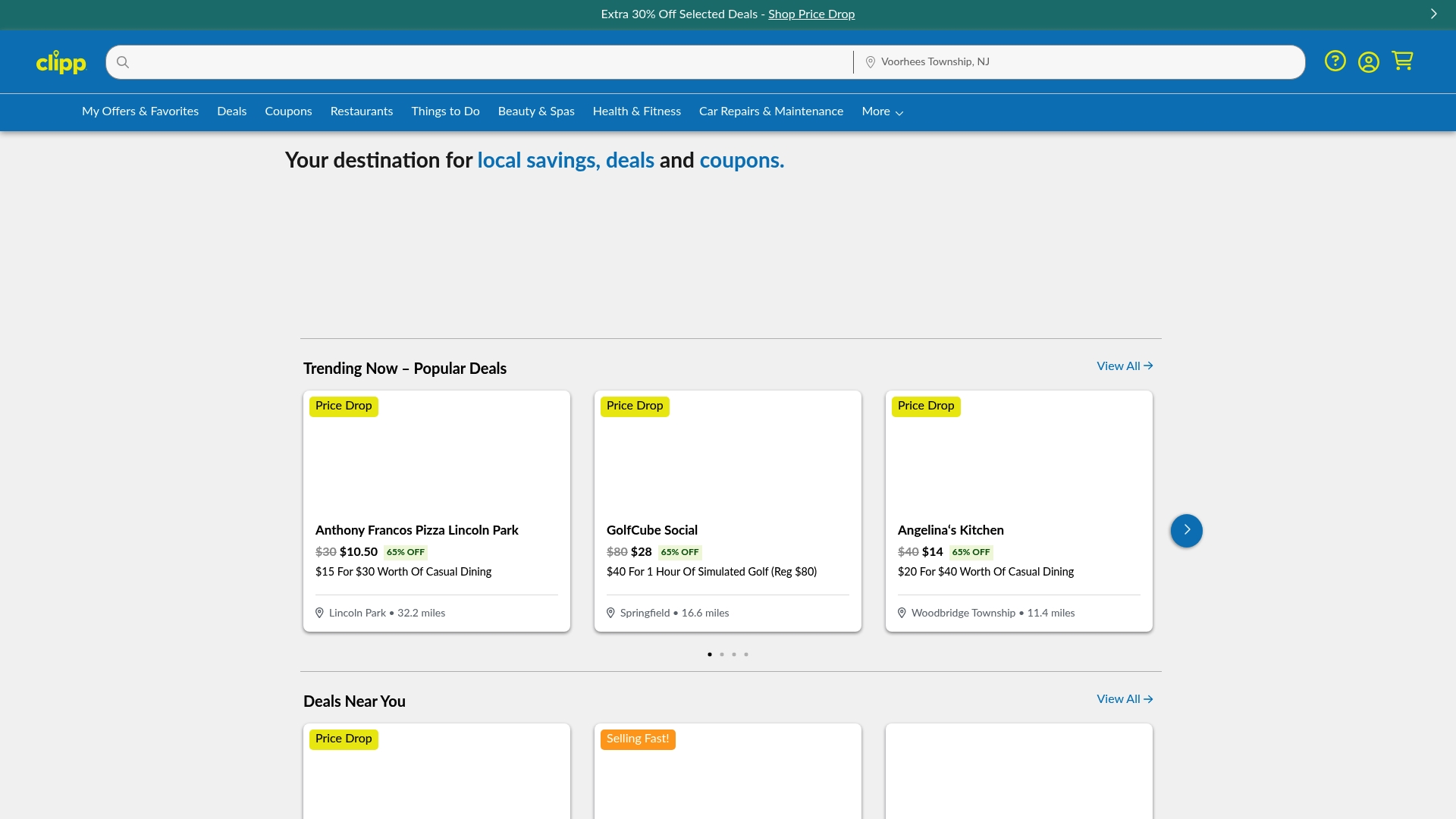
You can browse the latest deals in Ashburn or search by zip code and category to find offers that match exactly what you need right now. Whether you're planning a family dinner, booking a salon appointment, or comparing auto service discounts, Clipp.com surfaces the best local value so you spend less time searching and more time saving. New deals rotate in regularly, so it pays to check back often.
Frequently asked questions
Are digital coupon apps better than paper coupons for local savings?
Digital coupon apps are generally faster and easier to stack than paper, and the savings add up to 20 to 40% on grocery bills when used consistently with BOGO and manufacturer coupons.
Can you really save 50% or more at local restaurants and entertainment venues?
Yes, platforms that aggregate dining and wellness deals advertise 50 to 70% off regularly, though you should always verify redemption terms and blackout dates before purchasing.
What should I check before using a local service coupon?
Verify per-customer limits, whether the coupon must be presented before service begins, stacking restrictions, and expiry date, as automotive service coupons commonly include all of these restrictions.
Is it true that dollar stores always offer the best prices?
Not always. AARP price comparisons show supermarkets with circulars and coupons frequently beat dollar store shelf prices on a per-unit basis, especially for larger quantities.
Where can I find last-minute local deals on services?
Neighborhood platforms are a strong starting point, as Nextdoor service posts regularly feature short-term, location-specific promotions from local businesses looking to fill open slots quickly.