

Finding a local deals marketplace that actually features relevant offers from businesses in your neighborhood often means wading through generic national promotions or listings with sparse local participation. Most platforms either restrict neighborhood deals to a handful of markets, offer little verification of merchants, or bury small business offers behind cluttered national feeds. This guide reviews five local deals marketplaces side by side on local coverage, deal verification, and merchant participation so you can pick one that reliably drives real savings in your area.
Table of Contents
Clipp
At a Glance
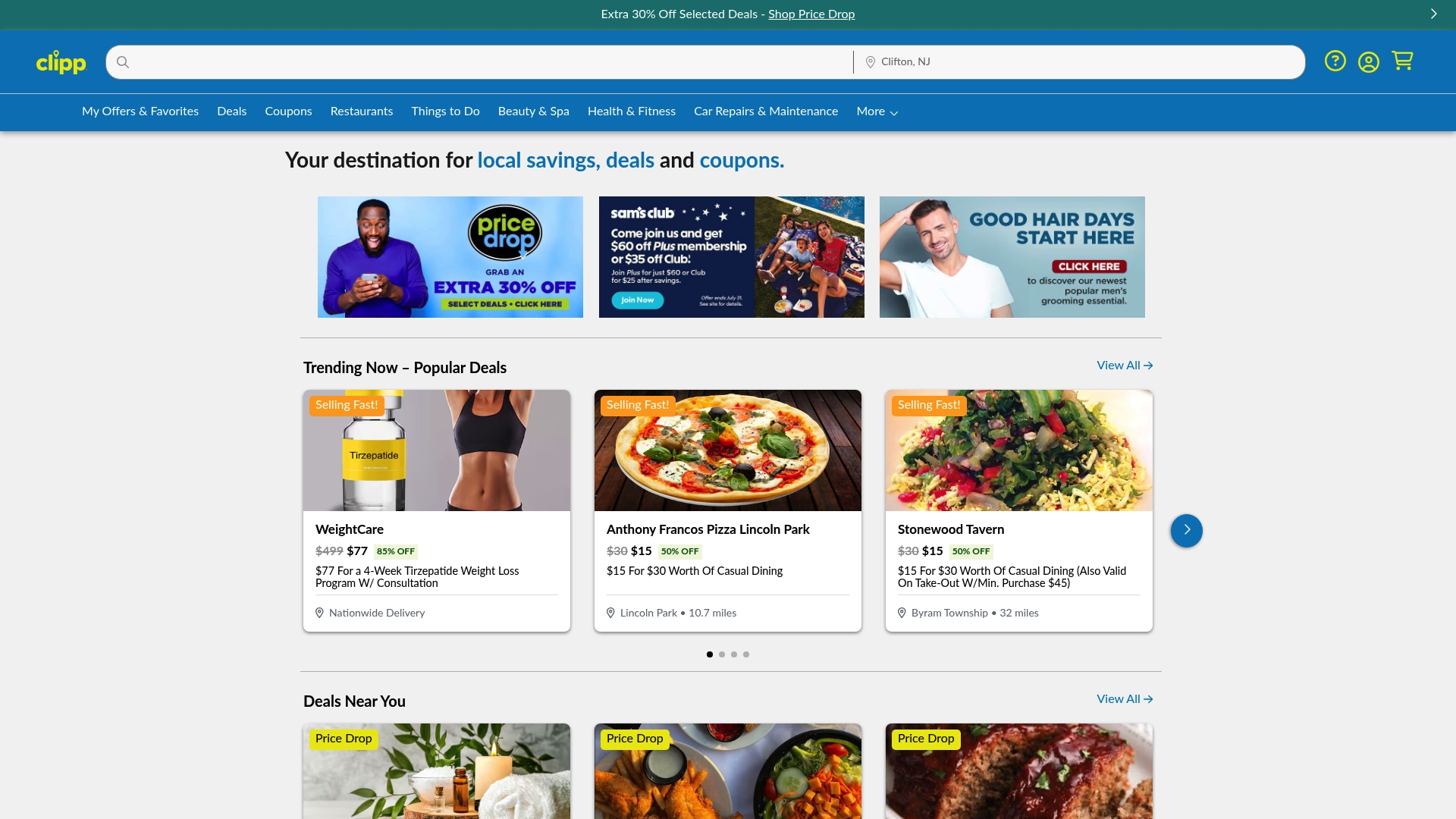
Clipp centers deals on individual cities so you search by neighborhood instead of wading through national rollouts. The site pairs digital and printable coupons with a referral and rewards program to keep savings local and shareable.
Core Features
- City specific deals and coupons that let you filter offers by town or ZIP code for quick local discovery.
- Referral and rewards program that credits users for sharing deals and bringing friends to local merchants.
- Digital and printable coupons so you can redeem offers on a phone or print a voucher for in-store use.
- Personalized offers and favorites let you save merchants and get more relevant promotions.
- Broad category coverage across dining, beauty, fitness, services, retail, and entertainment.
Key Differentiator
Clipp organizes offers around city pages and local merchant partnerships so promotions reflect neighborhood demand. That city focus drives deal rotation and partnership efforts toward small business foot traffic rather than national coupons that appear everywhere.
Pros
-
Strong local focus helps you find deals that are actually usable nearby rather than generic national promotions.
-
The referral and rewards program nudges repeat visits and gives a simple path to extra savings when you invite friends.
-
Frequent deal updates across categories mean fresh dining and fitness offers show up often, which helps planners pick new spots to try.
-
Digital coupons reduce paper waste and speed checkout. Printable vouchers cover merchants that still require physical coupons.
-
Browsing by location and category makes the site useful both for residents and short term visitors looking to explore a specific neighborhood.
Cons
- Coverage is limited outside targeted markets; if your city has few merchant partners, the selection and depth of deals can be sparse.
Who It's For
Local residents, newcomers, and visitors who want neighborhood offers rather than nationwide coupon blasts. This works best if you live in or near a city where small merchants actively list promotions and you value discovering local shops and services.
Unique Value Proposition
City pages and merchant-curated offers put neighborhood promotions first. That means the economics shift for small merchants who want nearby foot traffic and for users who want deals they can actually use the same week. For community-minded shoppers, that local curation saves time and avoids irrelevant offers.
Real World Use Case
A Fort Lauderdale resident checks Clipp to compare nearby restaurant specials and gym trial passes. They redeem a digital coupon at dinner, then share a referral link with a friend to earn rewards. The friend uses a printable voucher for a salon discount the next week.
Pricing
Clipp is free to access. Coupons and deals are provided at no cost to users. Discount levels vary by offer and the site often highlights additional savings during local events and merchant promotions.
Website: https://clipp.com
LocolDeal
At a Glance
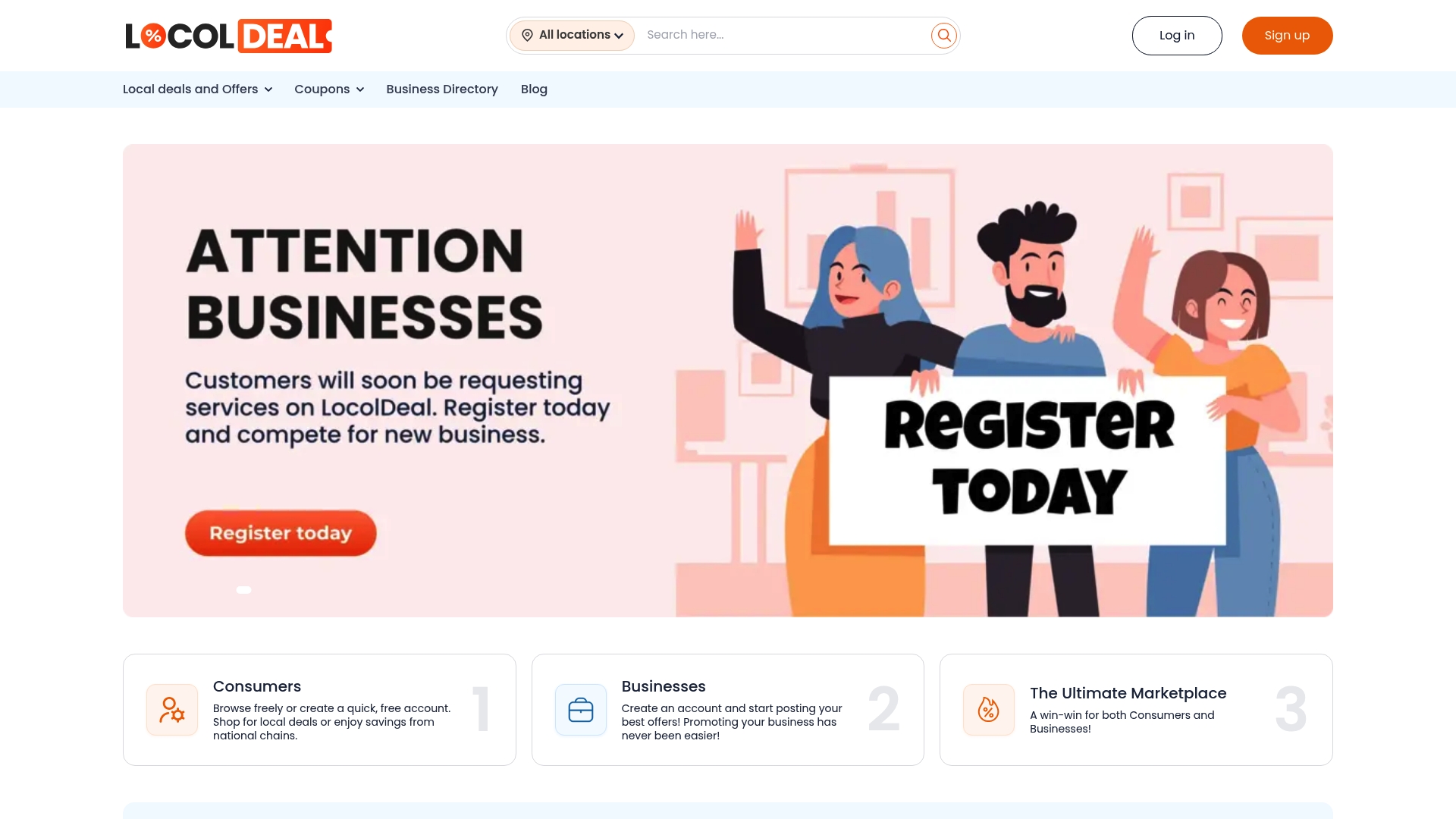
The platform's demand-driven Deal Request system lets consumers post interest and connect directly with nearby businesses, which shortens the path from discovery to purchase. LocolDeal operates primarily in the United States and Canada and centers on free listings and coupons for local merchants.
Core Features
- Free business listings for local and national businesses so shops can advertise without upfront fees.
- Exclusive coupons and deals aggregated by city and region for quick browsing.
- Deal Request system that matches consumer requests with willing merchants.
- Local city and regional pages designed for targeted promotion and easier discovery.
- Mobile app support to find and manage deals on the go.
Key Differentiator
LocolDeal’s main distinction is a free, community-focused marketplace that links small merchants and bargain hunters through the Deal Request mechanism. That direct connection is meant to make local promotions immediate and neighborhood oriented rather than buried in national feeds.
Pros
- Free listings lower the barrier for small merchants to advertise to nearby customers, which can help tight-budget businesses try promotions without risking ad spend.
- The city and regional pages collect local offers in one place, making it faster to scan nearby dining, retail, and services deals.
- Consumers get access to a range of categories from retail to dining, which helps savings-focused shoppers consolidate searches into one app.
- The mobile app support makes on-the-street discovery simple, letting users redeem coupons while they are already nearby.
- The platform’s community emphasis encourages neighborhood-level engagement rather than impersonal national outreach.
Cons
- User reviews flag widespread trust issues, with repeated reports of scams and questionable listings that undermine confidence in the marketplace.
- Multiple complaints mention damaged items, non-delivery, and slow or missing refunds, suggesting transactional risk on some offers.
- Limited customer support means disputes can go unresolved or require external payment disputes to fix.
- The presence of unverified businesses on the site can make it hard to distinguish reputable merchants from risky listings.
When It May Not Fit
Shoppers seeking fully vetted sellers and buyer protection will find LocolDeal a poor match because of reported fraud and non-delivery issues. If you require strong dispute resolution or guaranteed refunds, this platform’s current support and verification gaps are likely unacceptable.
Who It's For
Budget-conscious local consumers who enjoy bargain hunting and are willing to accept some risk for lower prices. Small to medium local businesses that need a no-cost channel to promote time-limited offers or test coupons in their neighborhood will find this appealing.
Real World Use Case
A small café posts weekly coupon bundles on LocolDeal and responds to nearby Deal Requests for bulk orders. Walk-in traffic increases on slow weekdays, and the owner tracks which coupons drive repeat visits, adjusting offers based on redemption patterns.
Pricing
Posting deals is free for businesses, and consumers access coupons at no cost. There are no listed transaction fees or subscription prices in the product data provided.
Website: https://locoldeal.com
Fyndr
At a Glance
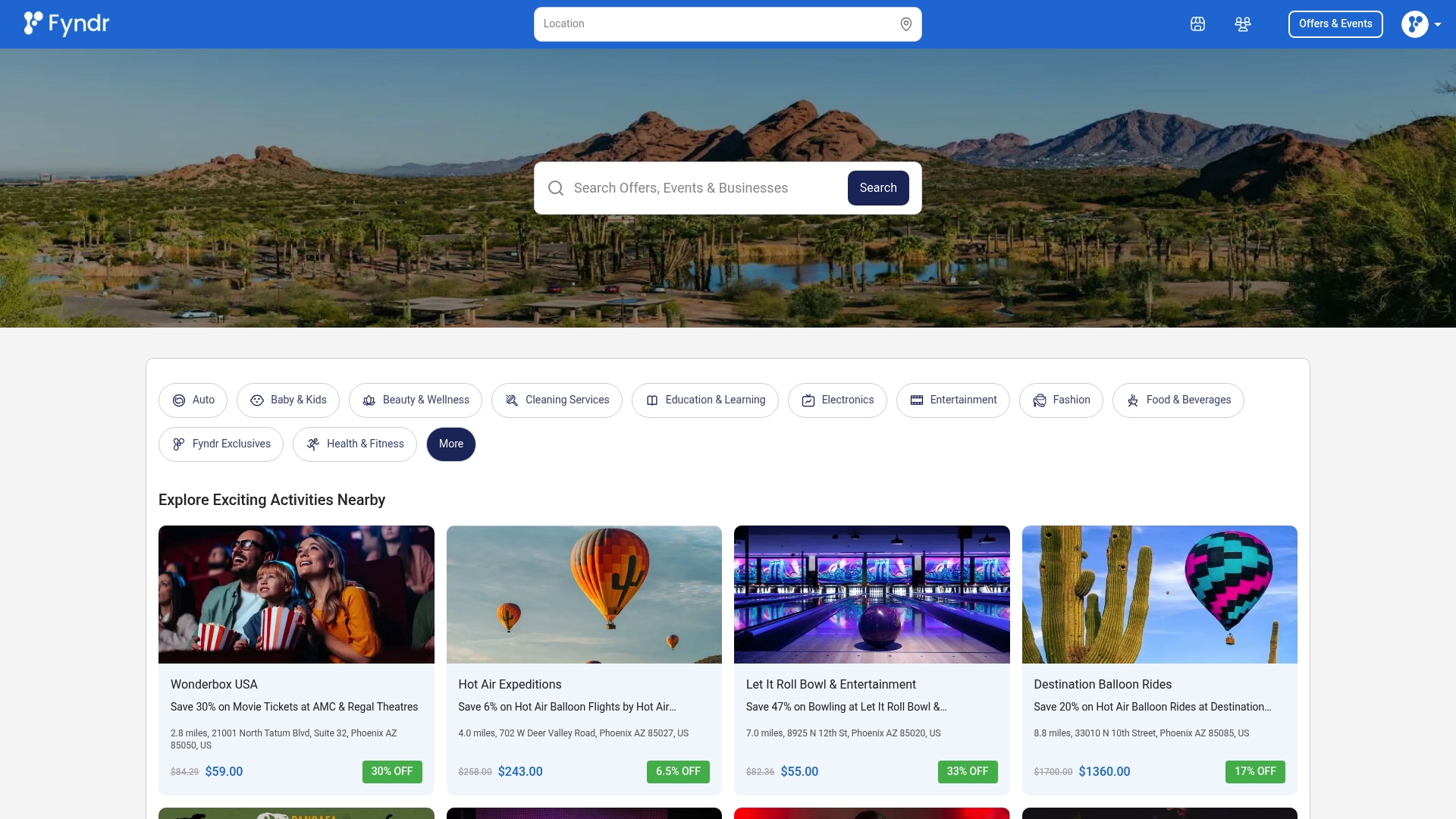
Businesses can create deals and campaigns at no initial cost, which lowers the barrier to entry for small service providers. Fyndr pairs that low-cost onboarding with built-in booking and payment flow aimed at local commerce.
A consumer-facing app surfaces nearby offers across health, beauty, entertainment, travel, and services to make discovery and checkout quick.
Core Features
- Promotional campaign management: Tools for creating, editing, and scheduling local deals and coupons.
- Online booking: Built-in appointment scheduling and calendar management for service providers.
- Geo-targeted deals: Location-based promotions to reach customers within a chosen radius.
- Integrated contactless payments so customers can pay at booking or in person.
- Merchant tools for tracking redemptions and promoting events to local audiences.
Key Differentiator
Fyndr centers local discovery around geo-targeted offers combined with an integrated booking and payment flow, rather than just listing coupons. That pairing helps merchants convert nearby interest into appointments without sending customers to a separate scheduler or payment page.
Pros
- A clean, consumer-friendly feed that speeds discovery and reduces friction for first-time buyers. New visitors find deals quickly.
- Merchants get a compact toolkit to run promotions, manage bookings, and accept payments from a single place. That reduces juggling multiple apps.
- Because businesses can launch campaigns with no upfront cost, small operators can experiment with pricing and timing without an initial spend.
- The site covers multiple local categories so merchants in salons, fitness, dining, and events have a shared marketplace to reach customers.
- The product shows room for growth; early investors and user feedback suggest iterative improvements are likely as the platform matures.
Cons
- The platform is still early stage, and some features feel underdeveloped compared with long-established local marketplaces.
- Limited international availability restricts reach to U.S. merchants and customers at present.
- Deal variety depends heavily on local business participation, so coverage can be thin in less populated areas.
- User reports call out stability and feature gaps that the vendor will need to address as the product scales.
When It May Not Fit
If you manage a multinational chain or need broad geographic coverage, Fyndr’s U.S.-centric footprint will be a constraint. If you require advanced loyalty programs, complex coupon stacking, or enterprise-grade reporting, the early-stage feature set may be too lightweight.
Who It's For
Local service providers and small businesses that want a low-cost way to promote time-limited offers and accept bookings. Also for residents and visitors who prefer discovering and paying for neighborhood experiences in a single app.
Real World Use Case
A small spa publishes a new-client package on Fyndr, lets customers book appointments through the platform, and accepts contactless payment at checkout. The spa tracks redemptions and adjusts future promos based on which times sell out.
Pricing
Consumers can browse deals for free. Businesses can create campaigns at no initial cost; the vendor may apply transaction fees depending on how a deal is structured. Exact fee details are determined at setup.
Website: https://fyndr.us
Local Pocket
At a Glance
Independent businesses get a free digital storefront and local advertising through the app, a concrete way to appear in front of nearby shoppers without paying a listing fee. The mobile GPS search and map-first discovery make it easy for residents to find time-limited deals while out running errands.
Core Features
- Free digital presence for local businesses so shops, cafés, and services can create offers without setup costs.
- Geo-location search and a map interface that surfaces nearby promotions as you move around town.
- Customizable promotions and QR code redemption for in-person discounts.
- Community engagement tools and a basic review system that let neighbors recommend places.
Key Differentiator
What sets Local Pocket apart is the explicit focus on giving small businesses a no-cost digital presence paired with neighborhood discovery. That combination keeps the app oriented toward foot traffic and local loyalty rather than national coupon flooding.
Pros
- Supports local economies by highlighting independent shops rather than national chains, which helps keep spending inside the neighborhood.
- No registration fees for merchants. Small owners can list offers without an advertising budget or onboarding paperwork.
- The map and search features make discovery fast. You see offers pinned to actual streets, which simplifies planning errands or impromptu stops.
- Community tools encourage repeat visits. Local groups and shoppers can share promos that feel relevant rather than algorithmic.
Cons
- Mostly UK-focused, so options thin outside that region and usefulness drops for international users.
- Offer variety depends on merchant participation. In areas with low signups the app can feel empty.
- Businesses get limited analytics. Owners will not find deep customer segmentation or conversion funnels on the platform.
- User reviews are mixed and sometimes confuse Local Pocket with similar services, which can hurt first impressions.
When It May Not Fit
If you run a chain or national brand expecting broad consumer analytics and campaign reporting, Local Pocket will feel too light. It is also a weak choice for shoppers in regions where few merchants have signed up; the value depends on local density of offers.
Who It's For
Residents who want to save money while supporting neighborhood shops and small families looking for nearby deals during weekly errands. Also ideal for small business owners who need immediate, low-friction visibility and do not want to pay for digital advertising.
Real World Use Case
A resident opens the app while planning a shopping route, spots a lunch discount two blocks from the grocer, and redeems it by scanning a QR code at checkout. A boutique owner posts a weekend special and tracks foot traffic qualitatively through repeat redemptions and neighbor messages.
Pricing
Free for businesses to register and list promotions. Consumers access offers at no cost. There is no subscription model today, although the vendor notes potential premium features in future development.
Website: https://localpocket.com
Valpak
At a Glance
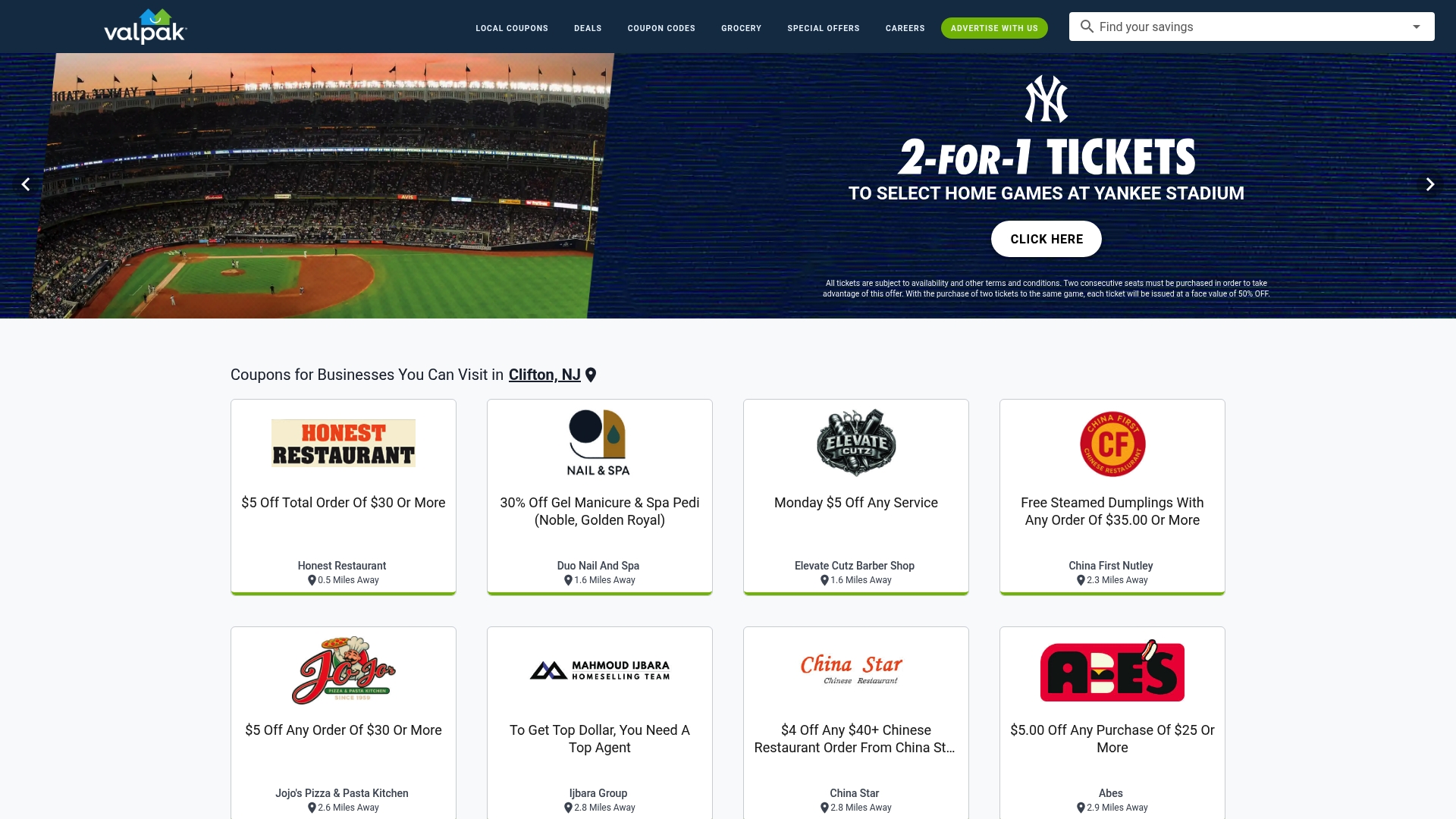
Valpak combines a vast physical coupon distribution network with digital marketing tools to run hyper-local campaigns across U.S. neighborhoods. Its franchise model ties mailed coupon drops to targeted online ads and email promotions, making it a hybrid option for businesses that still rely on direct mail.
Core Features
- Integrated direct mail and digital advertising solutions that coordinate mailed coupons with online placements.
- Data-driven consumer targeting and audience segmentation to focus campaigns on neighborhoods with high conversion potential.
- Extensive local reach via a network of franchisees that manage neighborhood mailings and placement.
- Analytics and reporting for campaign measurement, letting you compare mail lift to digital click or redemption rates.
Key Differentiator
Valpak's standout angle is the physical plus digital mix: mailed coupons backed by targeted online ads and audience data. That blend suits businesses that want measurable local penetration through both mailbox presence and online touchpoints rather than digital-only traffic. It serves a different merchant profile than a deals-first marketplace.
Pros
- Strong local footprint. The franchise network gives you neighborhood-level distribution without building a local logistics program yourself.
- Multi-channel reach. Combining mailed coupons with digital ads and email reduces reliance on any single channel during a campaign.
- Actionable data. Audience segmentation and reporting help refine where to send mail and which neighborhoods respond best.
- Franchise support. Local franchisees can handle on-the-ground details like drop timing, creative placement, and merchant relationships.
- Consumer pull. Valpak’s coupon focus attracts price-sensitive shoppers who respond to tangible offers in their mailbox.
Cons
- Platform usability issues. Users report a non-intuitive interface and cumbersome workflows that slow setup and edits.
- Labor-intensive campaign setup. Expect paperwork and manual steps, especially during compliance checks and print coordination.
- Compliance complexity. Regulations around mailed promotions and local advertising can add extra review cycles and delays.
When It May Not Fit
If your business is online-only or targets international customers, Valpak's U.S.-centric, mail-first model will feel like overkill. Teams that need a lightweight, plug-and-play advertising tool may find the setup and compliance steps too heavyweight for short promotions.
Who It's For
Small to mid-sized local businesses, regional franchise owners, and agencies that want coordinated mail and digital campaigns. Ideal when neighborhood penetration and mailed coupons matter more than purely digital reach.
Real World Use Case
A regional plumbing franchise uses Valpak to mail coupons into neighborhoods with older homes and to run matching localized digital ads. The franchiseer adjusts messaging from the campaign analytics to improve appointment bookings and tracks coupon redemptions against digital engagement.
Pricing
Campaigns are custom priced. Typical models include setup fees plus per-unit or per-impression charges, with some promotional packages starting at a few hundred dollars monthly. Final cost depends on print quantities, mailing routes, and targeting scope.
Website: https://valpak.com
Local Deals Marketplaces Comparison
When selecting a platform for discovering hyper-local deals, comparing features and usability can clarify which meets your needs best.
| Product | Key Differentiator | Best For | Pricing | Notable Limitation |
|---|---|---|---|---|
| Clipp | Focused on neighborhood-specific deals | Local residents and visitors seeking relevant offers | Free to use | Limited coverage outside targeted cities |
| LocolDeal | Community-oriented deal request system | Budget-conscious shoppers open to some risk | Free to use | Reports of scams and unverified listings |
| Fyndr | Integrated booking and payment flow | Small businesses promoting local experiences | Free to enroll, potential transaction fees | Feature set still maturing as platform evolves |
| Local Pocket | No-cost digital presence for merchants | Discovering and supporting independent shops | Free to use | Limited to UK-centric regions |
| Valpak | Hybrid of mail and digital campaigns | Regional campaigns needing physical and digital ads | Custom-priced | Setup and compliance may be time-intensive |
Find Local Savings That Actually Work With Clipp
If you are looking beyond generic goodsearch.com alternatives and want deals focused on your community, Clipp offers a solution designed to connect you with exclusive local promotions on dining, wellness, entertainment, and more. Instead of national coupons that may not apply to your neighborhood, Clipp helps you discover timely, neighborhood-specific offers tailored to your daily needs.
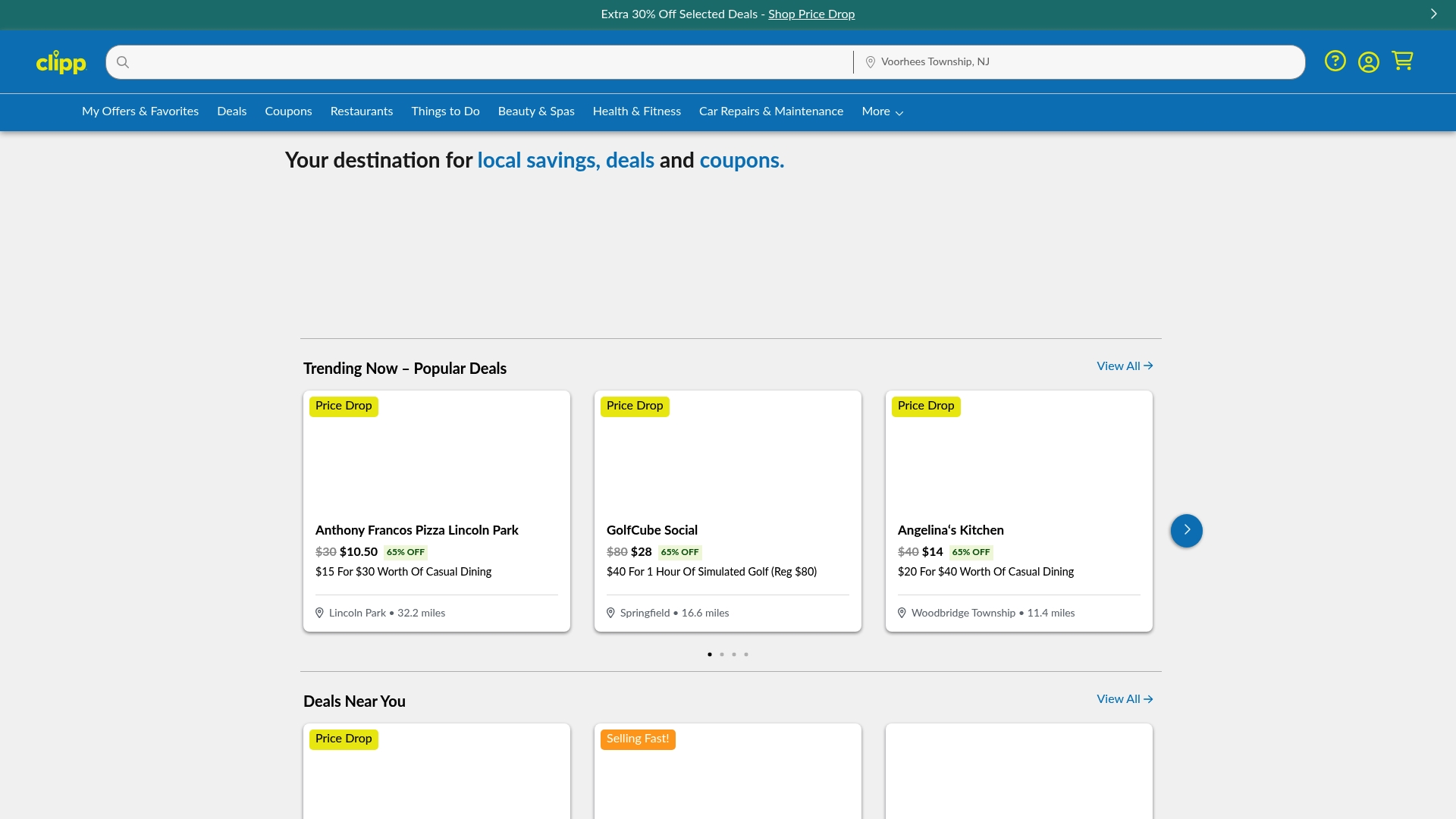
Start saving smarter by visiting Clipp where deals are curated for your city and nearby merchants. Take control of your spending and unlock valuable discounts on local favorites. Check out the latest offers in categories like dining and fitness, and enjoy instant access to printable and digital coupons with easy redemption. Discover how spending local with Clipp can add real value to your routine today.
Frequently Asked Questions
How does Clipp help users discover localized deals?
Clipp focuses on city-specific deals and coupons, allowing users to filter offers by town or ZIP code for quick local discovery. This feature enables users to find relevant promotions that they can actually use nearby. To make the most of this tool, residents should input their ZIP code to explore their local marketplace.
What is the difference between Clipp and LocolDeal in terms of user trust?
LocolDeal offers free business listings, which can help budget-conscious local merchants promote their services, but it has reported trust issues among users. In contrast, Clipp organizes offers around city pages and relies on merchant partnerships to ensure promotions reflect neighborhood demand. For those looking for reliable offers, Clipp is a better choice, given its emphasis on local merchant relationships.
Which platform provides a more integrated approach for local deals, Clipp or Fyndr?
Fyndr combines geo-targeted offers with integrated booking and payment flow for local commerce, which makes it easier for consumers to make appointments directly. Clipp, while also focused on local deals, primarily highlights coupons and digital vouchers. Users seeking a seamless booking experience might prefer Fyndr, while those looking for frequent updates on local offers should explore Clipp.
Does Clipp offer a rewards program for frequent users?
Yes, Clipp features a referral and rewards program that credits users for sharing deals and inviting friends to local merchants. This encourages repeat visits and provides a straightforward path to extra savings. Users interested in maximizing their local shopping experience should take advantage of this program.
How does the deal variety in Clipp compare to Local Pocket?
Clipp frequently updates its deals across various categories, including dining and fitness, providing fresh opportunities for local shoppers. Local Pocket, on the other hand, depends heavily on merchant participation, which can result in empty listings in areas with low signups. For those looking for consistent and updated local offers, Clipp may offer a more reliable experience.